A christmas dinner timeline is the difference between a pleasant morning and
four hours of low-grade panic. The meal itself is not difficult — it is a roast
with more side dishes than usual. What makes it hard is that eight things need to
be hot at the same moment and there is one oven.
So you work backwards from a single number: the time you intend to sit down.
Everything else is arithmetic from there.
 Save
SaveThree days before
Everything here keeps and removes the most pressure from the day itself.
- Bread sauce and cranberry sauce. Both keep a week and both taste better made ahead.
- Gravy base. Roast a few chicken wings or the turkey neck with onion and carrot, simmer into stock, strain, refrigerate. On the day you add the roasting juices. This is the single biggest improvement available to a Christmas dinner.
- Check the defrost timing. A frozen turkey needs a long time in the fridge — roughly a day for every two kilos, and more for a large bird. Getting this wrong is the one mistake that cannot be fixed on the day. The
USDA’s food safety service
publishes the thawing and cooking tables worth checking against.
Two days before
- Peel everything. Potatoes, carrots, parsnips, sprouts. Potatoes sit in cold water in the fridge; the rest go in bags. This is the most tedious job and doing it in advance while listening to something is a completely different experience from doing it at 9am on the day.
- Make the stuffing, uncooked, and refrigerate.
- Clear the fridge. You are about to need far more space than usual — the zone approach helps, and anything that can move to the freezer should.
The day before
- Parboil the potatoes, drain, rough up the edges, cool completely and refrigerate on a tray. They roast from cold and are better for it.
- Prepare the bird — out of the fridge in good time, buttered, seasoned, ready to go in.
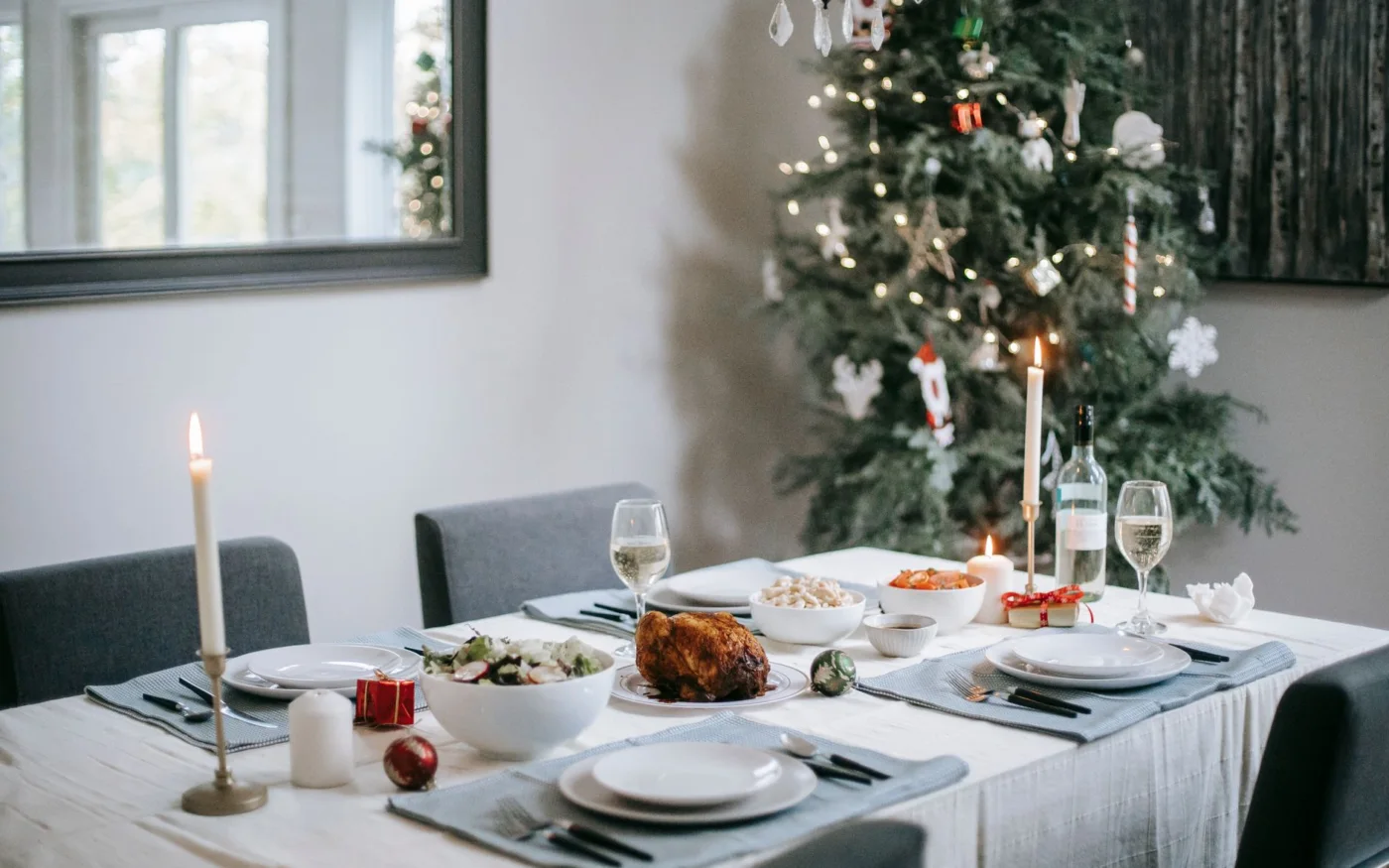
- Lay the table. Fully. Glasses, cutlery, napkins, crackers.
- Write the timeline out and stick it on a cupboard door. Actual times, not durations.
The christmas dinner timeline itself
Working backwards from a 2pm serving time. Shift every number if yours is
different.
-
9:00 — bird out of the fridge
It goes into the oven closer to room temperature, which makes the cooking time
more predictable. Turn the oven on now too. -
10:00 — bird in
Calculate from its actual weight and add half an hour of slack. A bird that is
ready early is a solved problem; one that is late is not.Use a meat thermometer rather than a timer. This is the single piece of
equipment that most improves the day, because it removes the guessing entirely. -
12:45 — bird out, and rest it
Cover loosely with foil and a tea towel. It will hold heat for well over an
hour and will carve considerably better for the rest.This is the hour everything else happens in. The oven is now
empty and hot, which is exactly what the potatoes need. -
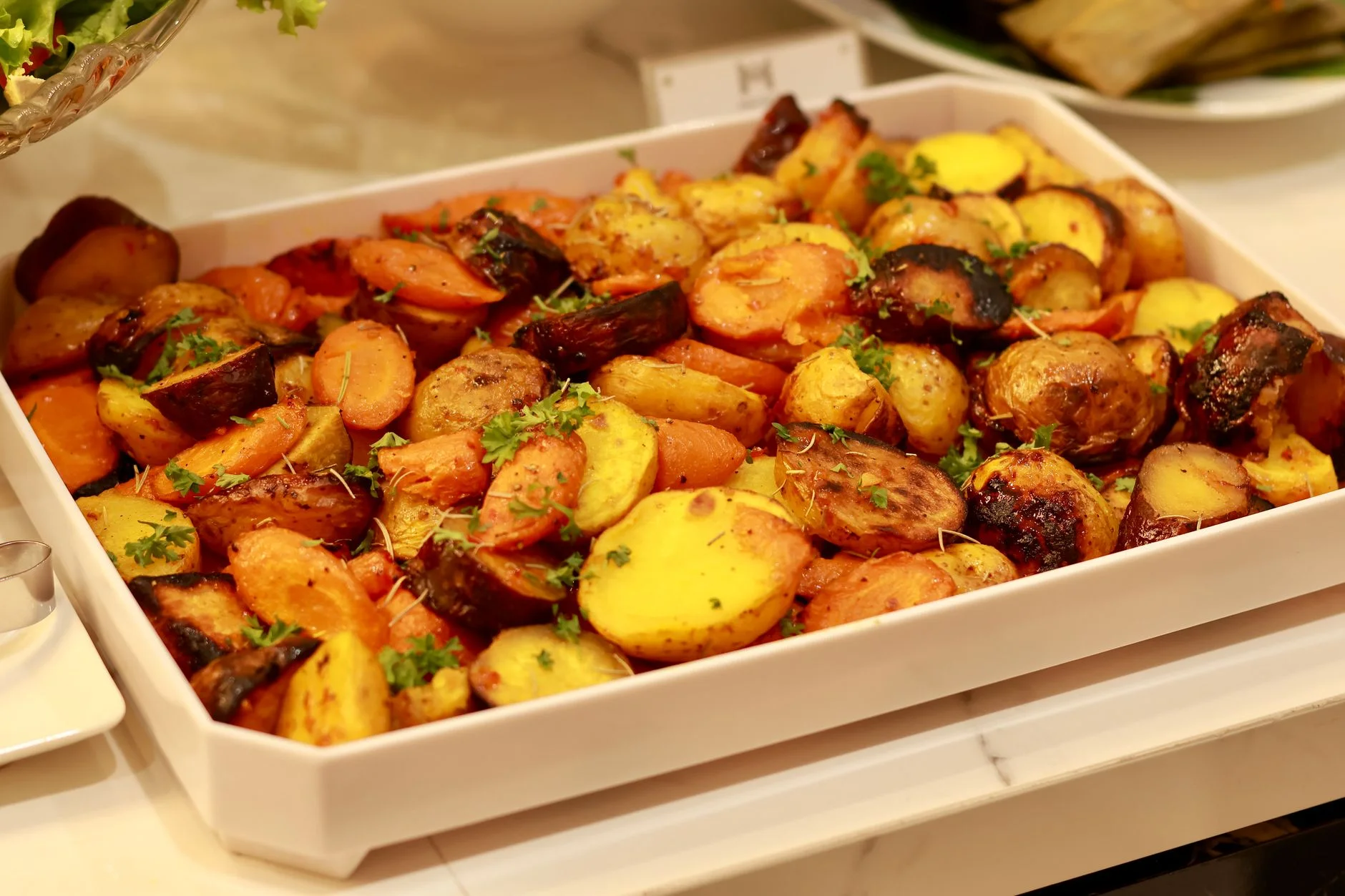
12:50 — potatoes and parsnips into the hot oven
Into hot fat, high heat, on the top shelf. Roughly an hour, turned once.
Stuffing and anything else oven-based goes in alongside. -
13:30 — gravy, and the hob vegetables on
Roasting juices into the base you made three days ago. Carrots and sprouts on
the hob — they need ten minutes, not thirty. -
13:45 — carve, plates warming
Carve onto a warmed dish, cover with foil. Plates into the bottom of the oven
or a sink of hot water. Cold plates are the most common reason a hot dinner
arrives lukewarm. -
14:00 — everything on the table
Serve in the dishes rather than plating up. It is faster, it stays hotter, and
it means the cook eats a hot meal too.
 Save
SaveThe oven problem
Almost every Christmas dinner disaster is really an oven-space problem, and it
is entirely predictable in advance.
Count your shelves. Then count the dishes that need the oven at the same
temperature at the same time. If those two numbers do not work, change the menu
now rather than discovering it on the day.
Three ways out, all of them fine:
- Move things to the hob. Carrots, sprouts, red cabbage and peas do not need an oven.
- Use the resting hour properly. It is a full hour of empty, hot oven — the single most under-used resource of the day.
- Serve something at room temperature. A dressed salad or a slaw cuts the richness and needs no heat at all.
What works
- One serving time, written on the door
- Gravy base made three days ahead
- Vegetables peeled two days ahead
- Potatoes parboiled the day before
- A meat thermometer rather than a timer
- Serving in dishes, not plating up
What to watch
- Working from durations instead of clock times
- Making gravy from scratch at 1:50pm
- Peeling potatoes on the morning
- Resting the meat for ten minutes
- Everything needing the oven at once
- Cold plates
Delegate three specific jobs
Not “can you help” — that produces someone standing in the kitchen asking what
to do, which is more work rather than less.
Name the job and the time. Drinks and glasses from noon.
Table and crackers, done the night before.
Washing up as you go, from 1pm. Each is a discrete thing someone
can own without checking in.
If there are people staying, this also spreads the load across the whole
period rather than one day — worth planning alongside
the rest of the guest preparation.
 Save
SavePlan the leftovers before you cook
You are about to produce a very large amount of cooked food, and the days
after Christmas are when most of it gets thrown away.
Decide in advance: turkey sandwiches on the 26th, curry or pie on the 27th,
soup from the carcass on the 28th. Get the carcass into a pot the same evening
rather than three days later — the six leftover
formulas all apply, and Christmas is the one day of the year they are worth
the most.
Portion and freeze anything that will not be eaten within about three days,
labelled and dated on the day it is cooked.
Common questions
loosely with foil and a tea towel it stays perfectly hot, carves far more easily,
and — crucially — frees the oven for the roast potatoes. Under-resting is the most
common mistake and it costs you both texture and oven space.
uncooked (two days), all vegetable peeling (two days), parboiled potatoes (one
day), and the table (the night before). What cannot: the roasting itself, the
final gravy, and green vegetables.
individually, and do the green vegetables last so they are the freshest thing on
the table. The resting meat holds its own heat for an hour, so it is the sides
that need the attention, not the bird.
evenly and considerably faster. Then move everything possible to the hob, and
consider a starter that needs no cooking at all so the oven stays free.
Write the time on a piece of paper
Pick the hour you want to sit down, work backwards using the steps above, and
stick the result on a cupboard door where everyone can see it.
That is genuinely the whole method. Do it in November alongside
the rest of the Christmas timeline, and the day
itself takes care of itself.