
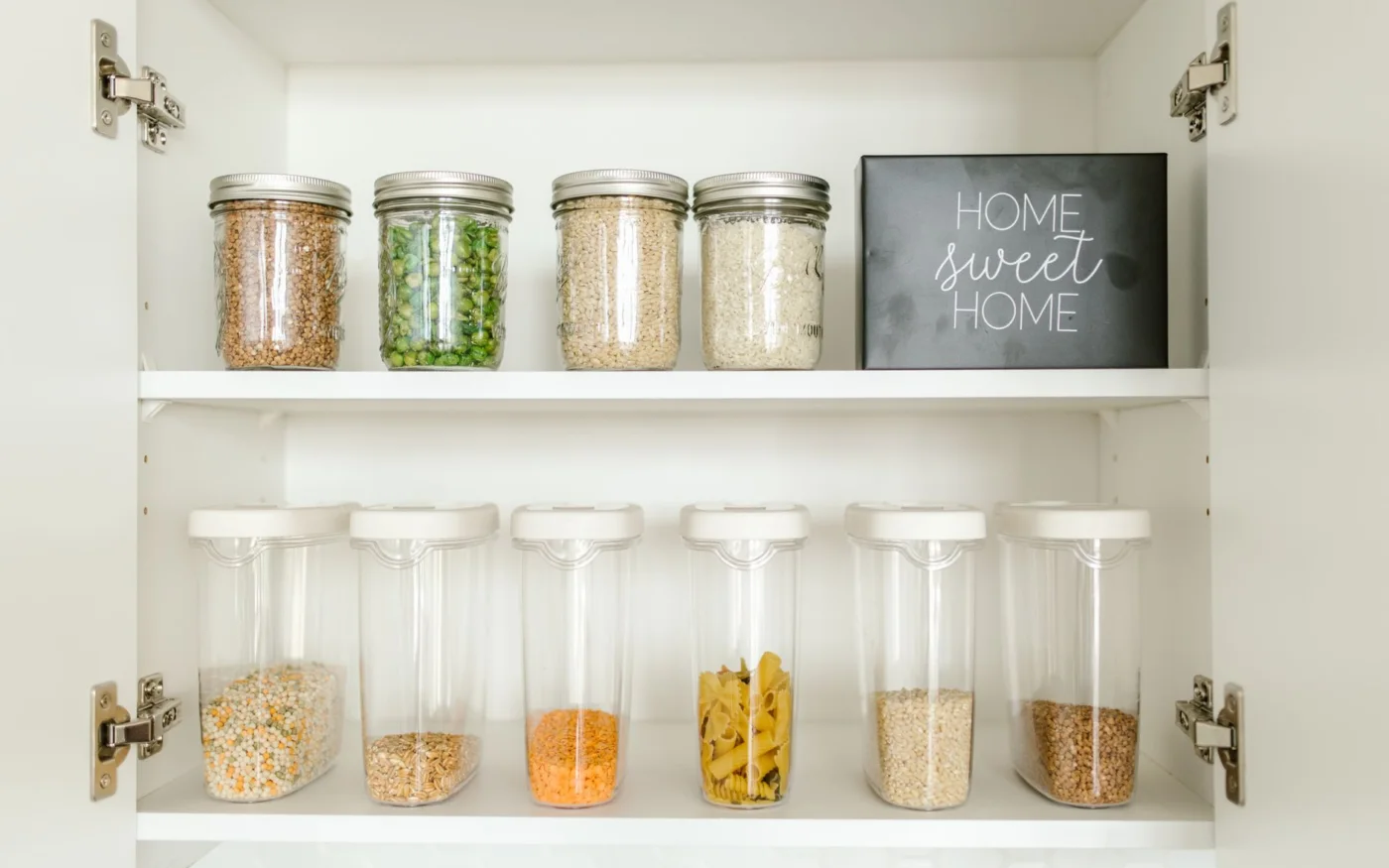

Fridge organization is usually sold as a photograph — matching containers,
decanted everything, labels in a nice font. That version looks excellent for
about four days and does nothing about the actual problem, which is that a
household throws away food it bought, paid for, and forgot.
The version that works is organised around temperature and visibility. Where
the cold actually sits, and what you can see without moving anything.
 Save
SaveWhy the door is the worst shelf you own
Every time the fridge opens, the door swings into a warm room. It is the
warmest part of the unit by a clear margin and its temperature swings the most,
which makes it the worst possible place for anything that spoils.
It is also, almost universally, where people keep the milk and the eggs — the
two items most affected. Condiments belong there. They are largely acid, salt
and sugar, and they do not care.
The bottom shelf is the coldest, which is why raw meat goes there — cold
enough to be safest, and low enough that if a packet leaks it cannot drip onto
anything below it.
The six fridge organization zones
-
Top shelf — leftovers and ready-to-eat
The most stable, visible shelf, so it holds the things that need eating and
need no further cooking. Leftovers in clear containers, opened deli items,
anything on its last two days.Clear containers matter here more than anywhere else. Opaque tubs are how
leftovers become archaeology. -
Middle shelf — dairy and eggs
Milk, yoghurt, cheese, butter, eggs. Cold and consistent, and out of the door
where they have been quietly spoiling early.Eggs stay in their box rather than in a moulded egg rack — the box protects
them, carries the date, and stops them absorbing odours through the shell. -
Bottom shelf — raw meat and fish, always
Coldest shelf, and nothing can drip onto anything from there. Keep it on a
tray or in a lipped container so a leaking packet is contained rather than
discovered later.This is the one rule on the list that is about safety rather than tidiness,
so it does not bend for a nicer layout. -
Drawers — one veg, one fruit, separated
Most fruit gives off ethylene as it ripens, and most vegetables ripen — which
is to say wilt — faster in response. Apples, pears, bananas and tomatoes are the
main offenders. Keeping them in a separate drawer from leaves and roots buys
real days.If your drawers have a humidity slider, high humidity for vegetables and low
for fruit is the right way round. -
Door — condiments, and nothing else
Ketchup, mustard, jam, pickles, dressings, hot sauce. Stable, preserved, and
entirely happy with a warmer shelf that opens twenty times a day. -
Front centre — the eat-first box
One open container, at eye level, holding whatever needs using in the next two
days. Half an onion, the last of the ham, three mushrooms, the yoghurt nobody
picked.This is the single highest-value thing on the list. Food is not usually thrown
away because it went off unexpectedly — it is thrown away because nobody saw it
until it had.
 Save
SaveThe temperature nobody checks
A fridge should run at or below 4°C / 40°F. A large share of home fridges do
not, because the dial is a number from one to five rather than a temperature, and
because a full fridge and an empty one behave differently.
Buy a fridge thermometer — they cost very little — and leave it on the middle
shelf. If it reads above 4°C, turn the dial up before reorganising anything,
because no amount of zoning compensates for a warm fridge.
The other common cause is airflow. Packing shelves solid blocks the vents at
the back, so the cold never circulates and the front runs several degrees warmer
than the back. Leave gaps.
What works
- Raw meat on the bottom shelf, on a tray
- Milk and eggs on the middle shelf
- An eat-first box at the front
- Fruit and veg in separate drawers
- A thermometer on the middle shelf
- Gaps left for airflow
What to watch
- Milk in the door
- Everything decanted into matching opaque tubs
- Fruit and vegetables in one drawer
- Shelves packed solid to the back
- Leftovers in containers you can't see into
- Reorganising a fridge that runs too warm
The twenty-minute reset
Do this once and then maintain it weekly.
Empty one shelf at a time, rather than the whole fridge onto
the counter. Wipe it, put back only what is still good, and move to the next.
Nothing spends long out of the cold and you can stop halfway without a disaster
on the worktop.
Bin honestly. Anything you have moved around three times
without using is not going to get used. That is information about what your
household actually eats, which is worth more than the item.
Set up the eat-first box last, and put into it everything
that made you hesitate.
Then five minutes before each shop: pull the eat-first box forward, check the
drawers, and write down what needs using. That is what makes it hold, and it
pairs naturally with the weekly top-up shop.
 Save
SaveWhat this is really worth
Household food waste is a large and almost invisible line in a family
budget — most of it fresh produce, dairy and leftovers, which is precisely what
these six zones govern.
Nothing here requires buying containers, though clear ones help. It requires
putting things where the cold is and where you can see them, which costs
nothing and does more for a grocery budget than switching
supermarkets.
The same logic applies next door — the freezer and
the pantry both waste food for the identical reason, which
is that nobody can see what is in the back.
Common questions
swings through room temperature every time it opens, which is exactly the
condition that shortens milk’s life. This is the single most common fridge
mistake and the easiest to fix.
packaging that was protecting the food. Clear containers are genuinely useful for
leftovers and cut fruit. Everything else can stay in what it came in.
the door opens. Packed solid is worse than empty, though, because it blocks the
vents at the back and the cold stops circulating. Full but with gaps is the
target.
job — pulling it out, cleaning the coils and behind — belongs on
the twice-yearly deep clean list rather than the weekly
routine.
Start with the door
Move the milk and the eggs to the middle shelf, and put a box at the front for
whatever needs eating this week. Two minutes.
Do the full six-zone reset the next time you shop, and check it during
your weekly reset — the fridge is one of the few places where
five minutes a week genuinely shows up in the grocery bill.


2 comments