

If you deep clean, it’s because the house got to a state that required it.
The deep clean isn’t the solution — it’s the symptom.
A weekly cleaning schedule that works isn’t a smaller version of a spring
clean. It’s a rhythm sized to a real weekday evening, arranged so the house
never reaches the point where a big clean becomes necessary.
 Save
SaveWhy a weekly cleaning schedule beats a big clean
Two reasons, and the second is the one people underestimate.
The obvious one: twenty minutes daily is easier to find than three hours
weekly, and far easier to sustain. Nobody cancels twenty minutes.
The less obvious one: dirt is cheaper to remove early. A shower cleaned weekly
takes four minutes and needs no chemistry. The same shower cleaned monthly takes
twenty and needs product. The schedule isn’t just spreading the same work out —
it’s reducing the total amount of work.
The schedule
-
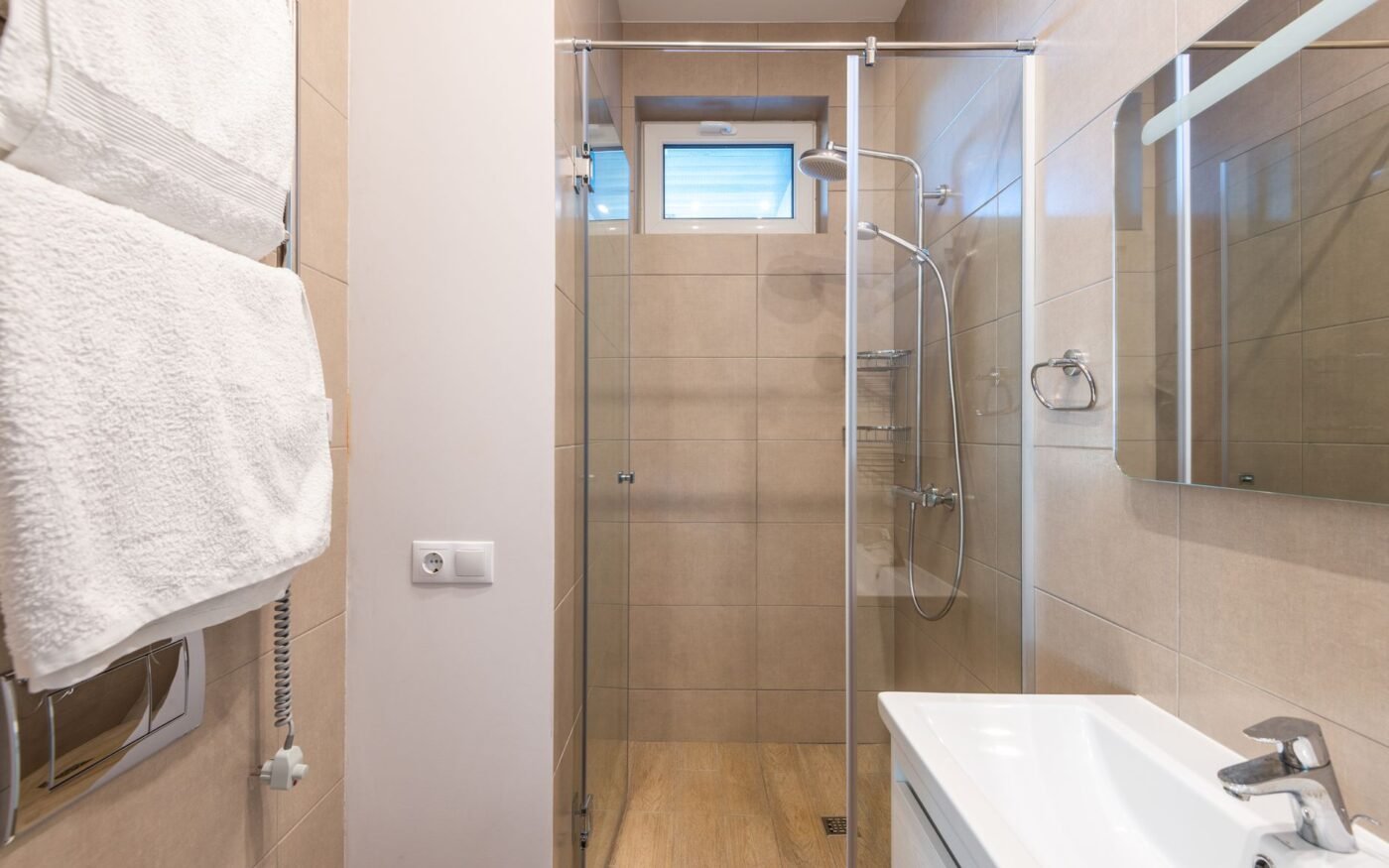
Monday — bathrooms
Toilets, sinks, shower, mirror, floor. Twenty minutes covers one bathroom
thoroughly or two quickly.Monday because bathrooms take the heaviest weekend use, and because doing
them before the floors means you aren’t walking bathroom dirt over clean floors. -
Tuesday — floors, everywhere
Vacuum the whole house, mop the hard floors. The only whole-house job in the
week and the one with the biggest visible payoff.Mid-week rather than Friday, so the house is at its best during the week when
you’re living in it, not just for weekend visitors. -
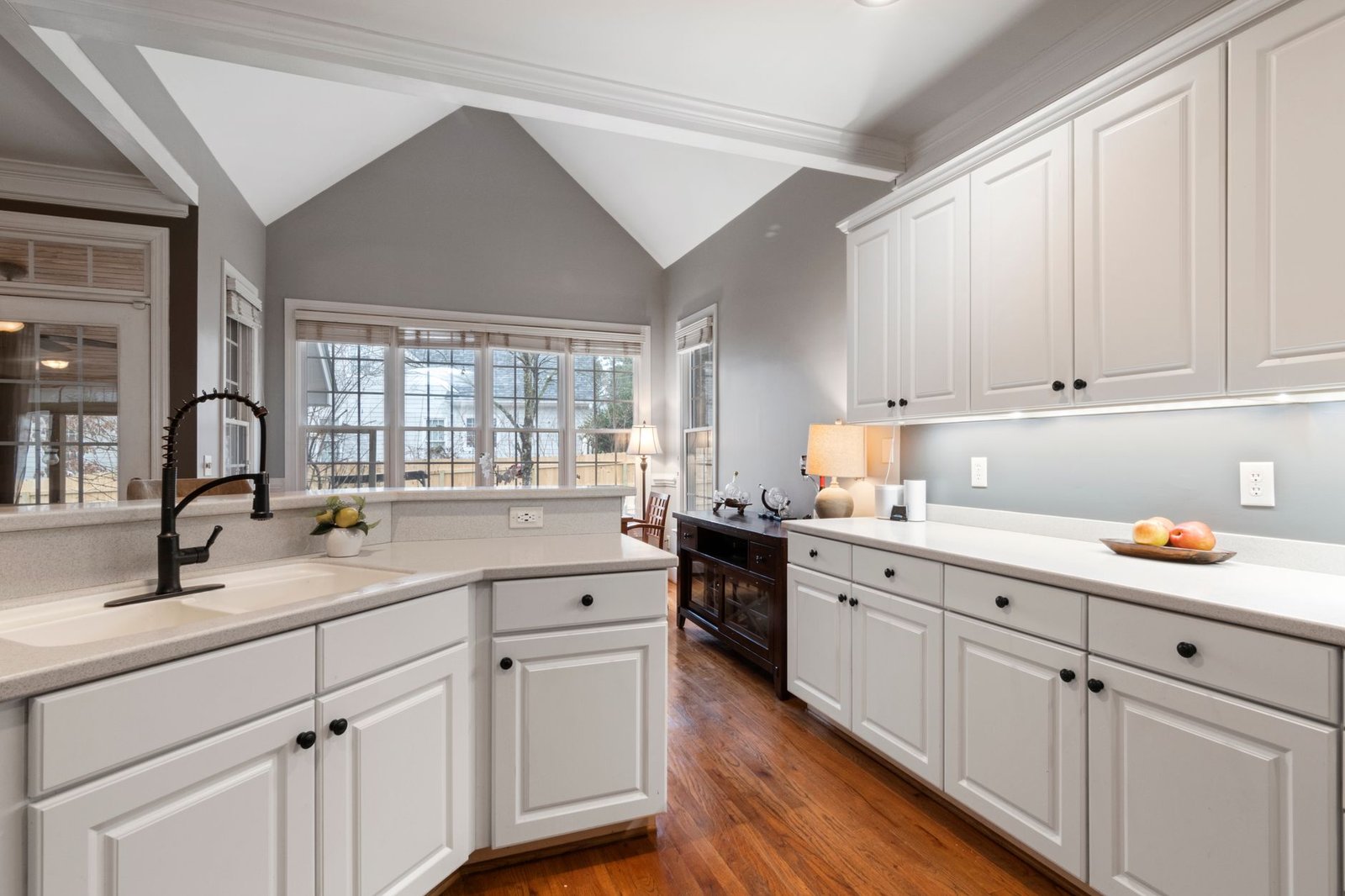
Wednesday — kitchen, beyond the daily
Your evening reset already handles the counter and
sink daily. Wednesday is the layer under that: fridge shelves, microwave,
stovetop, the front of the cabinets, the bin. -
Thursday — bedrooms and laundry
Sheets on one bed, surfaces cleared, floor clear enough to vacuum next
Tuesday. Rotate which bed gets fresh sheets if you have several. -
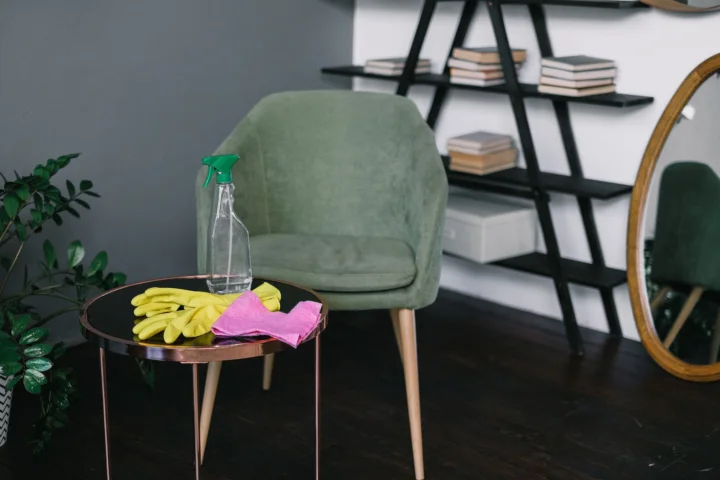
Friday — surfaces and glass
Dusting, mirrors, the glass in the doors, fingerprints. The cosmetic layer,
last, when the structural cleaning is already done.Friday also positions the house well for the weekend without anyone spending
the weekend cleaning.
 Save
SaveWhat is not weekly
Half the reason cleaning schedules feel crushing is that they include jobs
that don’t need doing anything like that often.
What works
- Bathrooms weekly
- Floors weekly
- Kitchen surfaces weekly
- Sheets weekly, rotating
- Dusting weekly
What to watch
- Baseboards
- Inside the oven
- Windows inside and out
- Light fixtures
- Behind and under furniture
- Cabinet interiors
Everything on the right is a quarterly job at most. Put them on a list, do one
per month when you happen to have a free hour, and stop carrying them as weekly
guilt.
The oven in particular: modern ovens mostly need doing twice a year unless
something dramatic happens, and cleaning it weekly is a good way to hate your
schedule.
 Save
SaveThe bad-week version
Some weeks you’ll do two zones out of five. The schedule needs to survive
that, so decide the priority now rather than in the moment.
If you only do two: bathrooms and floors. Those two carry
most of the actual hygiene and most of the visible difference. Everything else
is improvement on top.
And the daily layer matters more than the weekly one. If the four surfaces
from the four-surface rule are getting cleared each
evening, a missed cleaning zone barely registers. If they aren’t, no schedule
will make the house feel calm.
Weekly slots — the deeper pass, the laundry backlog, the paperwork — belong in
the Sunday reset, which is where anything that fell through
during the week gets picked up.
Common questions
times a week keeps a house genuinely acceptable. The five-zone version is an
optimization, not a requirement.
hall while I do the living room” works; “Tuesday is your day” mostly produces a
negotiation every Tuesday.
to something that already happens that day, it continues on autopilot. If you’re
relying on remembering, it will stop.
first two or three weeks will feel like twenty minutes isn’t enough, because
you’re still clearing backlog. After that it is.
Start Monday
Pick your five zones, attach each to something that already happens that day,
and start with bathrooms.
Then leave the quarterly list alone. That’s the part that makes this
sustainable — not doing more, but finally being allowed to do less.


2 comments