Most cleaning mistakes are not laziness. They are things people were taught,
or picked up from a video, that quietly move dirt around rather than removing
it — so the house takes longer to clean and ends up no cleaner.
Nine of them below, in rough order of how much difference fixing them makes.
None requires buying anything.
 Save
SaveThe cleaning mistakes worth fixing first
-
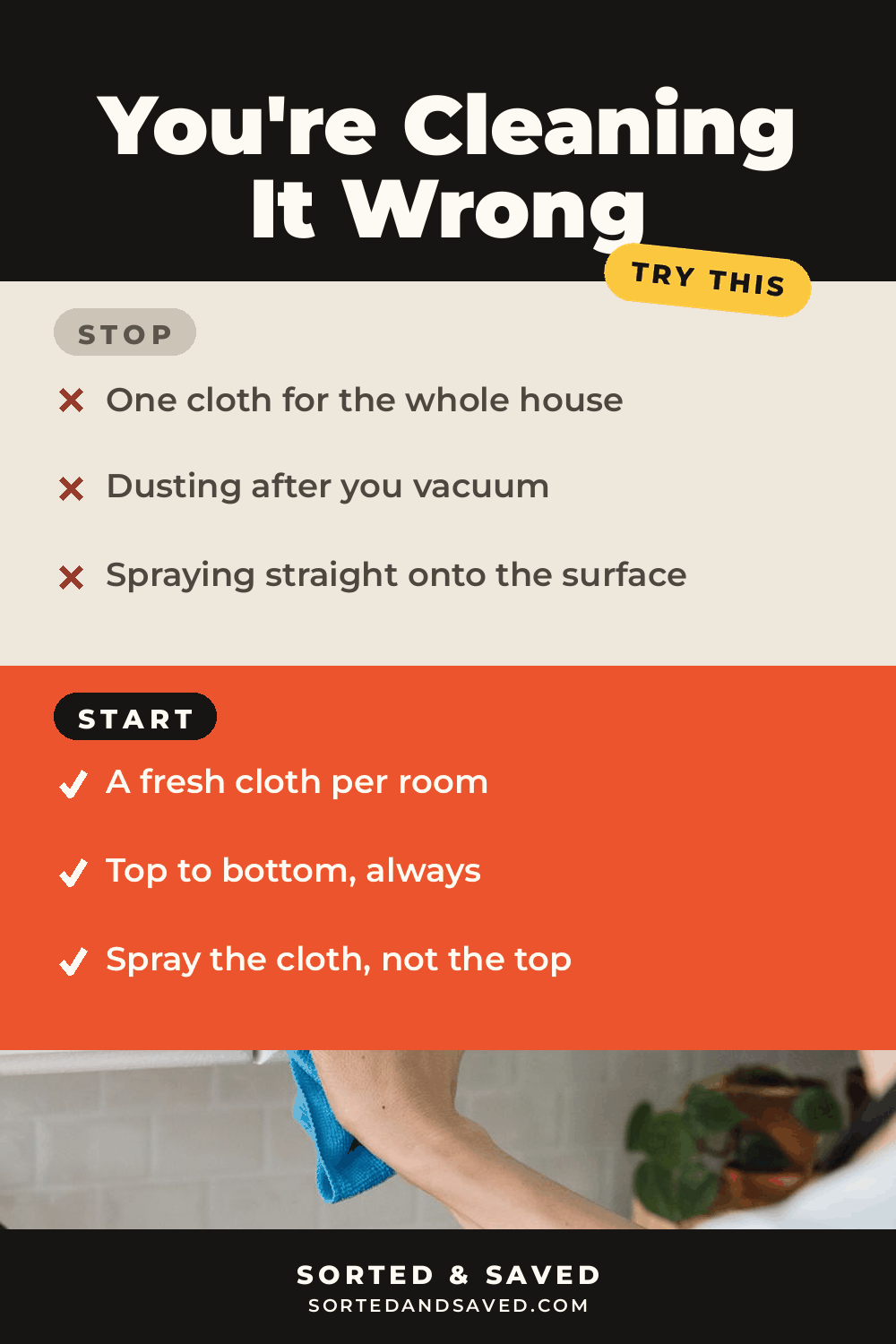
Cleaning bottom to top
Vacuum, then dust, and the dust lands on the floor you just did. Gravity is
not negotiable. High shelves, then surfaces, then skirting, then floors — always
in that order. -
Using one cloth everywhere
A cloth holds what it picks up. Carrying it from the bathroom to the kitchen
moves that somewhere considerably worse.A fresh cloth per room, colour-coded if that helps, and all of them washed on
a hot cycle afterwards. A cloth washed at 30°C is not clean, which is its own
small mistake sitting inside the laundry routine. -
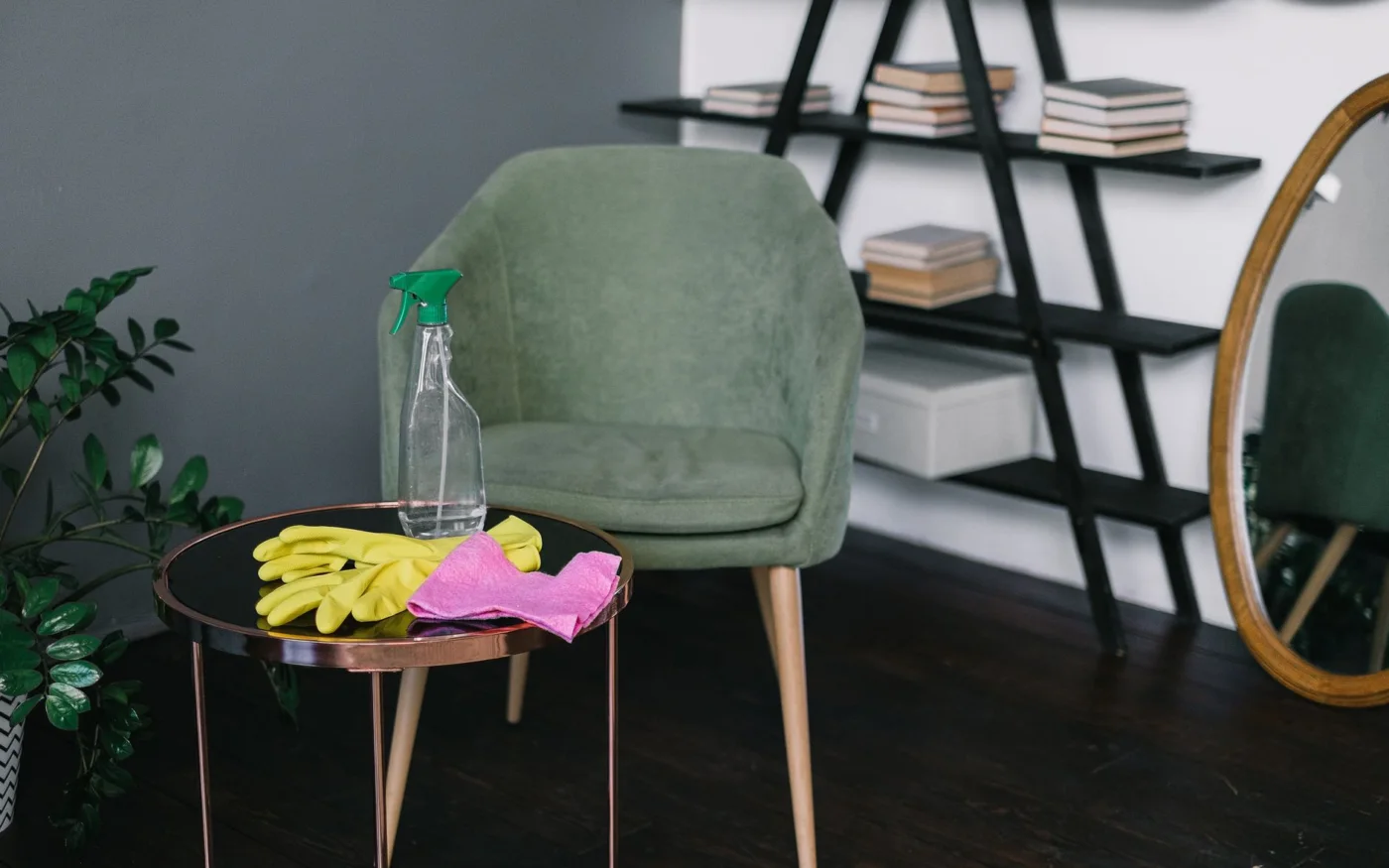
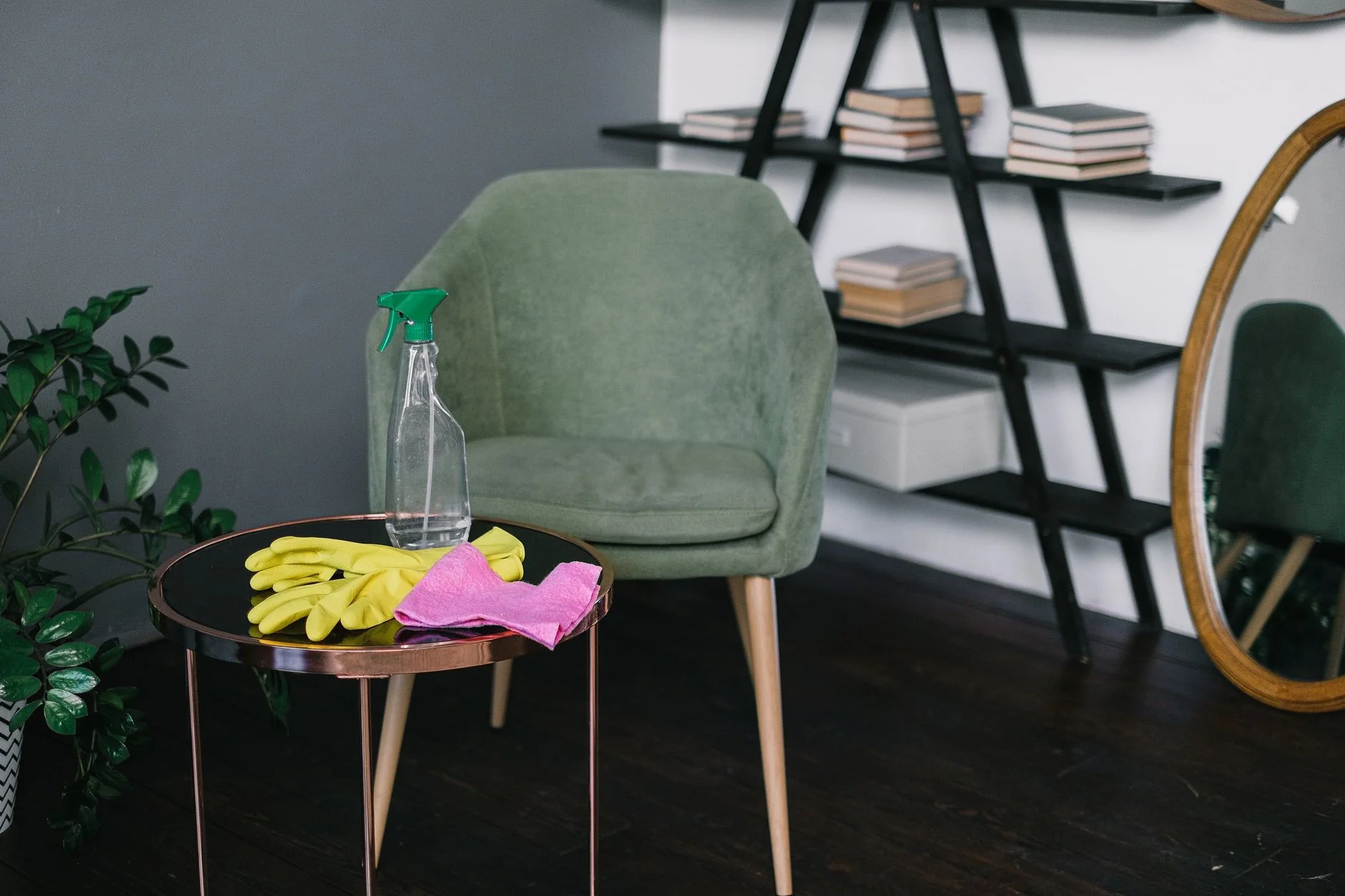
Spraying product straight onto the surface
It over-applies, runs down cupboard fronts, and leaves residue that attracts
dust — so the surface gets dirty faster than before. Spray the cloth instead.
You will use a fraction of the product and get no streaks. -
Not letting anything dwell
Disinfectants and limescale removers need contact time — often several
minutes — to do what the label claims. Spraying and immediately wiping is
spending the money without getting the effect.Spray everything in the room first, do something else, then come back and
wipe. It is faster overall, not slower. -
Cleaning around clutter
Wiping a shelf by moving eleven objects one at a time takes four times as
long and cleans less. Clear the surface completely, clean it, put back only what
belongs — which is the four surface rule doing the work
before the cleaning starts. -
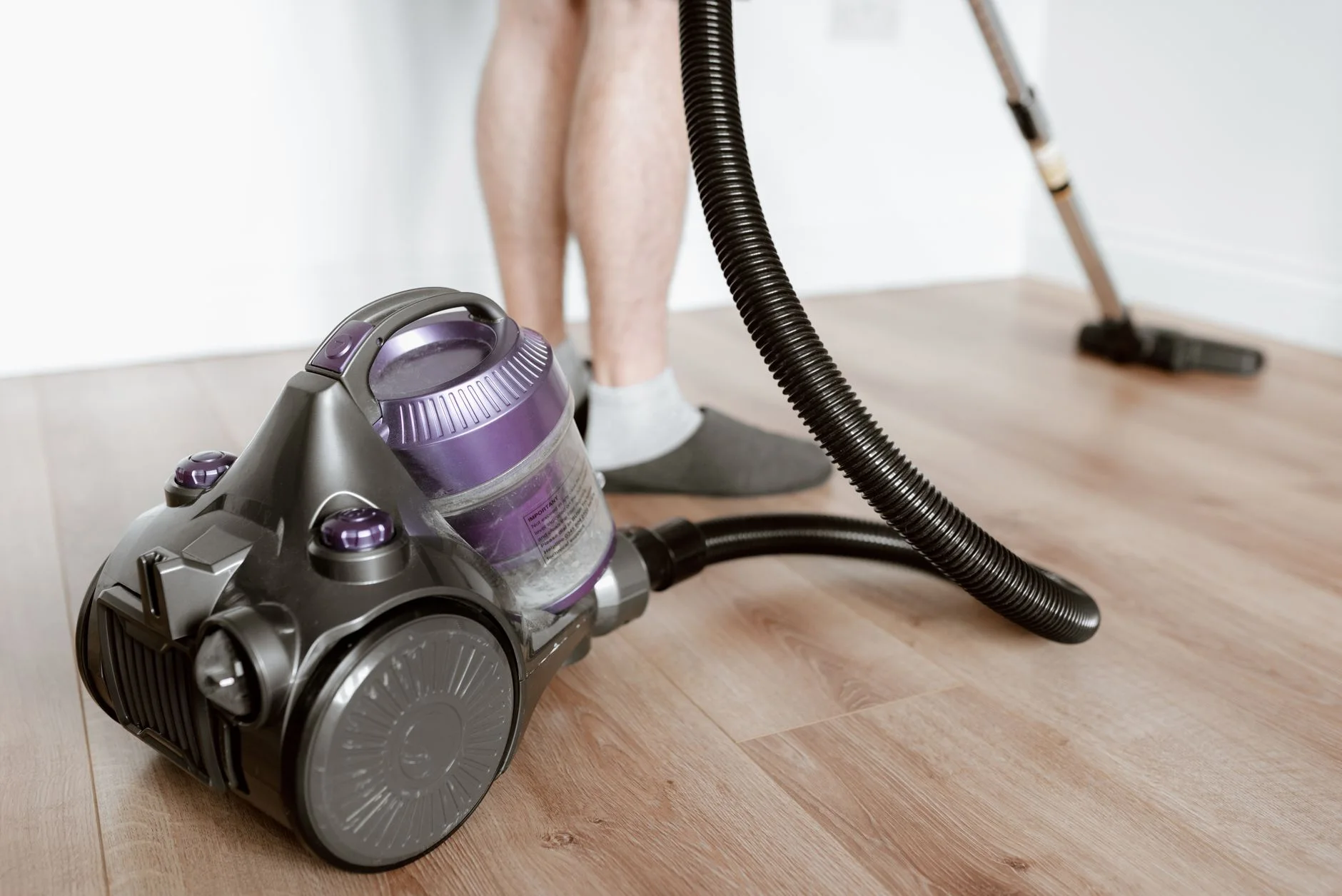
Ignoring the vacuum filter
A vacuum that has “lost suction” almost always has a full filter, not a dying
motor. It is also then blowing fine dust back into the room.Empty the canister when it reaches the line, not when it is packed, and wash
or replace the filter on the schedule in the manual. This one change makes more
difference than a new machine for most people. -
Mixing products
Bleach with ammonia, or bleach with any acid-based limescale remover, produces
genuinely dangerous gas. This is not a folk warning.Use one product, rinse, then the other if you must. Never in the same cloth,
the same bucket, or the same toilet bowl. Store them apart —
the cupboard under the sink is where this usually goes
wrong. -
Using too much detergent
In the washing machine, on floors, in the dishwasher. Excess detergent does
not rinse away — it stays as a film that holds dirt, so floors get sticky and
laundry comes out stiff and grey.Use the stated amount, then slightly less if you are in a soft water area.
-
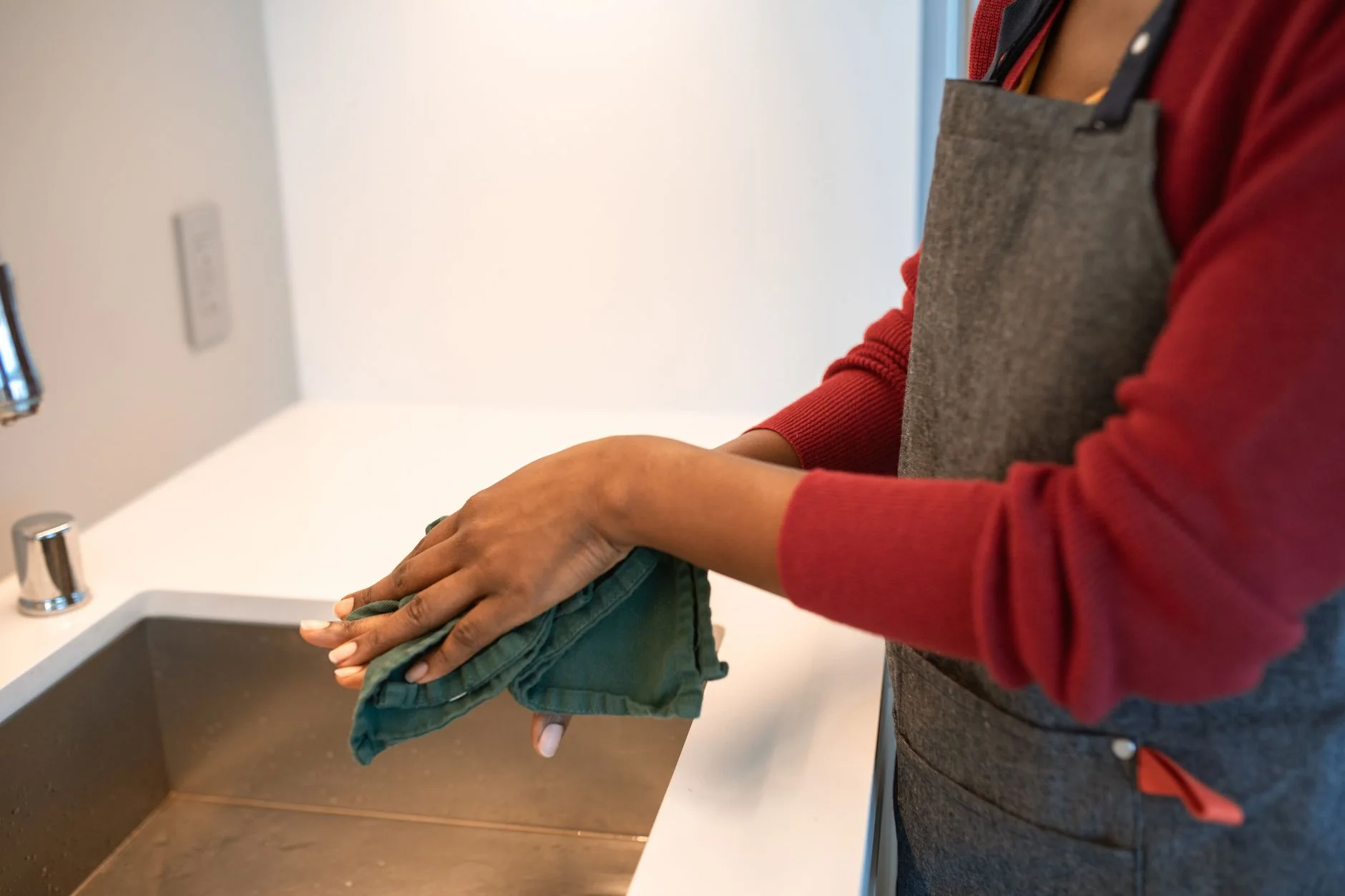
Leaving cloths and sponges wet
A damp cloth folded on the tap is the dirtiest object in most kitchens. Wring
them properly, spread them to dry, and replace sponges regularly rather than when
they smell.
 Save
SaveThe order that actually works
One pass per room, in this sequence, and nothing needs redoing:
- Clear the surfaces — everything off, so you clean the surface rather than around objects.
- Dust high to low — light fittings, shelves, furniture, skirting.
- Spray and leave — get the products on everything wet-work related, then wait.
- Wipe down — in the order you sprayed.
- Floors last — vacuum, then mop if needed.
The whole point is that nothing you have already cleaned gets dirtied by the
next step. Most people’s routine breaks that rule two or three times.
What works
- Top to bottom, floors last
- A fresh cloth for every room
- Spraying the cloth, not the surface
- Letting products dwell before wiping
- Clearing surfaces before cleaning them
- Emptying the vacuum at the line
What to watch
- Dusting after vacuuming
- One cloth for the whole house
- Drenching surfaces in product
- Spray and immediately wipe
- Cleaning around the clutter
- Mixing two products 'to be sure'
The two that are not really cleaning
Two habits do more for how a house feels than any technique.
Ventilate. Ten minutes of open windows removes more of what
makes a room feel stale than any spray, and it is what stops the damp and
condensation that turn into a much bigger job. The EPA’s
indoor
air quality guidance is clear that ventilation does more than any product,
particularly while cleaning products are in the air.
Reduce what there is to clean. Every object on a surface is
something to move, dust and put back, forever. Decluttering is not a separate
project from cleaning — it is the thing that makes cleaning fast, which is why
the households that always look tidy are rarely the
ones cleaning the most.
 Save
SaveWhat to do with the time you get back
Fixing the order alone typically takes a third off a full clean, because
nothing gets done twice. That is worth putting into the jobs a weekly routine
never reaches — filters, behind appliances, inside the machine — which live on
the twice-yearly deep clean list.
For the weekly rhythm itself, a zone-based schedule
beats a single long session, and the bathroom is worth a
dedicated look since it is where most of these mistakes
compound.
Common questions
surfaces. It guarantees you clean the same area twice and it is the reason a
thorough clean takes so much longer than it should.
Elsewhere, a fresh cloth per room is ideal but a rinse in hot water between rooms
is a reasonable compromise. What matters is that the bathroom cloth is separate
and washed hot.
there because it is the point at which the product actually works. Spraying and
wiping immediately gets you the smell and none of the effect.
products that genuinely earn their place are limescale removers, an oven cleaner,
and a proper disinfectant for the bathroom. Technique and order beat product on
almost everything else.
Change the order first
Before anything else, do one room top to bottom with floors last, and use a
cloth that started the day clean. That is two changes and it is most of the
value here.
Then fold it into your weekly reset so it becomes the way
you clean rather than something you remembered once.