The households whose homes always look presentable are almost never the ones
cleaning the most. They have a set of tidy house habits that stop mess forming in
the first place, so there is far less to deal with — and none of it looks like
effort from the outside.
Eight of them. Every one takes under two minutes, and not one is cleaning.
 Save
SaveThe eight tidy house habits
-
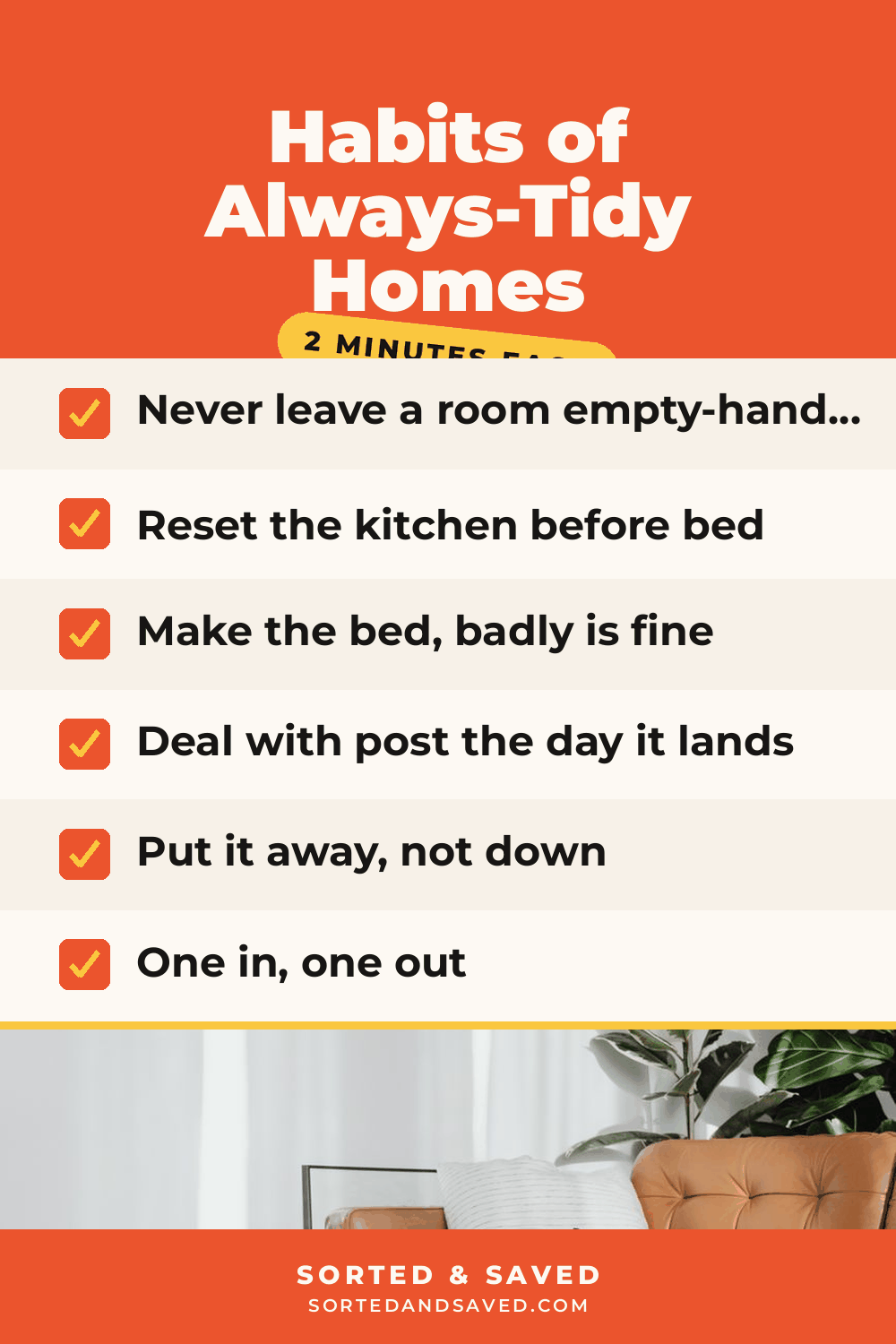
Put it away, not down
The whole thing in one line. Almost every mess in a house is an object that
was put down somewhere convenient instead of away where it
lives — and the difference in effort at the time is about four seconds.It only works if things have a place. If a shoe has no home, “away” does not
exist, and the shoe lives in the hall forever. -
Never leave a room empty-handed
Going upstairs? Take what belongs upstairs. Leaving the kitchen? Take the mug.
Over a day this moves a startling amount of stuff with no dedicated time at all.It is the single easiest habit to install because it attaches to something you
were doing anyway. -
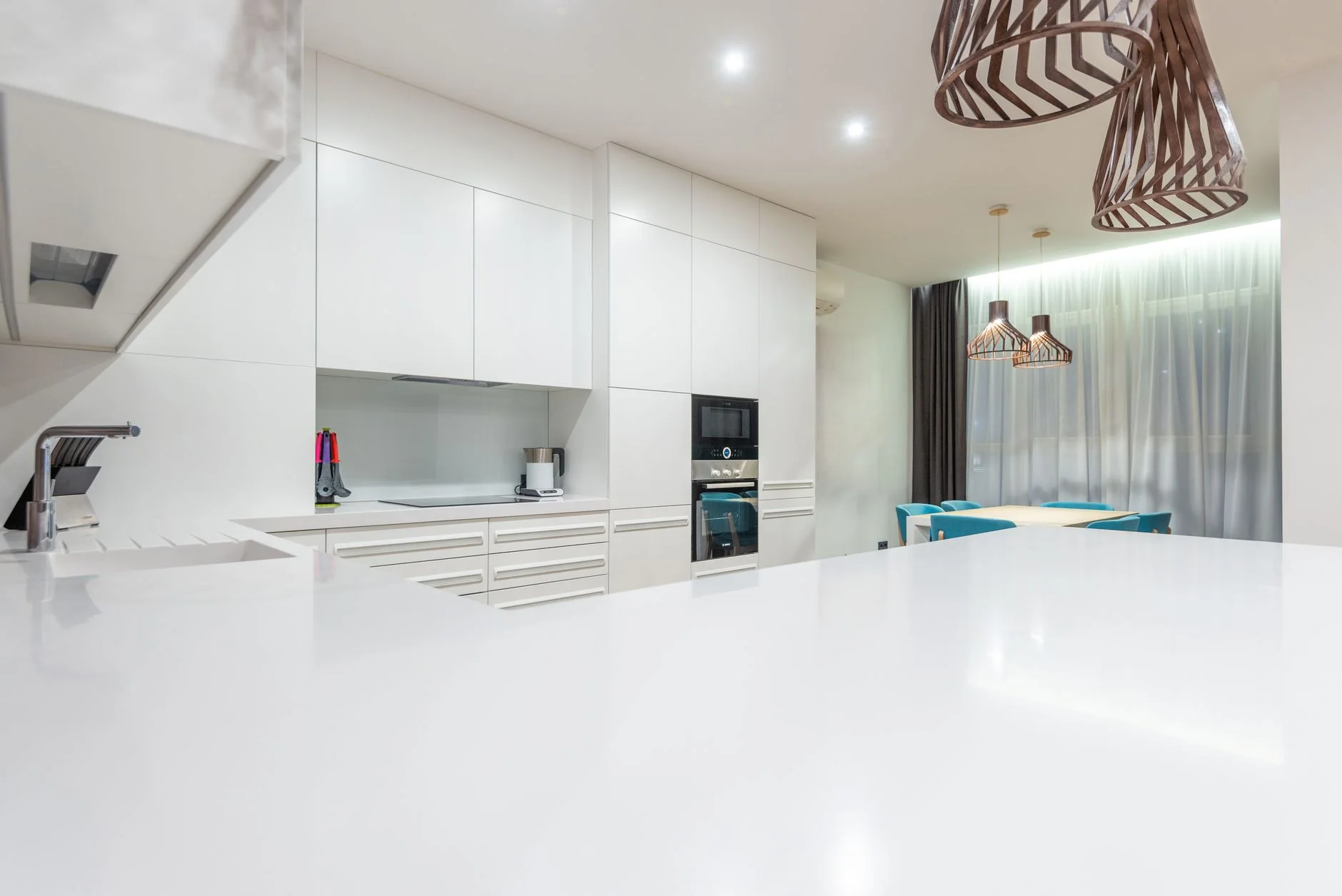
Reset the kitchen before bed
Dishwasher on, sink empty, counters clear, one wipe. Ten minutes at the
absolute most.Waking up to a clean kitchen changes the whole morning, and a dirty one
guarantees the day starts behind. If only one habit here survives, make it this
one — it anchors the evening reset. -
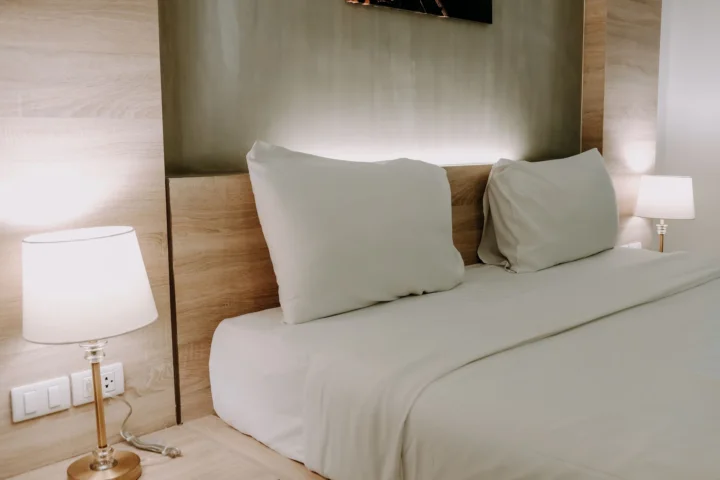
Make the bed, badly if necessary
Duvet pulled up, pillows straightened, thirty seconds. Not hotel standard.
The bed is most of the visual field in a bedroom, so a made bed makes an
otherwise untouched room read as tidy. It is the highest ratio of appearance to
effort anywhere in the house. -
Deal with post the day it lands
Standing next to the recycling bin. Junk goes straight in. Anything needing
action goes in one tray. Nothing gets put on a worktop “for later”.Paper is uniquely bad because it arrives daily and never runs out — it is the
category most likely to defeat an otherwise tidy house, which is why
it needs a system rather than willpower. -
Do a two-minute pass before you sit down
Evening, before the sofa. Walk through the main rooms putting things back —
not cleaning, not tidying properly, just returning objects to where they live.Two minutes daily is what stops the Saturday from becoming a four-hour job,
and it is the same mechanism as the four surface rule. -
Clear the drop zone every day
The spot by the door where bags, shoes, keys and post land. It is the first
thing anyone sees and it fills fastest.Ninety seconds every evening keeps it functional. Left a week, it stops being
a drop zone and becomes a barricade — the entryway
system is what makes it survivable. -
One in, one out
New mug in, old mug out. New toy in, old toy out. It is the only habit here
that reduces the total rather than relocating it.Without it, every other habit slowly gets harder, because the same two minutes
has to handle more objects each year.
 Save
SaveWhy this beats cleaning harder
Mess is not a cleanliness problem. A house can be genuinely clean — surfaces
disinfected, floors done — and still look chaotic, because tidiness is about
where objects are, not how clean they are.
Which is good news: putting things away requires no products, no time slot and
no motivation, and it is what people actually notice when they walk in. It also
makes the real cleaning faster, since cleaning around
clutter is one of the biggest time sinks there is.
What works
- Putting things away rather than down
- Taking something every time you leave a room
- A kitchen reset every night
- The bed made, however roughly
- Post handled at the recycling bin
- One habit at a time, for two weeks
What to watch
- Putting things down 'just for now'
- Leaving the kitchen until morning
- Saving all tidying for the weekend
- Making the bed perfectly or not at all
- A post pile on the worktop
- Trying to install all eight on Monday
Getting everyone else doing it
Habits that only one person in a household follows do not keep a house tidy —
they keep one person tired and resentful.
Give everything a place, and label it if needed. Nobody can
put something away if they do not know where away is. Most “they won’t tidy up”
problems are actually “they don’t know where it goes” problems.
Make the rules specific and visible. “Tidy up” is an
argument. “Shoes on the rack, bag on the hook, plate in the dishwasher” is an
instruction anyone can follow, which is exactly why
chore charts outperform verbal reminders.
Do the evening pass together. Two minutes, everyone, at the
same time. Considerably faster and it stops it being one person’s job by
default.
 Save
SaveThe habit underneath all of them
Every one of these gets easier the fewer things you own, and harder every year
you accumulate. Two minutes handles a room with twelve stray objects; it cannot
handle one with forty.
So if the habits keep failing, the problem is usually volume rather than
discipline. The no-decision declutter list is the
fastest way to change that, and it is worth doing before concluding you are
simply an untidy person. Most of what leaves need not be thrown away either —
the EPA’s
waste
and recycling figures show how much household discard is reusable.
Then the weekly and seasonal jobs sit on top —
a cleaning schedule for the actual cleaning, and
a weekly reset to catch whatever the daily habits missed.
Common questions
affects how the house feels, and waking up to a clear kitchen makes every other
habit more likely to happen. Add a second only once that one is automatic.
a time matters. The two-minute evening pass tends to stick fastest because it is
short and the result is immediately visible.
than lidded boxes, everything at their height, and the evening pass done together
as a game with a timer. The house will not be tidy at 4pm and that is not the
target.
than a general expectation of tidiness. If it is still one-sided, that is a
conversation about fairness rather than a tidying problem, and no system will fix
it on its own.
Start tonight, with the kitchen
Dishwasher on, sink empty, counters clear. Ten minutes before bed, tonight
and tomorrow and the night after.
Do only that for two weeks. It is the habit everything else hangs off, and
most people find the two-minute pass installs itself once the kitchen is already
happening.