
Almost every bathroom organization problem is a volume problem wearing a
storage costume. The room is small, yes — but it is also holding three
half-finished shampoos, a decade of hotel samples, and sunscreen that expired
two summers ago.
Buying baskets before dealing with that just gives the same volume a tidier
silhouette. Throw things out first, and a surprising number of small bathrooms
turn out to have enough storage after all.
 Save
SaveThe throw-out pass
Everything out, onto a towel on the floor. Twenty minutes, and be ruthless
about five categories.
- Anything expired. Sunscreen and anything medicinal genuinely stop working. Check the small open-jar symbol on cosmetics — it shows the months of use after opening.
- Samples. If it has been there a year unused, a year from now will be the same.
- Products you disliked. Keeping a shampoo you hate because it cost money means paying for it twice — once in cash and once in shelf space.
- Dried out, separated, or smelling different from when you bought it.
- Duplicates beyond one backup. Four shower gels is not a stockpile, it is a queue.
This is the same principle as the declutter challenge
generally: the volume has to come down before any container helps.
The four zones of bathroom organization
-
Daily, at arm’s reach
Toothbrush, toothpaste, face wash, deodorant, whatever is used every single
morning. This zone should be small — genuinely daily items usually number under
ten across the whole household.Arm’s reach means the medicine cabinet or a shelf you can touch without
moving. Everything competing for that space that is not daily gets moved. -
Weekly, one step away
Razors, masks, nail things, hair tools. Under the sink or a lower drawer.
Close enough to be convenient, far enough not to crowd the daily zone. -
Backup stock, out of the bathroom entirely
Spare shampoo, bulk toilet paper, extra soap. This is the zone that ruins
small bathrooms — it does not need to be in the room at all.A linen closet or a shelf elsewhere works, and it is the same reasoning as
organizing kitchen cabinets by zone: store things where
they are used, and store backups where there is space. -
Medical, high and separate
Medicines, first aid, anything with a dose. High up, out of reach of children,
and not mixed in with cosmetics.Worth knowing: a steamy bathroom is a poor place for many medications, and
the label usually says so. A kitchen or bedroom cabinet is frequently the
better location despite the name “medicine cabinet”.
 Save
SaveVertical space, which is where the storage actually is
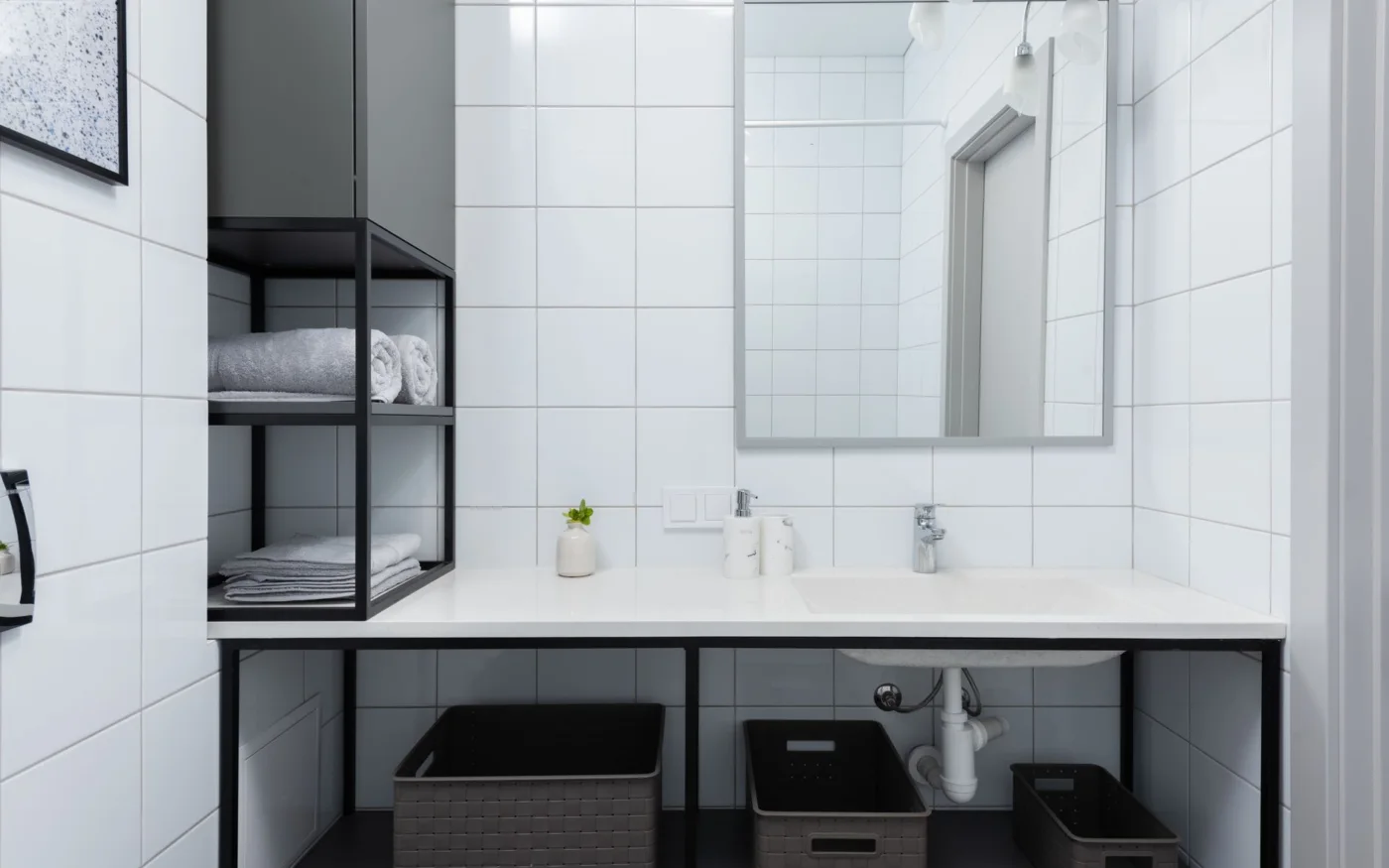
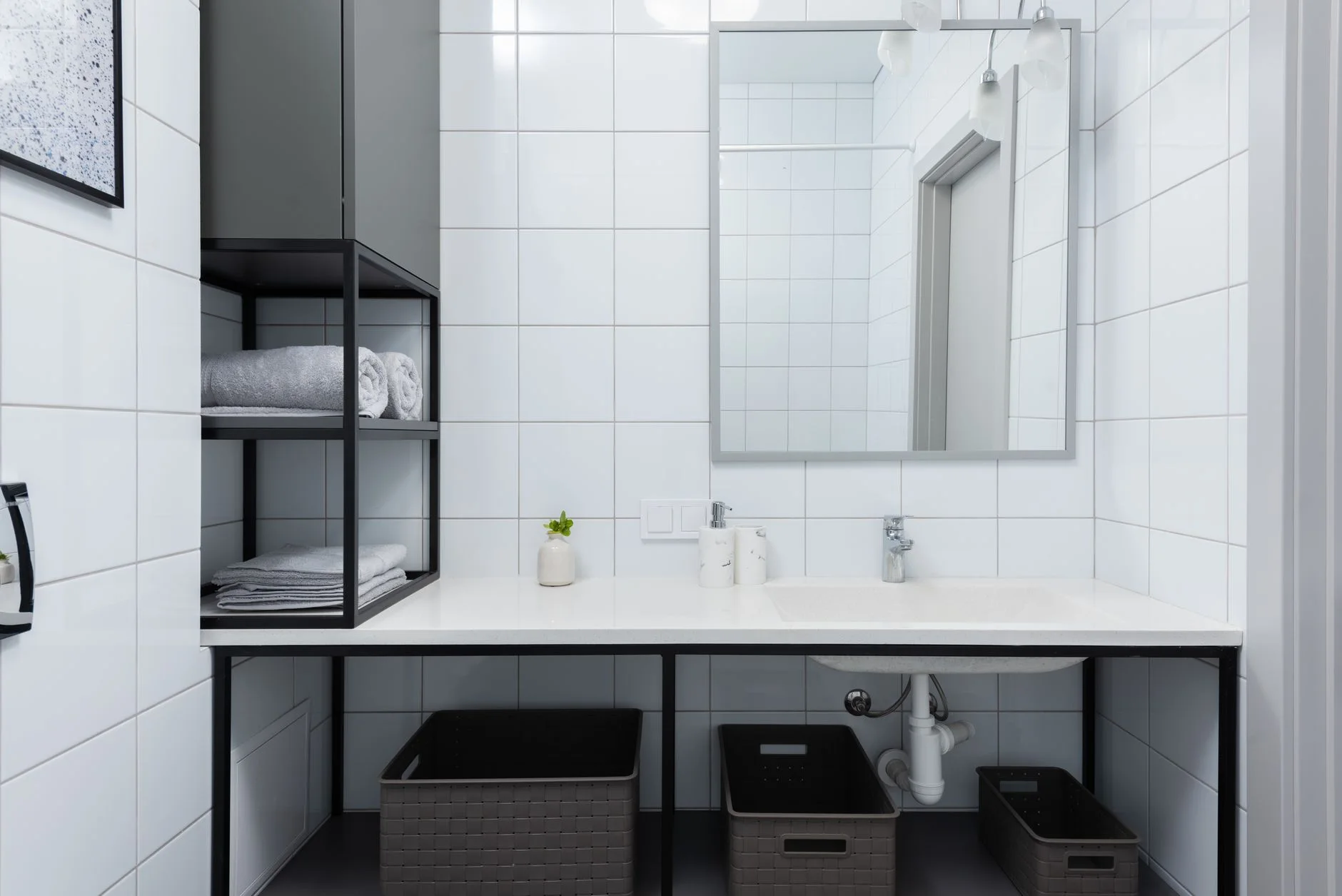
Small bathrooms have almost no floor and almost no counter, and usually a
large amount of unused wall between eye level and the ceiling.
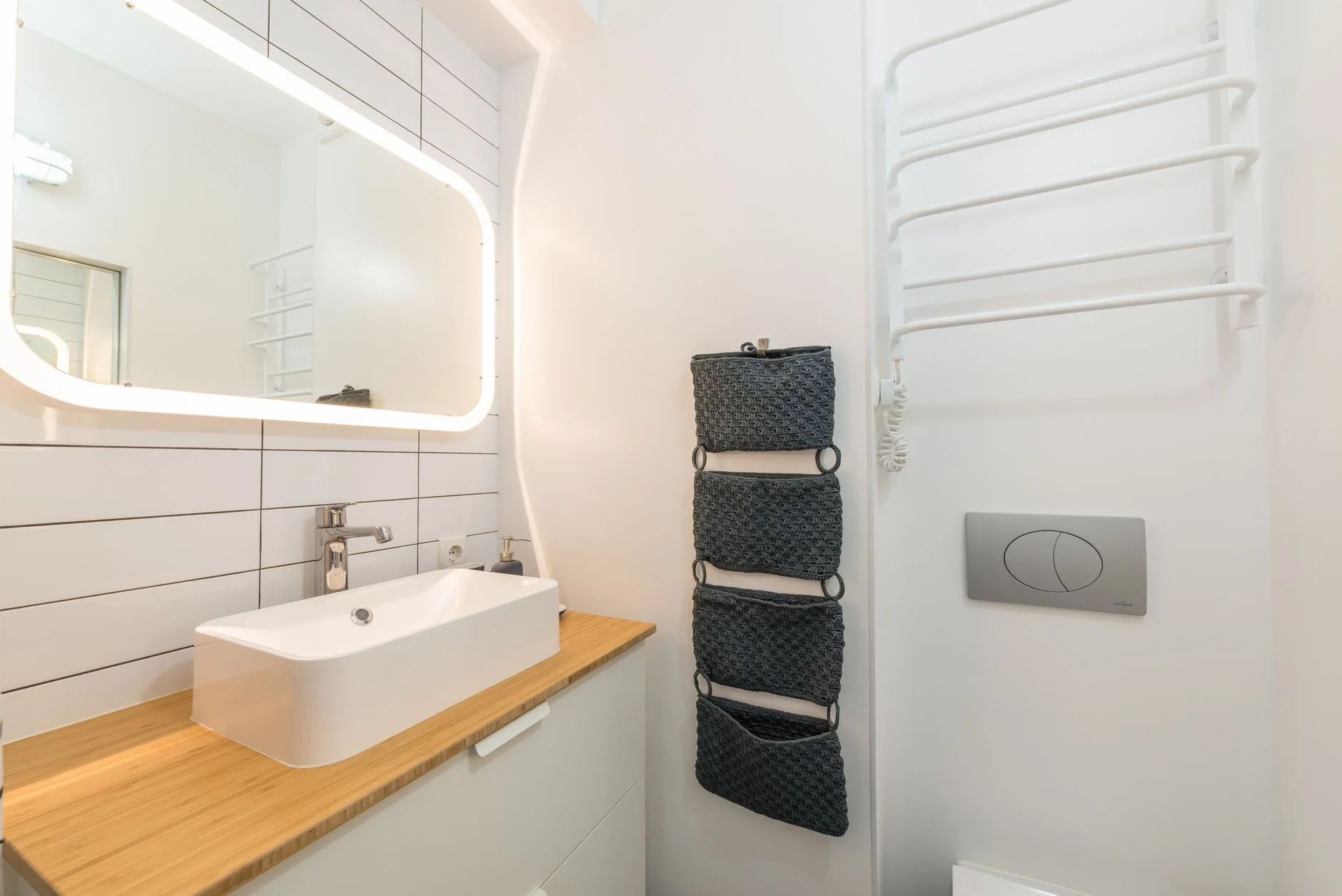
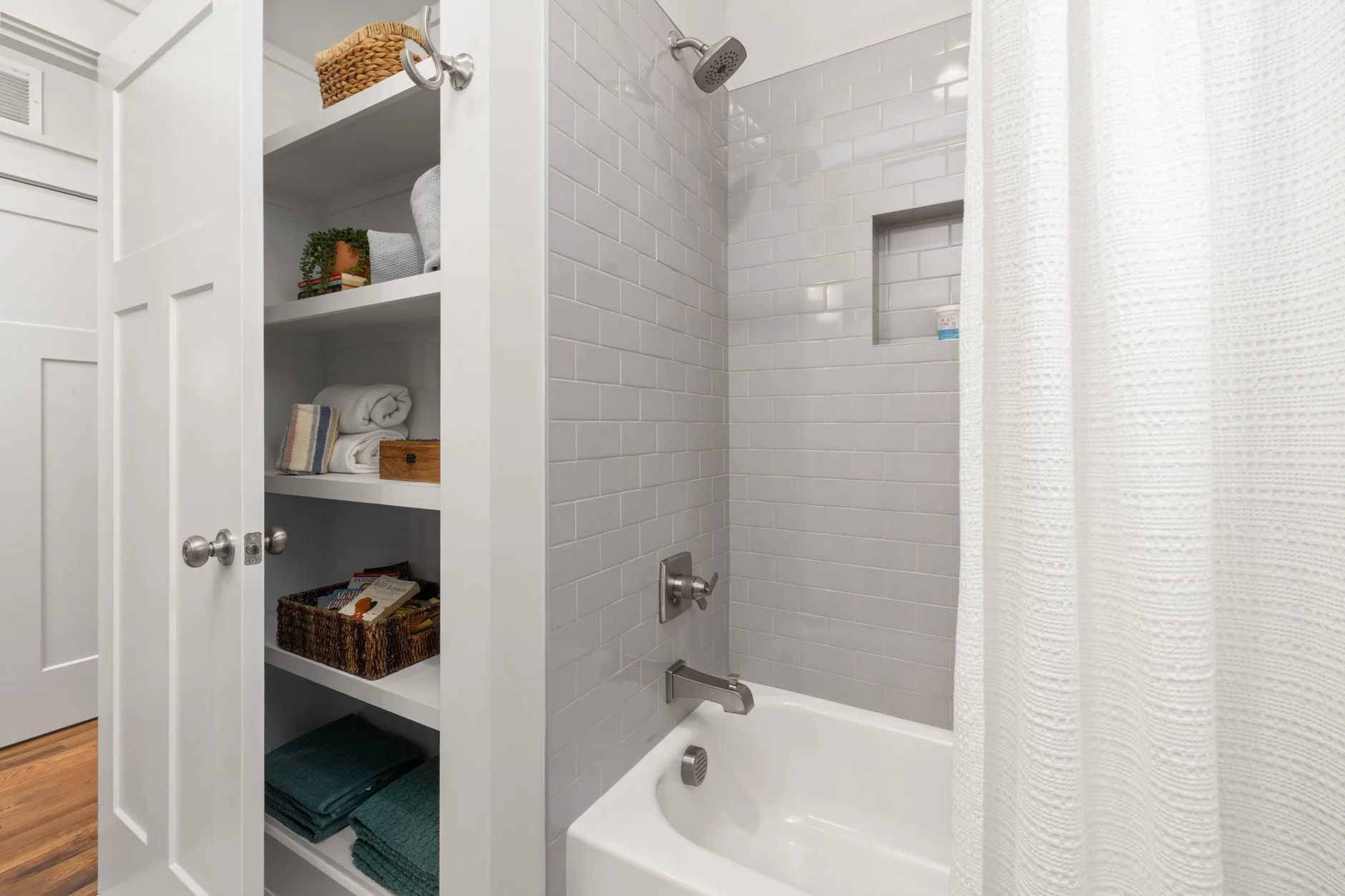
- Over the door. An over-door rack holds towels or baskets and costs no floor space and no drilling.
- Above the toilet. The most reliably wasted rectangle in any bathroom.
- Inside the cabinet door. Adhesive holders on the inside of a vanity door hold small things that otherwise go loose in a drawer.
- Tension rod under the sink. Hangs spray bottles by their trigger, which frees the whole floor of the cabinet.
- Stacked shallow bins rather than one deep one. Deep containers become archaeology; things at the bottom are functionally gone.
If you rent, all five of those work without a single hole in a wall — which
is worth checking before buying anything that needs mounting.
What works
- Decluttering before buying storage
- Zones by frequency of use
- Backups stored outside the room
- Shallow bins over deep ones
- Vertical and over-door space
- Medicines high and separate
What to watch
- Buying baskets first
- Sorting by product type
- Bulk stock on bathroom shelves
- One deep bin under the sink
- Storing medicine in a steamy room
- Keeping products you dislike
Keeping it that way
The bathroom counter is one of the surfaces that decides whether a house feels
tidy, which is why it appears in the four-surface rule.
Clearing it takes under a minute and it is visible immediately.
Beyond that, two habits hold it: one in one out on products, and a two-minute
wipe as part of the weekly cleaning schedule. A quarterly
check for expiry dates during a Sunday reset catches the slow
accumulation before it becomes another twenty-minute job.
 Save
SaveCommon questions
the months the product is good for after opening, not after purchase. Sunscreen
and anything medicinal have proper expiry dates and genuinely stop being
effective, so those are worth checking first.
despite the name. Heat and humidity degrade many medications, and the label will
often specify storage conditions. A high kitchen cabinet is frequently better.
toilet adds real capacity without touching the floor, and moving all backup
stock elsewhere usually frees more space than any product you could buy.
prevents it becoming a big job, which is the difference between maintenance and
another project.
Start with a towel on the floor
Empty the cabinet onto it and throw out everything expired. That pass alone
takes twenty minutes and usually removes a third of the contents.
Decide what to buy afterwards, when you can see how much space you actually
have.


4 comments