Halloween on a budget is not really a frugality problem. Almost nobody
decides to spend a lot on Halloween — it arrives in four or five small
purchases across three weeks, none of which felt like a decision.
Which is good news, because four capped lines are much easier to manage than
one act of willpower in a costume aisle.
 Save
SaveHalloween on a budget: where the money actually goes
The National Retail Federation
publishes
annual data on Halloween spending, and the pattern is consistent: the total
splits fairly evenly across costumes, candy, and decorations, with food behind
them. No single line dominates.
That is exactly why it creeps. There is no obvious villain to cut — just four
medium lines that each feel reasonable in isolation.
So set a cap on each one rather than one number for Halloween overall. A
single total gets consumed by whichever purchase happens first, usually costumes
in mid-September, leaving nothing for the rest.
Costumes
-
Ask in September, not October
Children change their minds, and they change them less the closer you get.
Asking early gives you time to make or find something instead of buying whatever
is left in the right size. -
Check what you already own first
The costume box, the dress-up bin, last year’s outfit on a younger sibling.
This is worth doing before any shopping and it is a natural companion to
the seasonal clothes changeover, since you are already
handling everything in the closet. -
Swap before you buy
Costume swaps between families cost nothing and solve the fundamental problem,
which is that a costume is worn once. A local group or a few friends covers most
sizes. -
Build from clothes that stay in rotation
Black clothes plus one accessory covers an enormous number of costumes. The
spend goes on the accessory, and the rest goes back in the closet on November
first rather than into a bag in the attic.
 Save
SaveCandy, decorations, and food
Candy: buy it last. Bought in early October it gets eaten and
replaced, which is a full double purchase. Buy it in the final few days, buy
slightly less than you think, and accept the small risk of running out over the
certainty of buying twice.
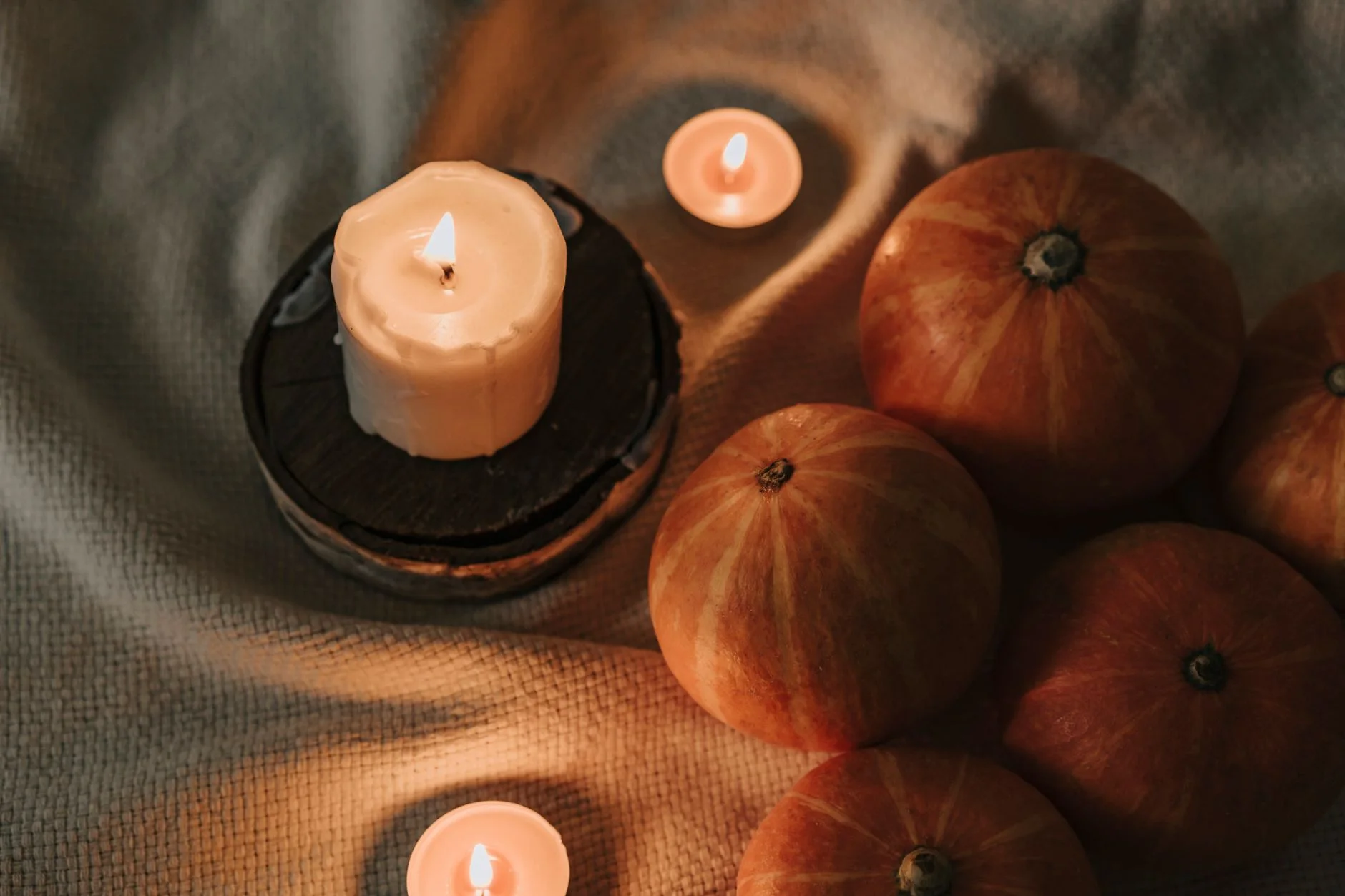
Decorations: buy nothing new this year, or buy one thing.
Decorations are the line with the worst cost-per-use ratio and the best
alternatives — pumpkins, leaves, and candles cost very little and read as
seasonal rather than as Halloween specifically, which means they earn their keep
through November too. That overlaps neatly with
the fall reset.
Food: plan it as dinner. The most common Halloween food
mistake is treating it as an extra meal on top of the week’s plan rather than as
one of the meals in it. Something in the slow cooker before trick-or-treating is
both cheaper and calmer than takeout afterwards.
What works
- A cap per line, not one total
- Deciding costumes in September
- Swapping costumes between families
- Buying candy in the last few days
- Seasonal decor that lasts to November
- Halloween dinner planned into the week
What to watch
- One combined Halloween budget
- Leaving costumes to October
- Buying candy early
- Halloween-only decorations
- Takeout after trick-or-treating
- Buying a costume for an adult who will wear it once
The one thing worth spending on
Pick the part your household actually remembers and put the money there.
For most families that is the costume the child genuinely wanted, or the
pumpkin carving, or having people over. It is almost never the decorations.
Spending properly on one thing and improvising the other three produces a better
Halloween than spreading the same money evenly across all four.
 Save
SaveWhere the money should come from
Not from the month’s grocery budget, which is what usually happens and is why
late October feels tight.
Halloween is entirely predictable, which makes it a textbook
sinking fund — a small amount set aside monthly means
October costs nothing extra. The same applies to the much larger version of this
problem a few weeks later, which is what
the Christmas budget exists for.
If it is too late for that this year, a short
no-spend stretch in the first half of October covers it
without touching anything else.
Common questions
else. The number matters much less than it being chosen before October rather
than discovered afterwards.
toward whatever you like. A number with a decision attached lands very
differently from a refusal, and children handle it better than adults expect.
much cheaper. A costume made from craft supplies bought specially often costs
more than buying one, and takes an evening.
early it gets eaten and replaced, and the second purchase is the one that breaks
the line.
Set the four caps this week
Write down a number for costumes, candy, decorations, and food. Four numbers,
five minutes, during your Sunday reset.
Doing that in September is the entire difference between Halloween costing
what you chose and Halloween costing whatever it happened to cost.