

Seasonal clothes storage has one job: what goes away in October should come
back in April in the same condition. Most of the time it doesn’t — things emerge
stained, holed, yellowed, or smelling strongly of wherever they spent the
winter.
None of that happens in storage. It is all decided in the twenty minutes when
the clothes go in.
 Save
SaveDeclutter first, store second
Do not store anything you would not choose to wear next season. Putting a
disliked sweater in a box means paying storage space for it and then having the
same conversation in six months.
The changeover is the best possible moment for this, because you are handling
every item anyway. A short pass using the questions from
a closet declutter costs twenty extra minutes and reduces
the volume you are about to box up — which is the actual goal.
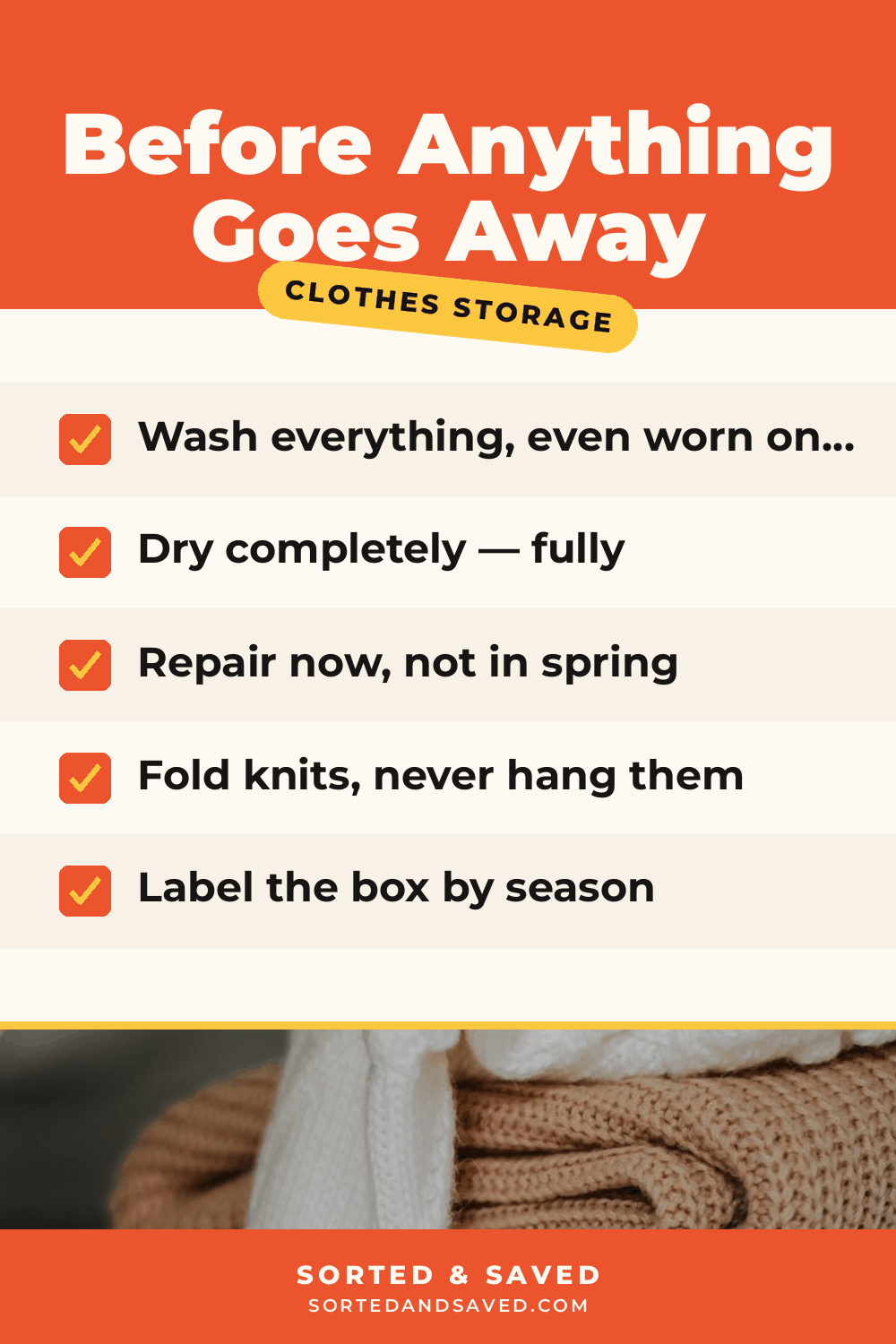
What to do before anything goes in a box
-
Wash everything, even things worn once
This is the step most often skipped and it matters most. Body oils, deodorant,
and food traces are frequently invisible on the day and oxidize into brown marks
over months — which is why stains appear on garments that were “clean” when they
went away.They also attract the insects that eat clothing. Clothes moths are drawn to
soiled natural fibers far more than clean ones. -
Dry completely — more than you think
Any residual moisture in a sealed container becomes mildew, and mildew on
fabric is frequently permanent. If something feels even slightly cool to the
touch, it is not dry. -
Repair now
The missing button, the small hole, the loose hem. A small hole becomes a
large one in storage, and a repair deferred to spring means the garment is
unwearable exactly when you want it. -
Fold knitwear, hang structured pieces
Anything knitted goes flat — months on a hanger stretches shoulders into
permanent points. Coats and structured jackets keep their shape better hanging,
ideally in breathable garment bags rather than plastic.
 Save
SaveWhat to use for seasonal clothes storage
Breathable containers for natural fibers — cotton bags,
fabric boxes, or plastic bins that are not fully airtight. Wool and cotton need
some air exchange; sealed plastic traps whatever moisture was already there.
Rigid boxes over bags for anything stacked, because vacuum
bags crush the loft out of wool and down. Vacuum storage is excellent for bulk
and poor for anything you want to stay fluffy.
Cedar or lavender rather than mothballs for most households.
Mothballs are a pesticide with real handling requirements and a smell that
persists in fabric for a very long time.
On moths specifically, the University of Kentucky’s
entomology
guidance on clothes moths is the useful reference — cleaning before storage
does most of the work, and cedar is far less effective than it is marketed to
be.
The two places clothes should never go
The attic. Temperature swings from freezing to very hot
across a year, and that cycling degrades fibers and elastic faster than steady
warmth would. It is also where pests live.
The basement or garage. Humidity, and usually the occasional
damp event. This is where the mildew stories come from.
The right place is boring: under a bed, on a high closet shelf, in a spare
room. Somewhere that stays roughly the temperature you keep the house at. Storage
space inside the living envelope is worth more than the larger space outside
it.
What works
- Washing everything first
- Storing bone dry
- Folding knits flat
- Breathable containers
- Labelled boxes by season
- Somewhere temperature-stable
What to watch
- Storing anything worn but unwashed
- Sealed plastic for wool
- Hanging knitwear for months
- Vacuum bags for down or wool
- The attic
- The basement or garage
 Save
SaveDoing the changeover itself
Two hours, once, done properly beats a slow drift where both seasons live in
the closet until December. Half a closet of unwearable clothes makes getting
dressed harder every single morning.
It fits naturally into the fall reset, and the laundry
load it generates is worth planning around — do it on a day when
the washing machine is otherwise free, because washing
everything before storage is most of the work.
Then note in your calendar when to reverse it, so it happens on a chosen day
rather than during the first warm week.
Common questions
insects is usually invisible when the garment goes away — body oils and
deodorant residue oxidize slowly and appear months later as marks that were not
there when you packed it.
no. Compression crushes the structure that makes those garments warm, and it
does not always recover fully.
somewhere with the same temperature stability as the clothes; leather in
particular does badly in an unheated garage.
season. That is the cleanest test available at changeover, and it is the moment
you have the best evidence for it.
Start with the wash
Before anything goes in a box, everything gets washed and fully dried. That
one rule prevents most of what goes wrong in storage.
The containers and the location matter after that — but they cannot fix a
garment that went away dirty.



5 comments