
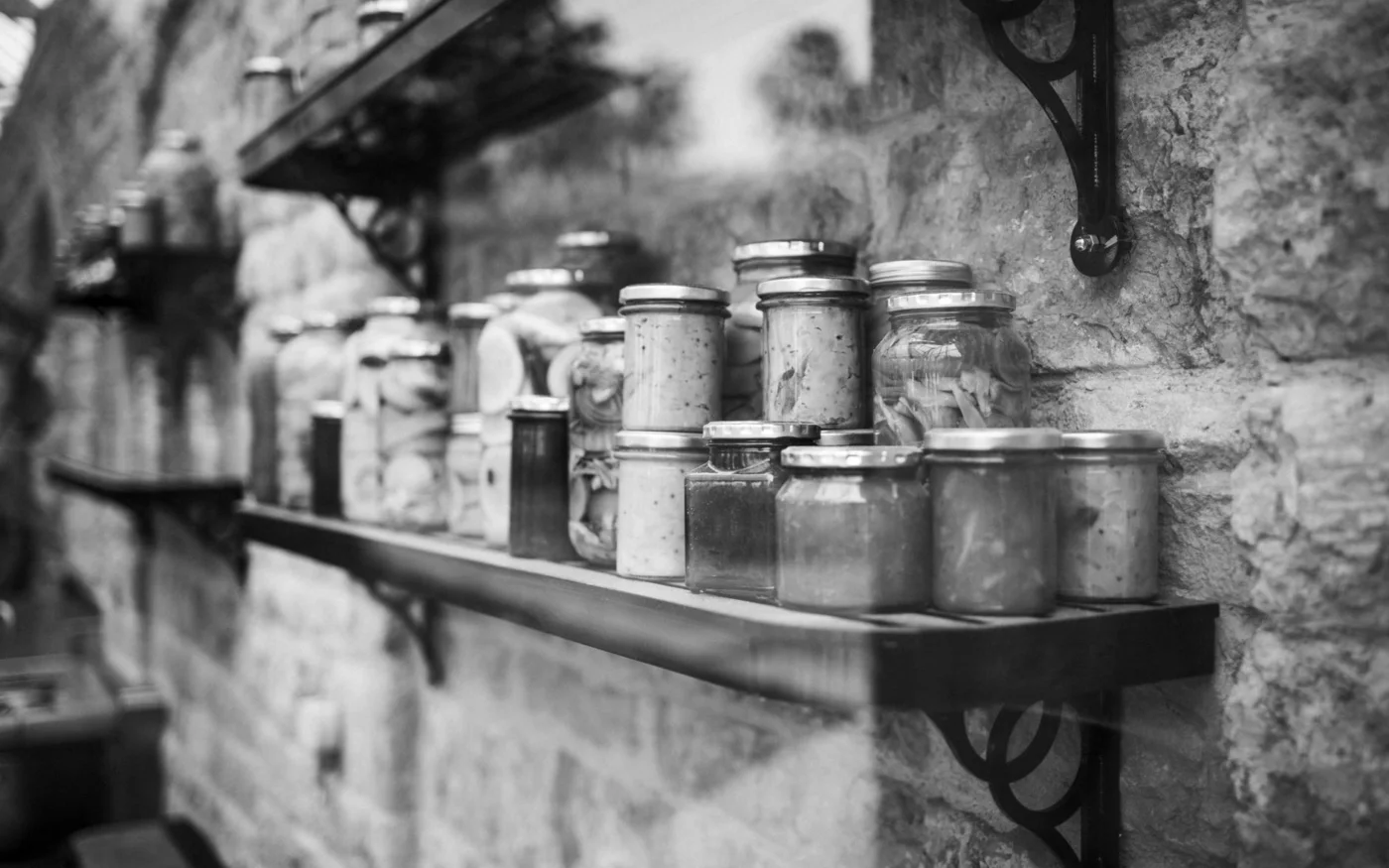
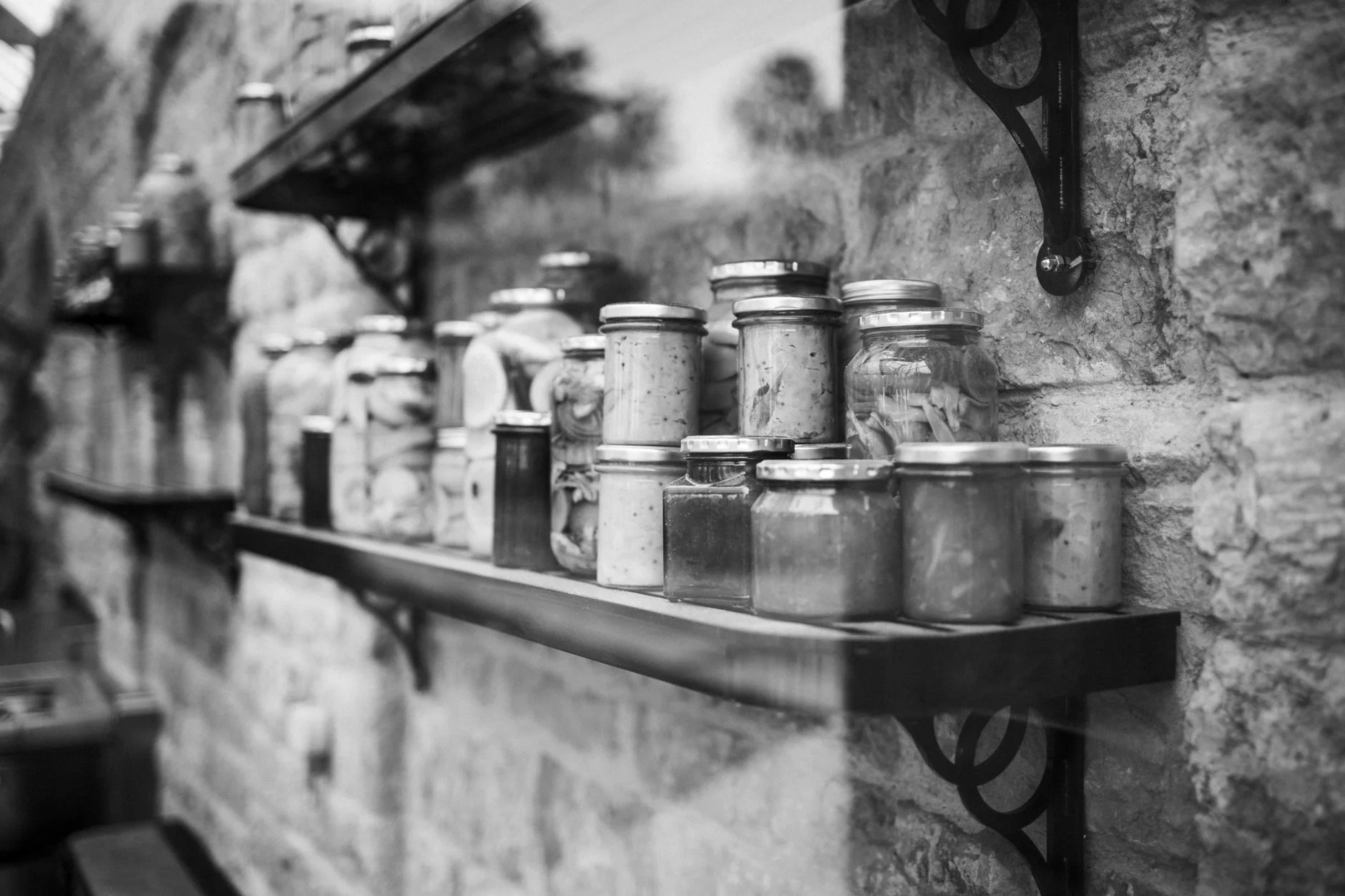
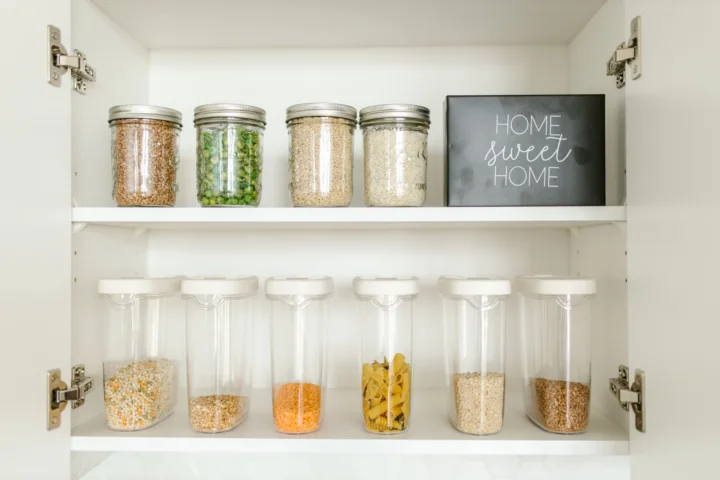
The pantries in photographs are organized for a photograph. Every label faces
forward, everything is in a matching jar, and nothing in there was put away by
someone holding a toddler and twelve grocery bags.
Real pantry organization has one test: does it survive the unpacking of a
weekly shop by whoever happens to be doing it. If putting things away correctly
takes longer than putting them away wrongly, the system loses within a month.
 Save
SaveEmpty it first
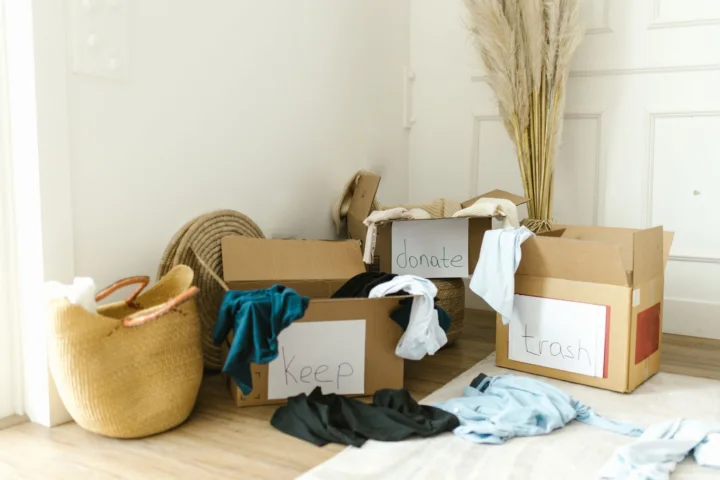
Everything out, expiry dates checked, and be honest about the things bought
for a recipe you made once. Most pantries lose a quarter of their contents in
this pass, and the space that frees is worth more than any container.
Wipe the shelves while they are empty. It is the only time it is easy, and it
is the same principle as
resetting kitchen cabinets — the reorganizing only works
on a cleared surface.
Pantry organization in six zones
-
Breakfast
Cereal, oats, spreads, coffee, tea. One shelf or one basket, at a height the
people who eat breakfast can reach — which often means low enough for children,
because a child who can serve their own breakfast is worth more than a tidy
shelf. -
Dinner bases
Pasta, rice, noodles, canned tomatoes, stock. The things most weeknight meals
start from, and therefore the zone reached for most often.This is the zone that should be easiest to see, because it is the one you
check when deciding what to cook — the same job a staples
list does on paper. -
Baking
Flour, sugar, leaveners, vanilla. Used occasionally and in a group, so it can
go higher up. Keep it together — baking is the one activity where hunting for a
single missing item stops the whole thing. -
Snacks
One basket, deliberately finite. A defined container is a portion control
mechanism that requires no willpower: when the basket is full, the shop is done. -
Cans and jars
Shallow rows rather than deep stacks, ideally on a riser so the back row is
visible. Cans hidden behind other cans are the single largest source of duplicate
buying in most kitchens. -
Bulk and backup
The top shelf or a lower cabinet elsewhere. Anything that is a spare rather
than in use, and it should never sit at eye level competing with the things you
reach for daily.
 Save
SaveWhy decanting usually backfires
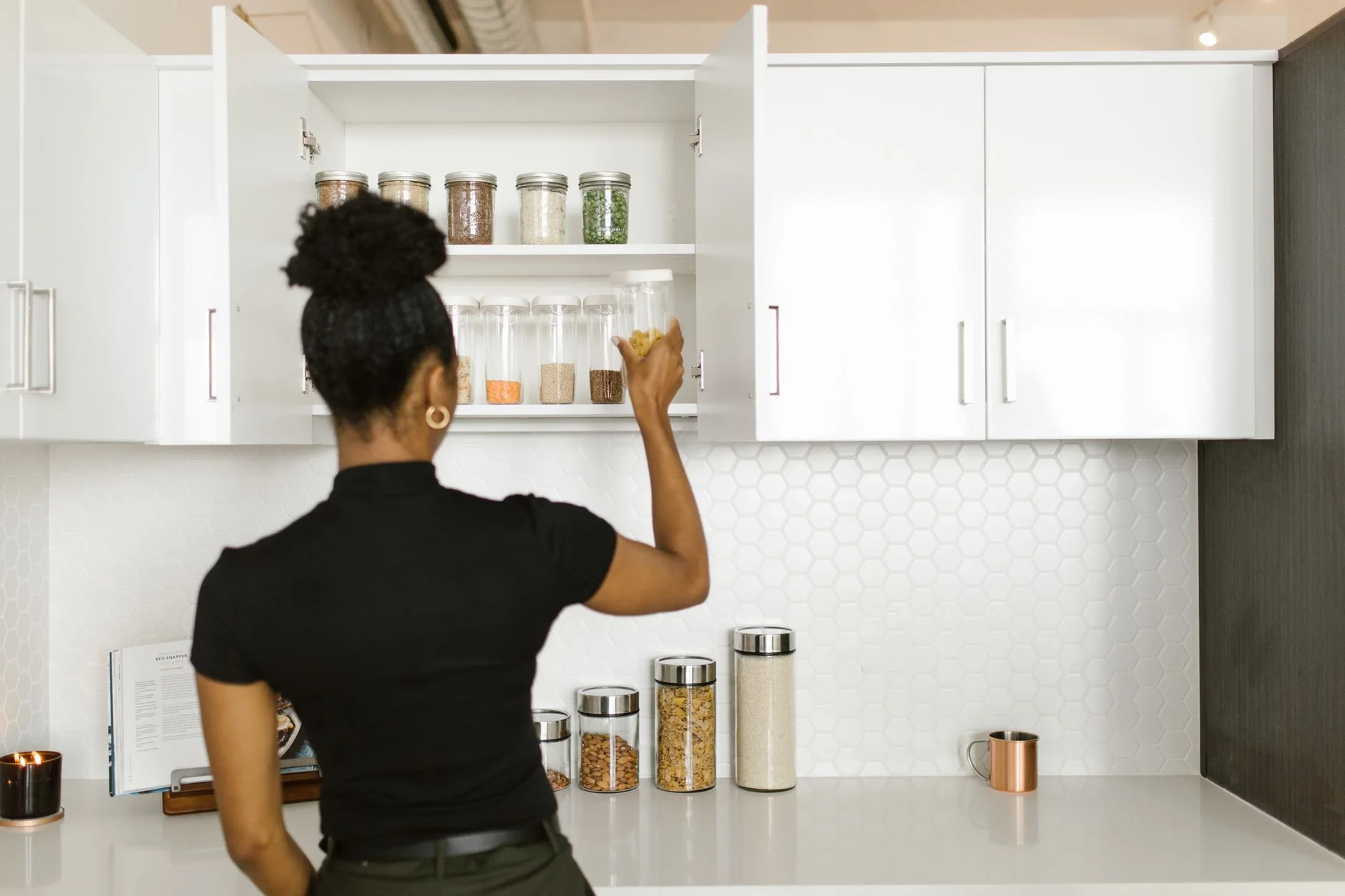
Matching jars look excellent and they add a step to unpacking. Every bag of
pasta now has to be opened and poured before it can be put away, and the empty
packet has to go somewhere.
That step is fine for the two or three things you use constantly — flour,
oats, rice. It is where the system fails for everything else, because a half-full
jar plus an unopened bag beside it is worse than the bag alone.
Decanting also discards two useful things printed on the packet: the expiry
date and the cooking instructions. If you do decant, write both on the jar, and
accept that this is now a permanent chore rather than a one-off project.
What works
- Zones grouped by meal
- Daily items at eye level
- New stock rotated to the back
- One basket per category
- Shallow rows for cans
- Backups stored above or elsewhere
What to watch
- Decanting everything into jars
- Sorting by packet size
- Deep stacks of cans
- Storing bulk at eye level
- Anything on the pantry floor
- Buying containers before decluttering
Containers, only after zones
Decide the zones first, then buy for the gaps. Buying containers first is how
people end up organizing the containers rather than the food.
What genuinely helps: shallow baskets to make a deep shelf usable, a riser or
tiered shelf so back rows are visible, and a lazy susan for corners. What mostly
does not: dozens of identical jars, and anything so tall it wastes the space
above it.
Measure the shelf depth before buying anything. Deep pantry shelves are the
most common storage complaint and the most common cause is a container that fits
the width and not the depth.
 Save
SaveKeeping it that way
Two habits, and neither takes real time.
Rotate while unpacking. New behind old, every shop, no
exceptions. This is the whole preservation system.
Look before you write the list. Two minutes standing in front
of the pantry before writing the grocery list prevents the
third jar of cumin, and it is the same two-minute check that makes
a freezer inventory work.
Then a proper reset twice a year — spring and before the holidays — folded
into a Sunday reset rather than treated as a project.
Common questions
For everything else it adds a step to every shop and throws away the expiry date
and cooking instructions. Matching jars are a look, not a system.
unloading the front. Depth is only a problem when the back row is invisible —
solve the visibility and the depth becomes storage rather than a void.
shopping list rather than while standing in the store. Almost all duplicate
buying is a visibility problem, not a memory problem.
Group by meal rather than by cabinet, and keep dinner bases in the cabinet
closest to the stove.
Start with the cans
Pull every can forward into a single shallow row where you can read all the
labels. Ten minutes.
That one shelf usually reveals two or three duplicates and something a year
past its date — which is the argument for doing the rest.

2 comments