
Most kitchen cabinet organization advice sorts by category. All the bowls
together. All the cans facing forward. Matching containers, labeled.
It photographs beautifully and it cooks badly, because you don’t cook by
category. You cook by task — and a kitchen arranged around tasks is faster,
which is the only measure that matters at six in the evening.
 Save
SaveWhy zone-based kitchen cabinet organization works
Watch yourself make one meal. You chop somewhere, cook somewhere, plate
somewhere. Each of those is a station, and each needs specific things within
reach.
Category organizing scatters the requirements for a single task across the
room. Making a stir-fry means the board is by the sink, the knife is in a
drawer, the oil is in a corner cabinet, the pan is under the island. Four trips
before you’ve started.
Zone organizing puts everything a task needs within one reach of where the
task happens. Fewer trips, less clutter generated, and — the part people don’t
expect — the kitchen stays tidier, because things get put back where they’re
used rather than where they officially live.
The five zones
-
Prep — where you chop
Usually beside the sink. Boards, knives, peeler, mixing bowls, measuring
things, the trash can within reach.The trash placement is the detail people miss. If scraps have to travel, the
counter accumulates them, which is how a prep area becomes a mess mid-cook. -
Cook — where the heat is
Pans, cooking utensils, oils, salt, pepper, the spices you use most, oven
gloves. All within one step of the stove.Keep everyday oil and salt out on the counter. Purists dislike it; it saves a
cabinet-opening several times a day, and this zone is about speed. -
Serve — where plates get filled
Plates, bowls, glasses, cutlery, serving spoons. Ideally near the dishwasher
so unloading is short, and near the table if the layout allows.Putting plates near the dishwasher rather than near the stove is
counterintuitive and saves more time overall, because unloading happens daily
and plating happens once per meal. -
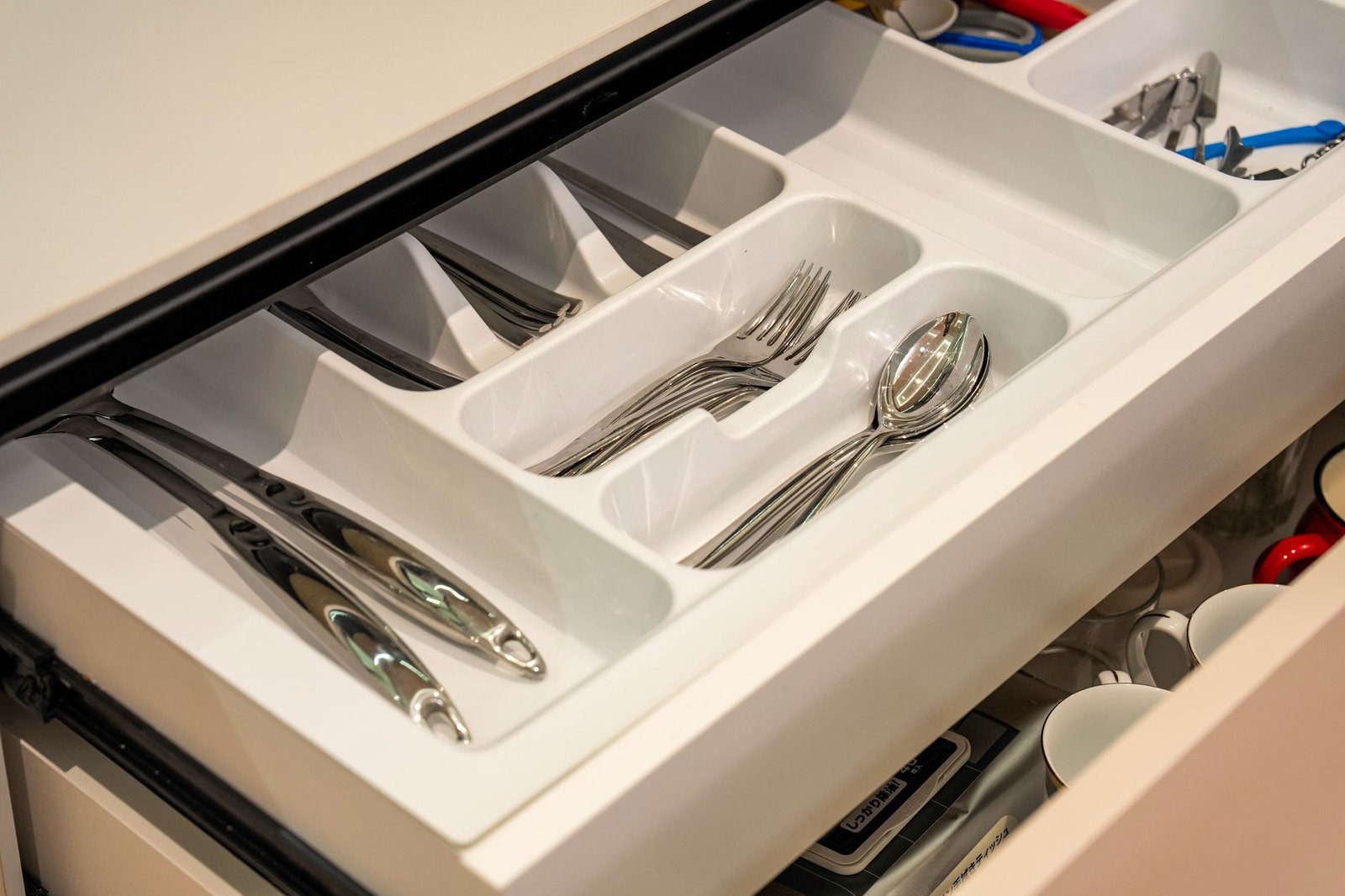
Store — leftovers and wrapping
Containers with their lids, foil, wrap, bags. Near the fridge, because that’s
where leftovers are heading.Match every container to a lid and discard the orphans. The mismatched-lid
drawer is a universal kitchen phenomenon and it costs you time every single day. -
Clean — under the sink, mostly
Cloths, sponges, dish soap, trash bags, surface products.
Keep it minimal. Under-sink cabinets attract accumulation because nobody sees
inside — three products used weekly beats eleven bought hopefully.
 Save
SaveHeight matters more than people think
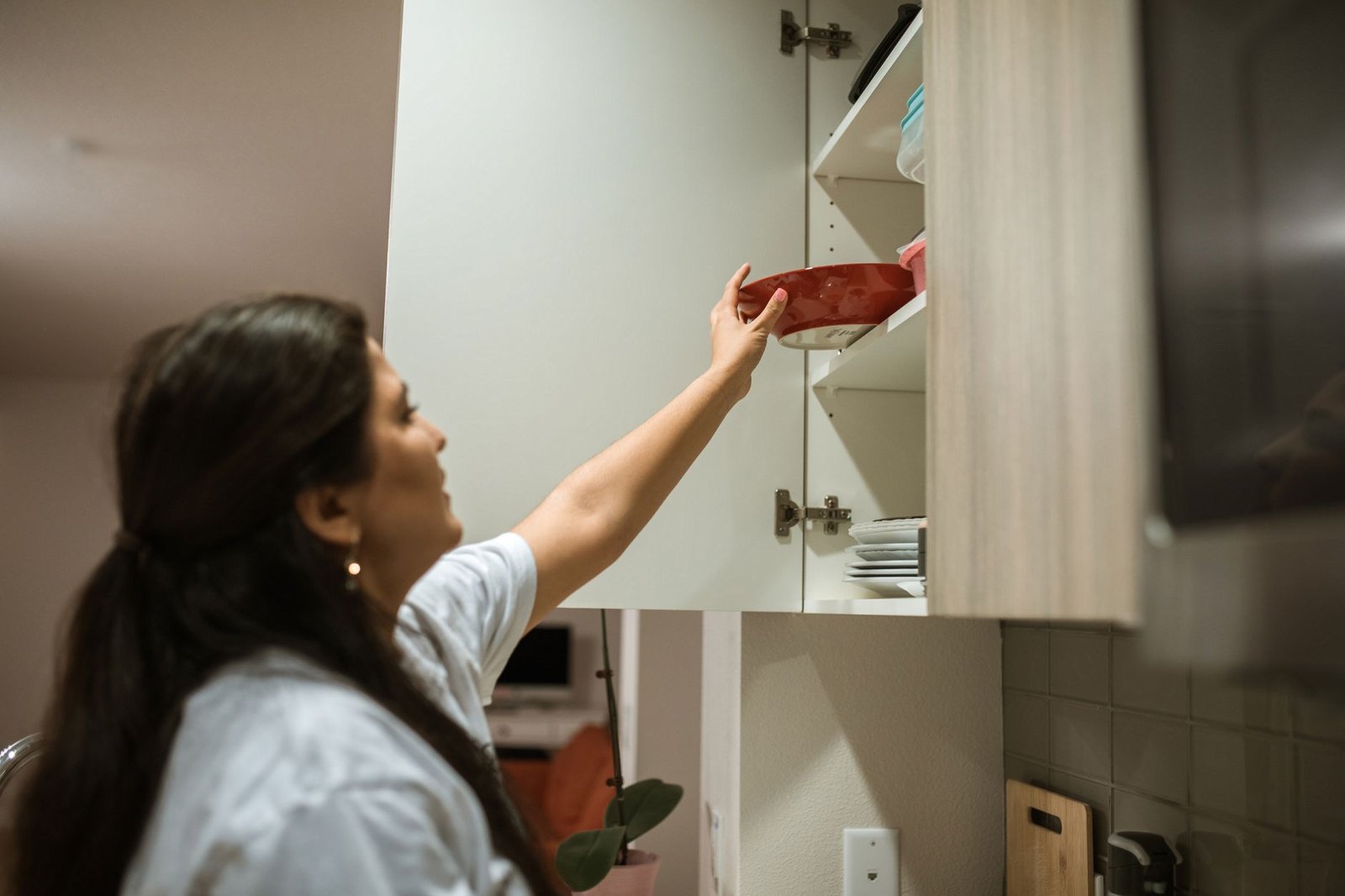
Within each zone, the shelf between hip and eye height is prime real estate.
It should hold only things used daily or near-daily.
Above eye level: light, occasional items. Below knee: heavy, occasional
items — heavy things low because lifting a full pot down from a high shelf is
both awkward and genuinely unsafe.
The most common kitchen organizing mistake isn’t messiness, it’s putting a
rarely-used appliance in the best cabinet in the room because that’s where it
fits.
What works
- Daily items at hip-to-eye height
- Heavy items low
- Duplicating cheap tools across zones
- Containers matched to lids
- Everyday oil and salt on the counter
What to watch
- Sorting purely by category
- Appliances you use twice a year in prime cabinets
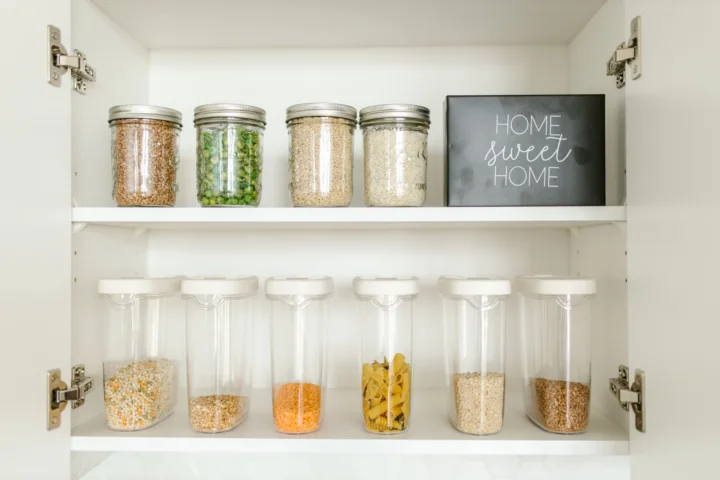
- Decanting everything into matching jars
- Deep corner cabinets for daily items
- More products than you use
Duplicating is worth stating plainly: two sets of measuring spoons, one in
prep and one in cook, costs almost nothing and removes a daily trip. The rule
against duplicates is aesthetic, not practical.
 Save
SaveKeeping it that way
Zone layouts hold far better than category layouts, for a simple reason:
putting something back where you use it is the path of least resistance, so it
requires no discipline.
The upkeep is the daily counter clear from your
weekly routine plus one seasonal pass — an annual look at
whether things drifted, usually after a big cooking event.
Do the pantry staples list at the same time as this
reset. Food storage and equipment storage are the same problem, and doing them
together means the ingredients for your quick weeknight
meals end up in the cook zone where you’ll actually reach for them.
Common questions
share a counter, and serve and store share a cabinet. The question isn’t whether
you have five areas — it’s whether each task’s tools are within one reach of where
it happens.
reset first and the cleaning separately, or you’ll be four hours in with the
contents of every cabinet on the floor.
never use — the third spatula, the gadget with one purpose. Volume is the enemy,
not duplication itself.
than monthly and is genuinely awkward to retrieve, that’s a fair signal to ask
whether it’s worth the space at all.
Start by watching yourself cook
Make one ordinary meal and count how many times you cross the kitchen for
something. That number is what zone organizing removes.
Then start with the cook zone — pans, oils, utensils, all within one step of
the stove. It’s the smallest change with the most immediate payoff, and you’ll
notice it the same evening.
7 comments