
Most pantry staples lists are written for a cook you are not. Six vinegars,
four kinds of flour, saffron. You buy them once, use them once, and they sit
there quietly reproaching you for three years.
A pantry staples list is only useful if it’s derived from the meals you
actually make. Which means the honest version starts with your rotation, not
with someone else’s aspirations.
 Save
SaveHow to build your pantry staples list
Write down the ten meals your household actually eats on repeat. Not the ones
you’d like to eat — the ones that got made this month.
Now list every non-perishable those ten meals require. That list, plus a few
universals, is your pantry. It’ll be shorter than you expect and every item on it
earns its shelf space.
This is the same logic behind the tier-one shelf for
weeknight dinners: stock the ingredients for the meals you make under pressure,
because those are the nights the pantry has to carry.
The 24 that cover most households
-
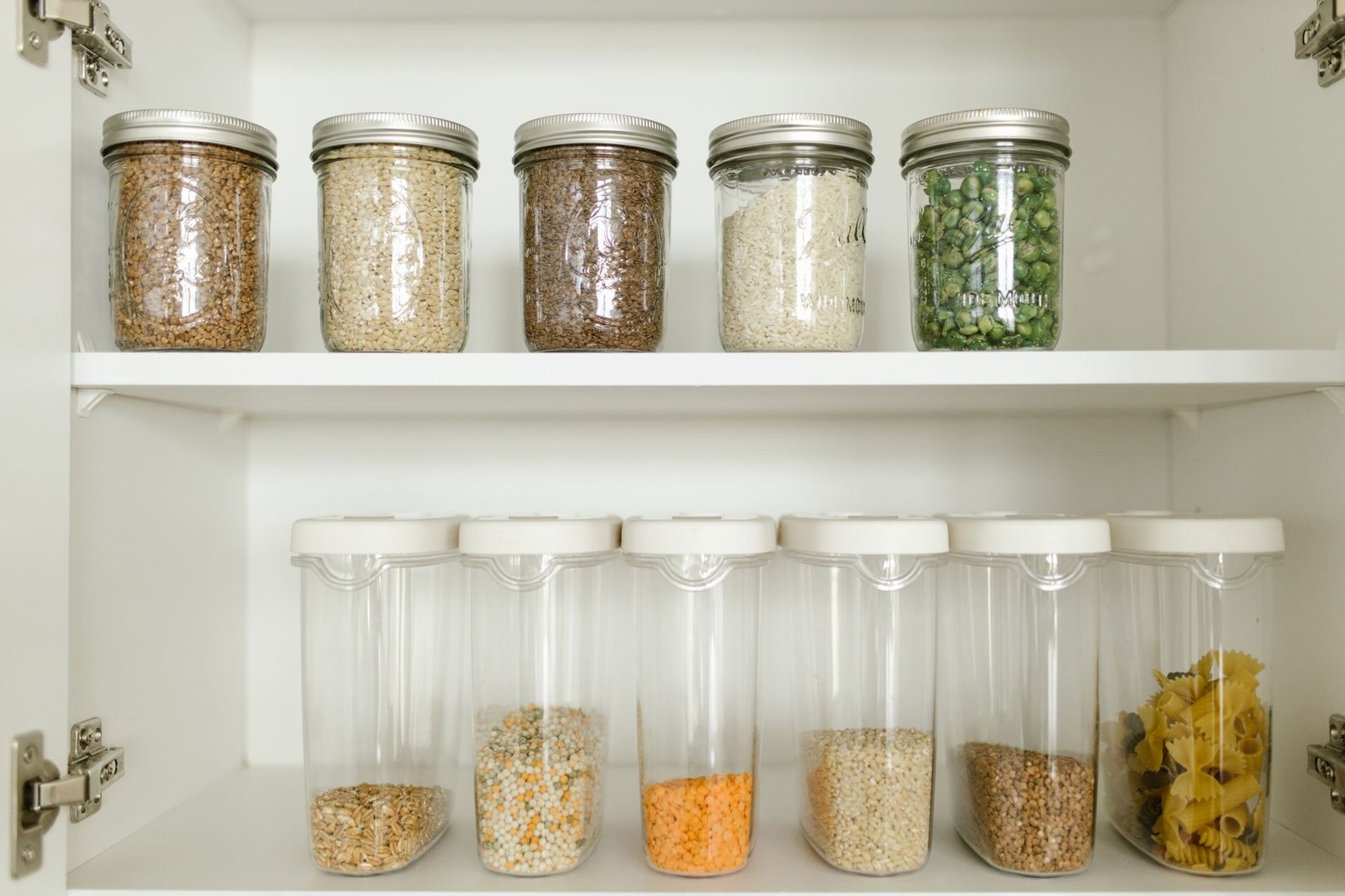
Grains and starches — 4
Pasta, rice, one other grain you actually eat (couscous, noodles, orzo), and
potatoes. These are the base of most cheap, fast dinners. -
Cans and jars — 6
Chopped tomatoes, beans, chickpeas, coconut milk, tuna, and one jar of pasta
sauce for the nights nobody is cooking from scratch.The jar of sauce is not a failure. It’s the difference between dinner and
takeout on a Wednesday. -
Flavor base — 6
Stock cubes or paste, soy sauce, a vinegar, olive oil, a neutral oil, and one
curry or chili paste.Six items and you can make almost anything taste like something deliberate.
This is the highest-leverage group on the list. -
Fresh that keeps — 4
Onions, garlic, lemons, and hard cheese. All keep for weeks, all rescue an
otherwise dull meal. -
Freezer — 4
Peas, spinach, bread, and one protein. Frozen vegetables are nutritionally
solid, cost less, and don’t rot in the drawer — the single most underrated
category in most kitchens.
 Save
SaveWhat to stop buying
What works
- Things in your ten regular meals
- Frozen vegetables
- One good all-purpose oil
- Stock in a form you'll actually use
- Canned beans and tomatoes
What to watch
- Specialty vinegars you used once
- Four kinds of flour
- Spices for a cuisine you cook twice a year
- Bulk buys with nowhere to store them
- Anything bought because a recipe demanded it
The last one is the biggest source of pantry waste. A recipe calling for one
tablespoon of something exotic leaves you with a full jar and no second use.
Where possible, substitute or buy the smallest available quantity, and accept
that some ingredients are per-recipe purchases rather than staples.
The restocking rule
Restock at half, not at empty.
Running out mid-recipe is what triggers the unplanned trip, and the unplanned
trip is the single largest leak in most grocery budgets. Half-full is the point
at which an item goes on next week’s list, giving you a full shopping cycle of
margin.
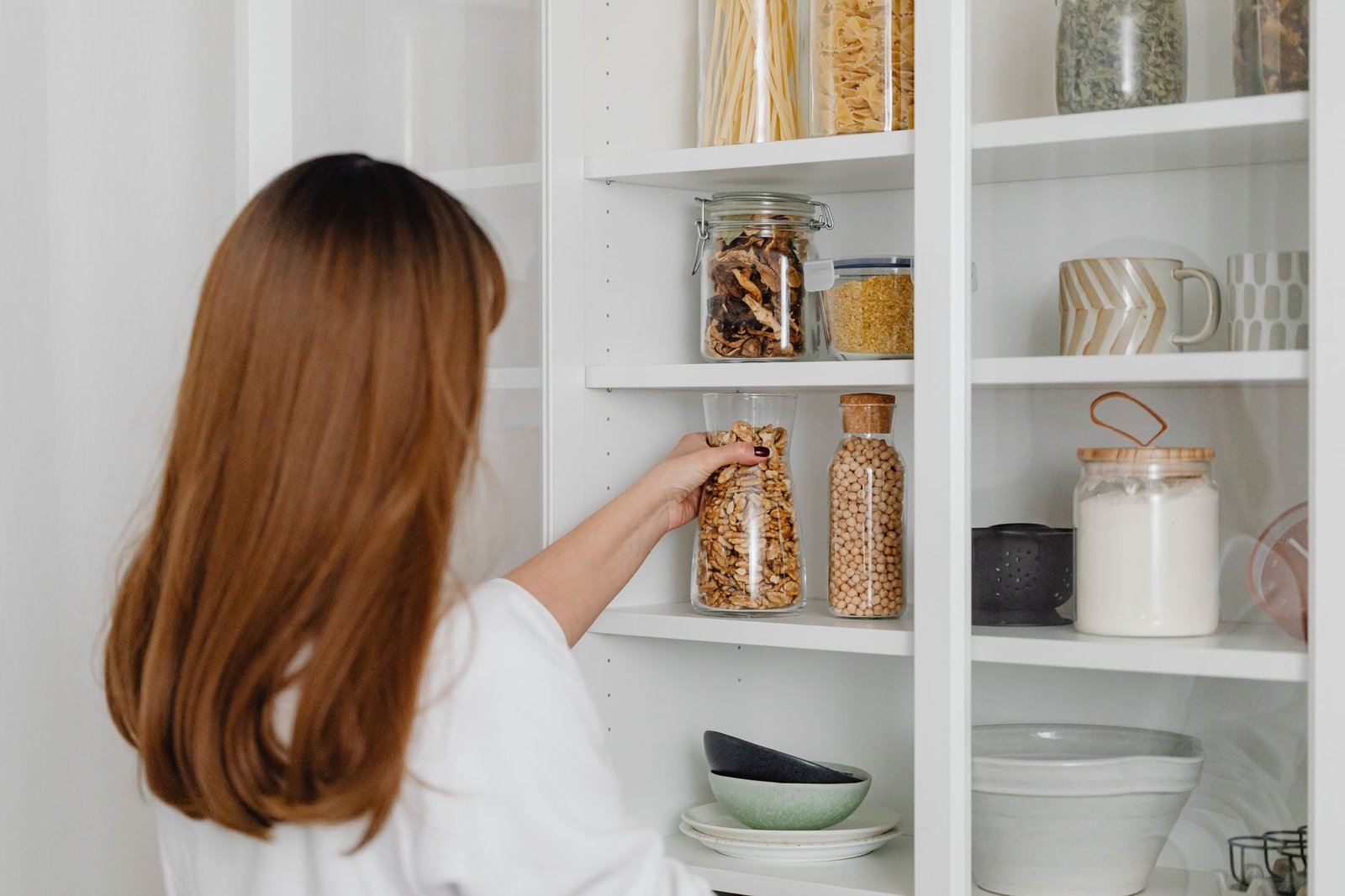
In practice this is a fifteen-second glance during your weekly plan. Open the
cabinet, note anything at half, add it to the list. That belongs in the
meal-planning block of your Sunday reset, right before you
write the groceries.
 Save
SaveCommon questions
storing rather than stocking. Exact quantities depend on household size, which is
why the half-full trigger works better than fixed amounts.
Do it if you enjoy it, skip it if you don’t — the list matters, the containers
don’t.
mostly represents thirty things going stale at different rates. Buy small, use
them up, replace.
baking things together. Sorting by category looks tidier; sorting by use means
you can grab everything for one meal in a single reach.
Start with your ten meals
Write down the ten dinners your household actually eats. List what they need
that doesn’t go off. That’s your pantry staples list, personalized, in about ten
minutes.
Then check what’s at half and add it to this week’s shopping. That single
habit removes most of the reasons anyone ends up at the store on a Wednesday.
9 comments