
Almost every declutter challenge follows the same shape: day one is a drawer,
day thirty is the garage, and somewhere around day eleven it quietly stops.
Week two is where these die, and the reason is structural rather than personal.
The first week is all easy wins with visible results. The second week hits the
zones that are slow, emotionally loaded, or invisible when finished — and the
reward disappears exactly when the novelty does.
 Save
SaveWhy most declutter challenges fail
Three reasons, all fixable by design.
They’re ordered by geography. Room by room means you hit four
consecutive low-reward zones and lose momentum. Ordering by visible payoff
instead means you never go more than two days without seeing a difference.
They have no stopping point. “Declutter the closet” is
open-ended, which means it expands, which means you don’t start it on a tired
Tuesday. Fifteen timed minutes always gets started.
They have no recovery rule. Miss day twelve and most people
treat the challenge as broken. Any thirty-day habit needs an explicit answer for
the day you skip, decided in advance.
The four boxes
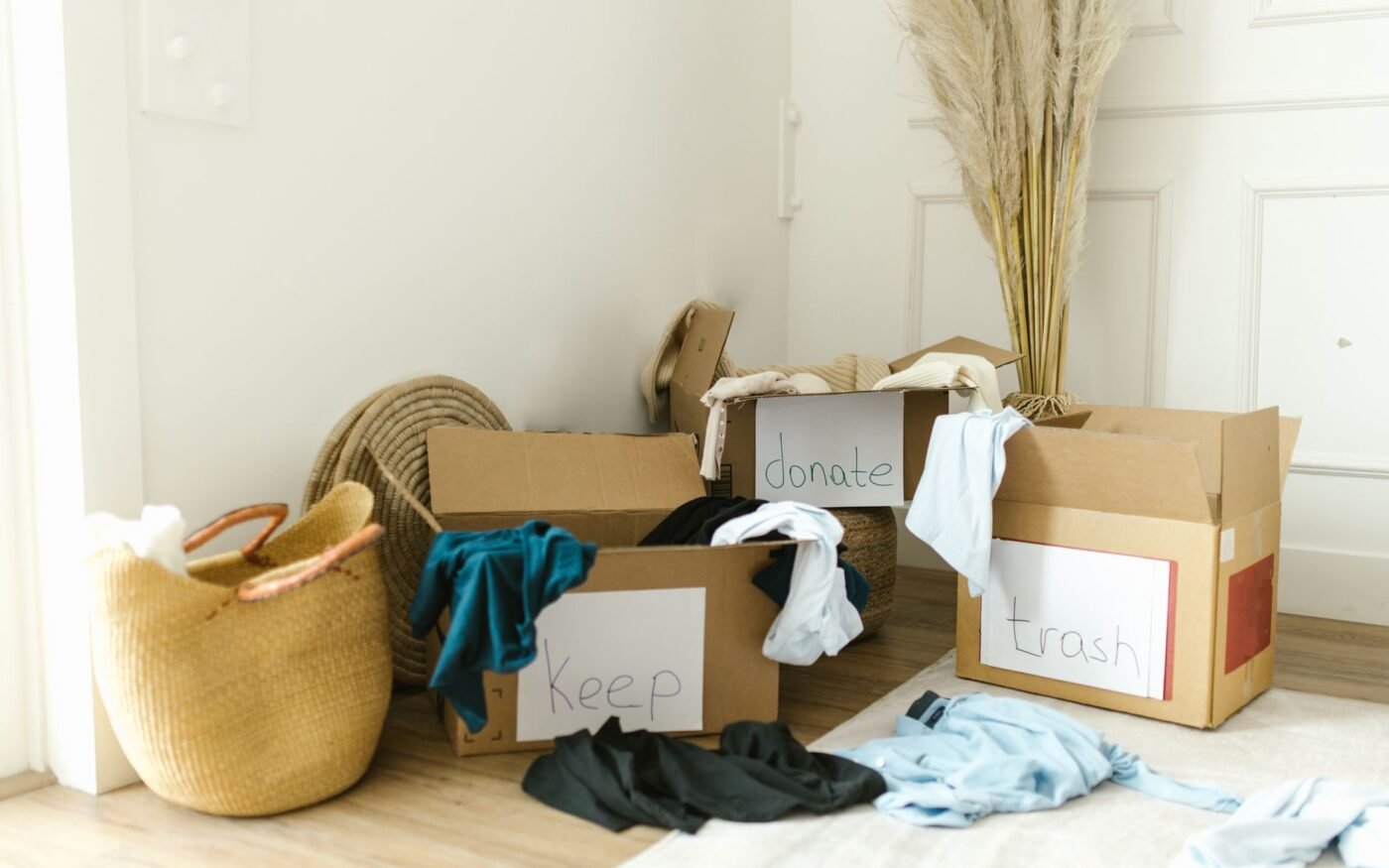
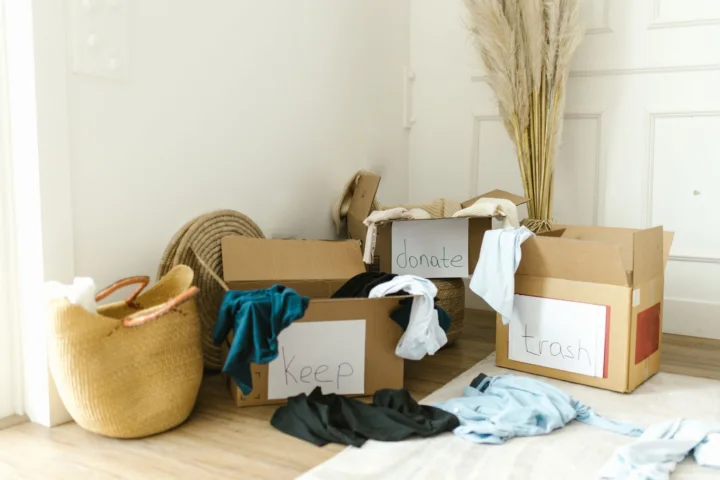
Every session uses the same four containers, which is what stops decisions
stalling.
Keep — goes back where it lives, properly, at the end of the
session. Not in a pile for later.
Donate — leaves the house within the week. A donate box that
lives in the hall for two months is just relocated clutter.
Trash — leaves today. Broken, expired, or genuinely worthless.
Undecided — the one that makes this work. Anything you can’t
decide on goes in a sealed box with today’s date on it. If you haven’t opened it
in six months, it goes without being reopened. That single mechanism removes
almost all the emotional friction that stalls decluttering, because you’re never
forced to throw away something you’re unsure about.
The 30-day order
-
Days 1–7: visible surfaces and fast wins
Kitchen counter, coffee table, entryway, bathroom cabinet, the fridge, one
kitchen drawer, the car.All high-visibility, all fast, all producing an obvious difference. This week
builds the habit while the reward is easy — it’s the same logic as
the four-surface rule, extended. -
Days 8–14: the week most people quit
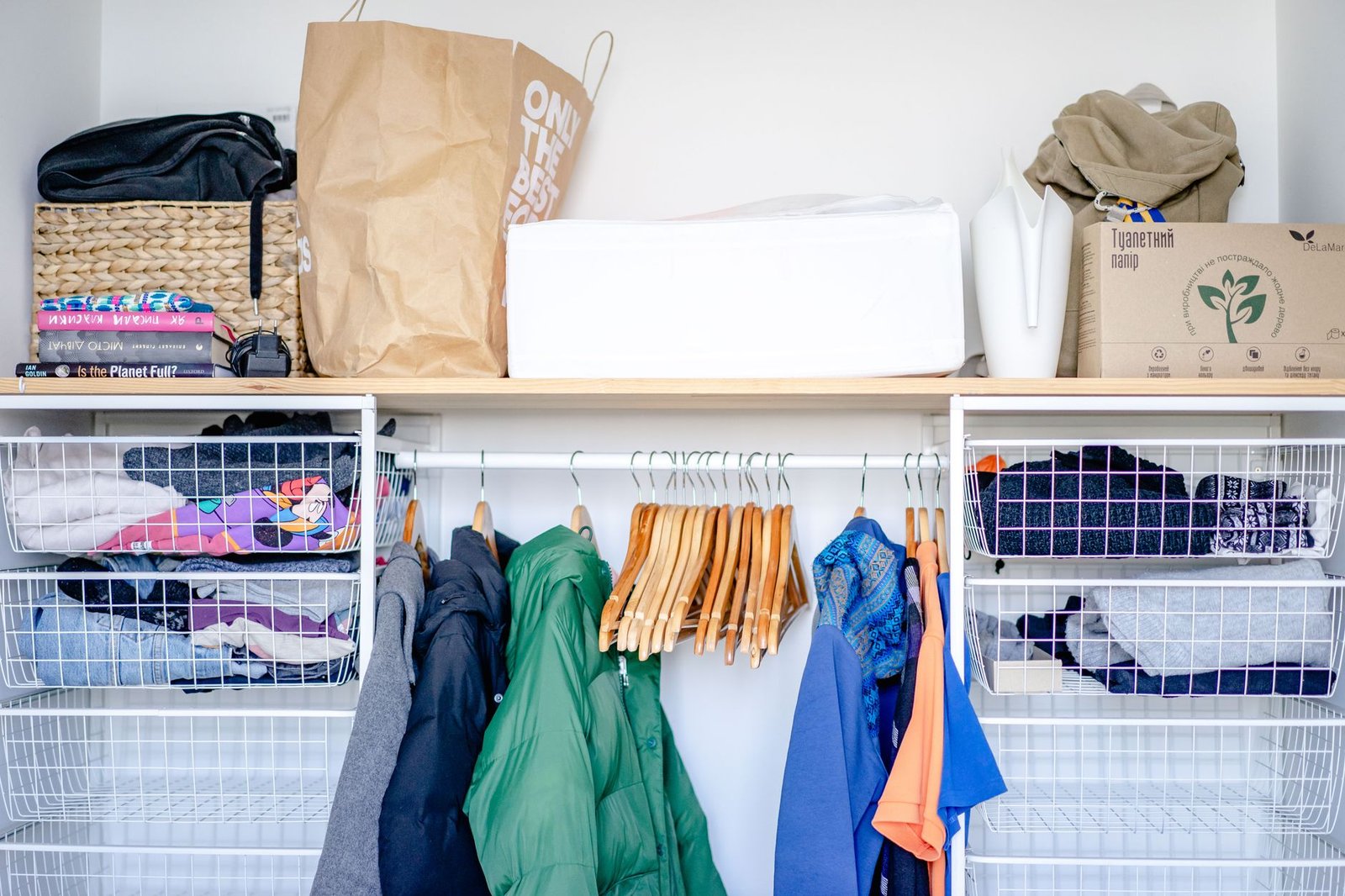
Closet, shoes, coats, linen closet, under the sink, medicine cabinet, one
bookshelf.Slower and less visible, so this week alternates deliberately: a hard zone,
then an easy one. Do not do closet and shoes back to back — that’s precisely
the pairing that kills challenges. -
Days 15–21: paper, digital, and admin
Paperwork, the junk drawer, cables and chargers, phone photos, email
subscriptions, kids’ artwork, the spice rack.Paper deserves its own approach rather than sorting — the
four-folder system handles it in a fraction of the time
that filing does. -
Days 22–30: storage, sentimental, and the finish
Garage or attic, toys, craft supplies, the “spare” everything, sentimental
boxes, and two flexible days.Sentimental items go last on purpose. By day twenty-five you’ve made hundreds
of small decisions and the muscle is built — starting there on day one is how
people stall permanently.
 Save
SaveThe rule for the day you skip
You will miss days. The rule, decided now: never miss two in a
row.
A missed day is a missed day. Two becomes a week, and a week becomes the end.
So if you skip Tuesday, Wednesday is non-negotiable — and Wednesday can be the
easiest zone on the list rather than the scheduled one. Order is a preference,
not a requirement.
The two flexible days at the end exist for exactly this. Use them to catch up,
or to redo a zone that needed longer.
What works
- A timer, every session
- Four boxes including 'undecided'
- Alternating hard and easy zones
- Photographing before and after
- Donations leaving within the week
- Sentimental items last
What to watch
- Decluttering room by room
- Open-ended sessions
- Starting with sentimental items
- Buying storage mid-challenge
- Doing two hard zones back to back
- A donate pile that never leaves
 Save
SaveWhat happens on day 31
The challenge removes a backlog. It doesn’t stop accumulation, and treating it
as a one-time fix is why people run one every January.
What holds the result is the daily and weekly layer — surfaces cleared each
evening, and a weekly reset that catches what drifted. Fifteen
minutes a day for thirty days gets you to a baseline; ten minutes a day
indefinitely is what keeps you there.
Common questions
better — the house is at its messiest after summer, and you’re setting up for the
months you’ll spend most time indoors. The genuinely best time is whenever you’ll
actually do it.
to sell is one of the most common ways decluttering stalls — boxes of “to sell”
items can sit for years and cost more in space than they’d ever recover.
someone else’s belongings without asking damages trust and usually ends the whole
project in an argument.
rather than one heroic one. Progress in a garage over four short sessions beats
one exhausting Saturday you never repeat.
Start with the kitchen counter
Set a timer for fifteen minutes, get four boxes, and do the counter. That’s
day one.
The order matters less than starting somewhere visible — and the rule that
matters most is the one about never missing two days in a row.


2 comments