
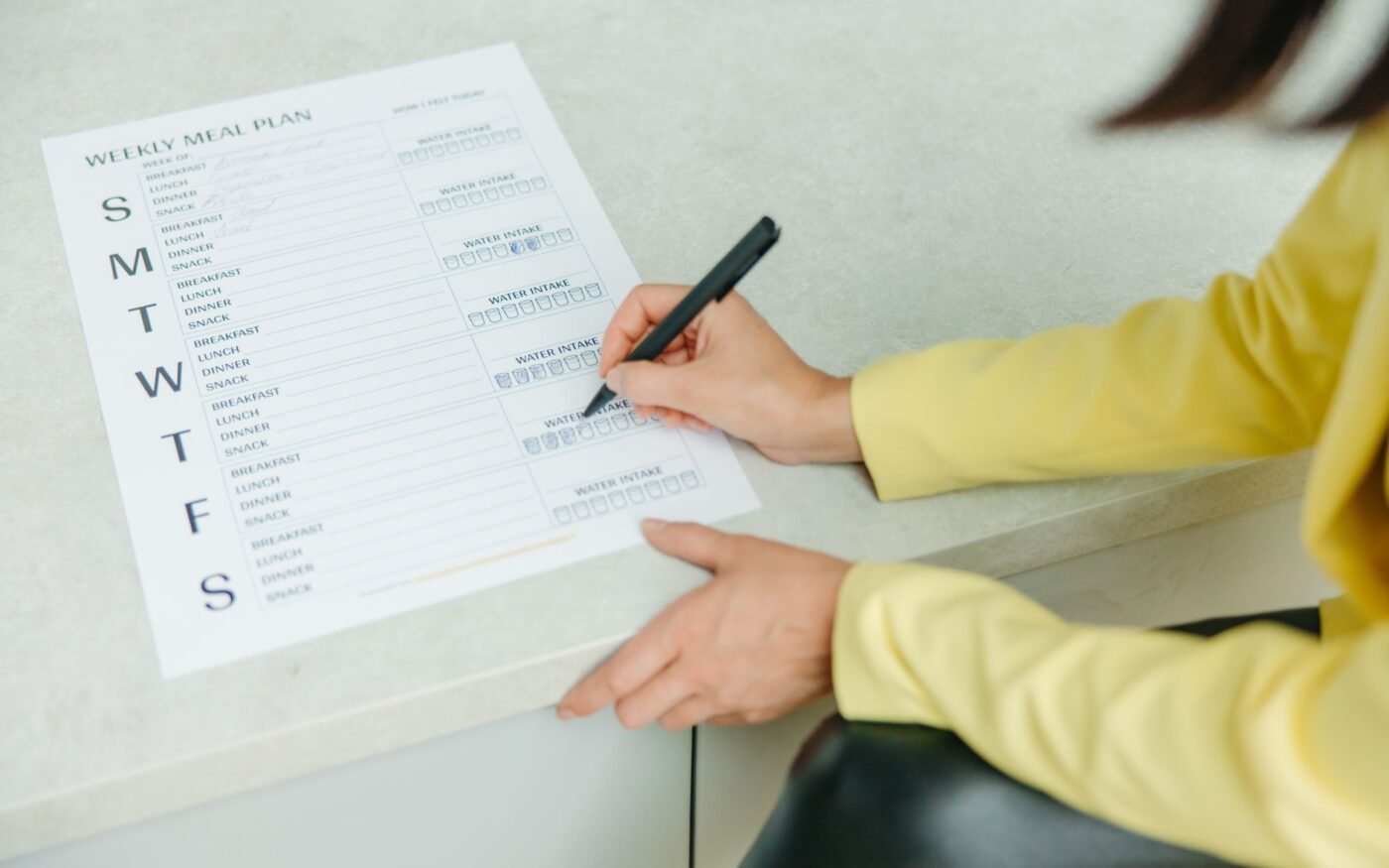
You sit down on Sunday, plan seven dinners, write a careful grocery list, and
feel briefly like a person who has their life together. By Wednesday two meals
have not been cooked, one ingredient has gone soft in the drawer, and you are
standing in front of the fridge at 6pm with no plan at all.
This is not a discipline problem. It is a planning problem, and it has a
specific cause: a seven-day weekly meal plan assumes seven cooking nights, and
you planned for a week that does not exist.
 Save
SaveWhy your weekly meal plan keeps failing
Almost nobody has seven cooking nights. You
have a late meeting, a kid with an activity, a night the leftovers stretch, and
a night where somebody is just done. That is normal — but a seven-day plan has
no room for it, so the moment reality intrudes the plan is broken.
And a broken plan does not degrade gracefully. It gets abandoned. You do not
cook five of the seven and call it a win; you stop looking at the list, buy
groceries without it next week, and conclude that meal planning does not work
for you.
The second problem is waste. Seven meals’ worth of fresh ingredients bought
for five cooking nights means two meals of produce quietly rotting. That is the
“I hate meal planning, it wastes money” experience — caused entirely by
overplanning. The
USDA estimates a substantial share of the
US food supply is wasted, and buying for nights you were never going to cook is
a direct household contribution to it.
The five-dinner rule
Plan five dinners. Leave two nights open on purpose.
That is the entire rule, and the important word is on purpose. There
is a large psychological difference between “I failed to plan two nights” and
“two nights are leftovers and takeout.” Same outcome, completely different
relationship with the system. One makes you quit; the other is the system
working.
Five is also the number where the grocery list stays honest. You buy fresh
produce for five meals and it gets used. Nothing sits in the drawer accusing
you.
How to pick the five: the 2-2-1 formula
-
Two meals you could cook half asleep
Not impressive. Not new. The pasta thing, the sheet-pan thing, the one your
household has eaten forty times. These exist to guarantee that at least two
nights this week require zero thinking.Put these on the nights you already know will be hardest — the late one, the
activity one. Matching your easiest meals to your worst nights is most of the
skill in meal planning. -
Two from your rotation
Most households cook about ten meals on repeat. That rotation is an asset,
not a failure of imagination. Pull two from it — ideally ones that share
ingredients with the first two, so the grocery list stays tight.If you have never written your rotation down, do it once. Ten meals on a card
on the fridge removes the “what do we even eat” stall that kills more meal plans
than anything else. -
One genuinely new recipe
One. Not three. New recipes take longer, need unfamiliar ingredients, and
occasionally fail — which is fine once a week and catastrophic four times.Put the new one on the night you have the most time and the least pressure.
For most households that is Saturday or Sunday, not Tuesday. -
Two nights named, not planned
Write “leftovers” and “takeout” (or “eggs on toast”, or “whatever’s left”) on
the two remaining nights. Naming them is what stops them registering as
failure.The leftovers night should follow whichever meal reliably over-produces. If
you cook a big batch on Monday, Tuesday is leftovers. That is a plan, not a
gap.
 Save
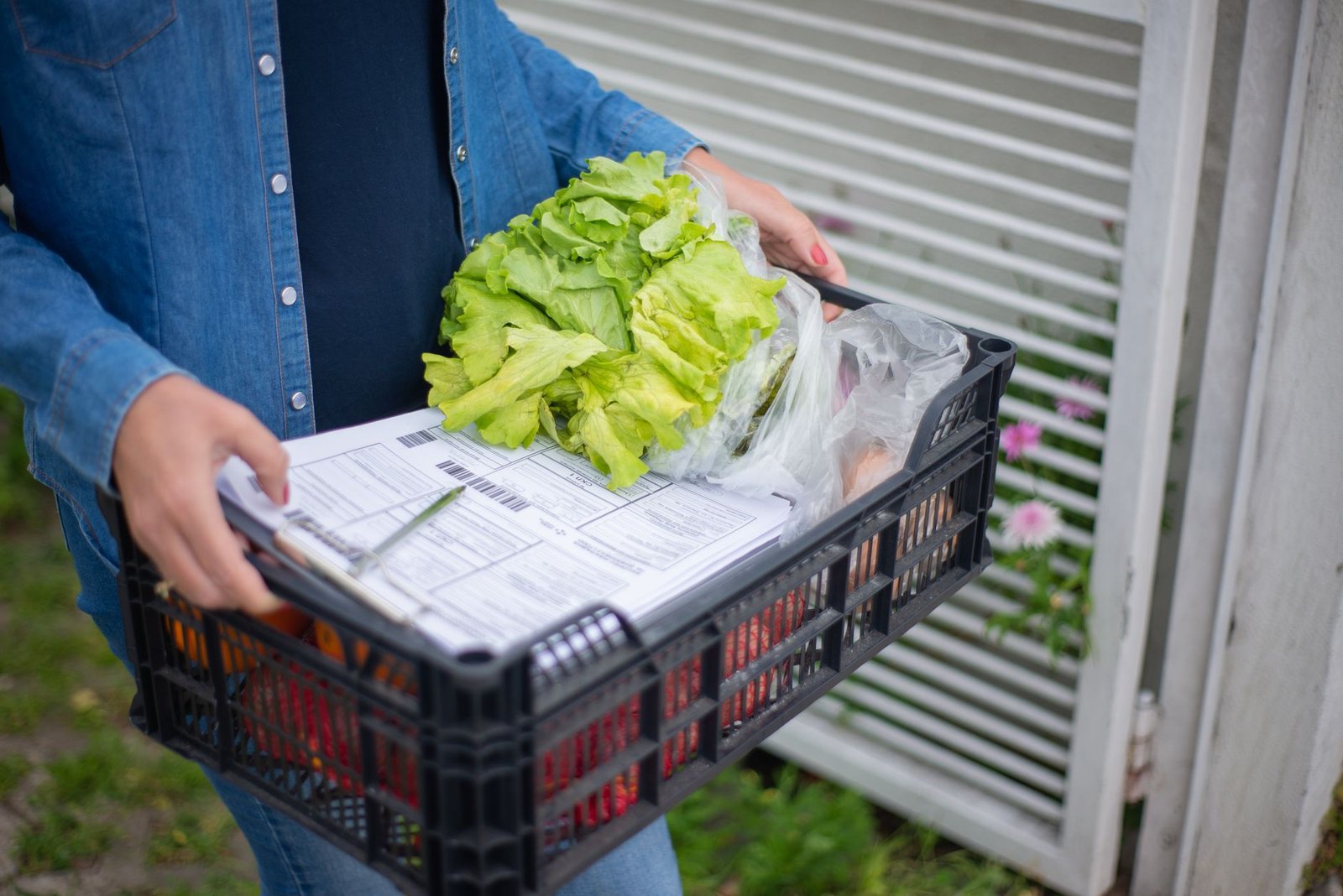
SaveBuild the grocery list from the plan
This is the step that turns a meal plan into money saved, and it is the step
most people skip.
Write the list from the five meals — not from memory, not from a mental
walk around the supermarket. Then, before you leave, check the fridge, the
freezer, and the cupboard, and cross off everything you already own. Almost
nobody does this second part, and it is routinely worth $15 to $25 a week in
duplicate purchases you never noticed making.
Shopping from a list built off a plan, after checking what you already have,
is the difference between a shop and a browse. Browsing is where the money
goes — and it is the same principle behind the ten-minute money block in
the 60-minute Sunday reset, which is where this whole
routine belongs.
What actually goes wrong, and what to do
What works
- Matching easy meals to hard nights
- Repeating meals week to week
- Writing the rotation down once
- Buying for five, not seven
- Naming the open nights
What to watch
- Planning a new recipe for a weeknight
- Assigning meals to specific days rigidly
- Planning seven dinners 'to be safe'
- Shopping without checking the fridge
- Starting over from scratch each week
The one worth expanding is rigid day assignment. Assigning “Tuesday: chicken
thing” means that when Tuesday goes sideways, the plan has a hole in it. Assign
meals to the week, not to days — five meals, cooked in whatever order
the week allows. The only exception is deliberately matching your two easiest
meals to your two hardest nights.
 Save
SaveMaking it survive a bad week
Some weeks you will not plan at all. The system needs a version that survives
that, or it dies the first time life gets loud.
The minimum viable version is three meals and a list. Pick
three, write the groceries, go. Three planned dinners is dramatically better
than none, and it keeps the habit alive so that next Sunday you pick it back up
rather than starting from zero.
The failure mode to avoid is all-or-nothing. A shortened plan is a plan. A
skipped week that becomes a skipped month is how people end up believing meal
planning does not work for them.
Common questions
the alternative is a 6pm scramble. Start by repeating only your two easy meals
and keep the rotation slots varied. If there is genuine resistance, expand your
written rotation to fifteen meals rather than abandoning repetition entirely.
usually already systematized — the same few things on repeat. Dinner is the meal
that actually requires decisions, so it is the only one worth planning.
slot it occupies in the Sunday reset. The first two or three weeks take longer
because you are still building the rotation list. That cost is paid once.
ahead is a two-hour one. Folding them together is the fastest way to turn a
sustainable habit into a Sunday you dread. Plan first, and cook ahead only if
you happen to have the afternoon.
Start with this week
Look at the next seven days. Count the nights someone is actually home and
able to cook. Pick five meals using the 2-2-1 formula, name the other two, and
write the grocery list from the plan.
Then check the fridge before you leave. That last step alone usually pays for
the fifteen minutes.


8 comments