

Most grocery budget advice starts with coupons. For the majority of
households, coupons are the least effective lever available — they take the most
effort per dollar saved, they push you toward branded products you would not
otherwise buy, and they do nothing about the actual leak.
The actual leak, for almost everyone, is the midweek top-up shop. You went
in for milk. You came out $47 lighter.
 Save
SaveStep one: find your real grocery budget number
Before changing anything, you need the truth. Open your banking app and add
up every food purchase in the last 30 days — the big shops, the top-ups, the
gas station milk, the “we’re out of bread” run. Include everything.
The number will be higher than you expected. That is not a personal failing;
it is how the top-up shop works. Big shops feel like grocery spending and get
remembered. A $12 run for bread and milk does not feel like grocery spending at
all, and four of those a month is $576 a year that nobody has ever accounted
for.
The five levers, ranked by what they actually save
-
Kill the midweek top-up shop
This is the single biggest lever and it is worth doing before anything else.
Every unplanned trip carries an unplanned-purchase tax — you did not go in with
a list, so you leave with extras.The fix is not willpower, it is planning. A
weekly meal plan built around five dinners means you
already own everything you need, so the trip never gets triggered. When you do
run out of something midweek, write it down and wait. Most “we’re out” items can
wait four days.Typical saving: $40–80 a month.
-
Shop once, from a written list
One planned shop, one list, written from the meal plan rather than from
memory. Then — and this is the part people skip — check the fridge, freezer and
cupboard before you leave, and cross off what you already have.Duplicate purchases are invisible money. You already own two jars of it; you
buy a third because you cannot remember. Checking first routinely saves
$15–25 a week for about ninety seconds of effort.Typical saving: $30–60 a month.
-
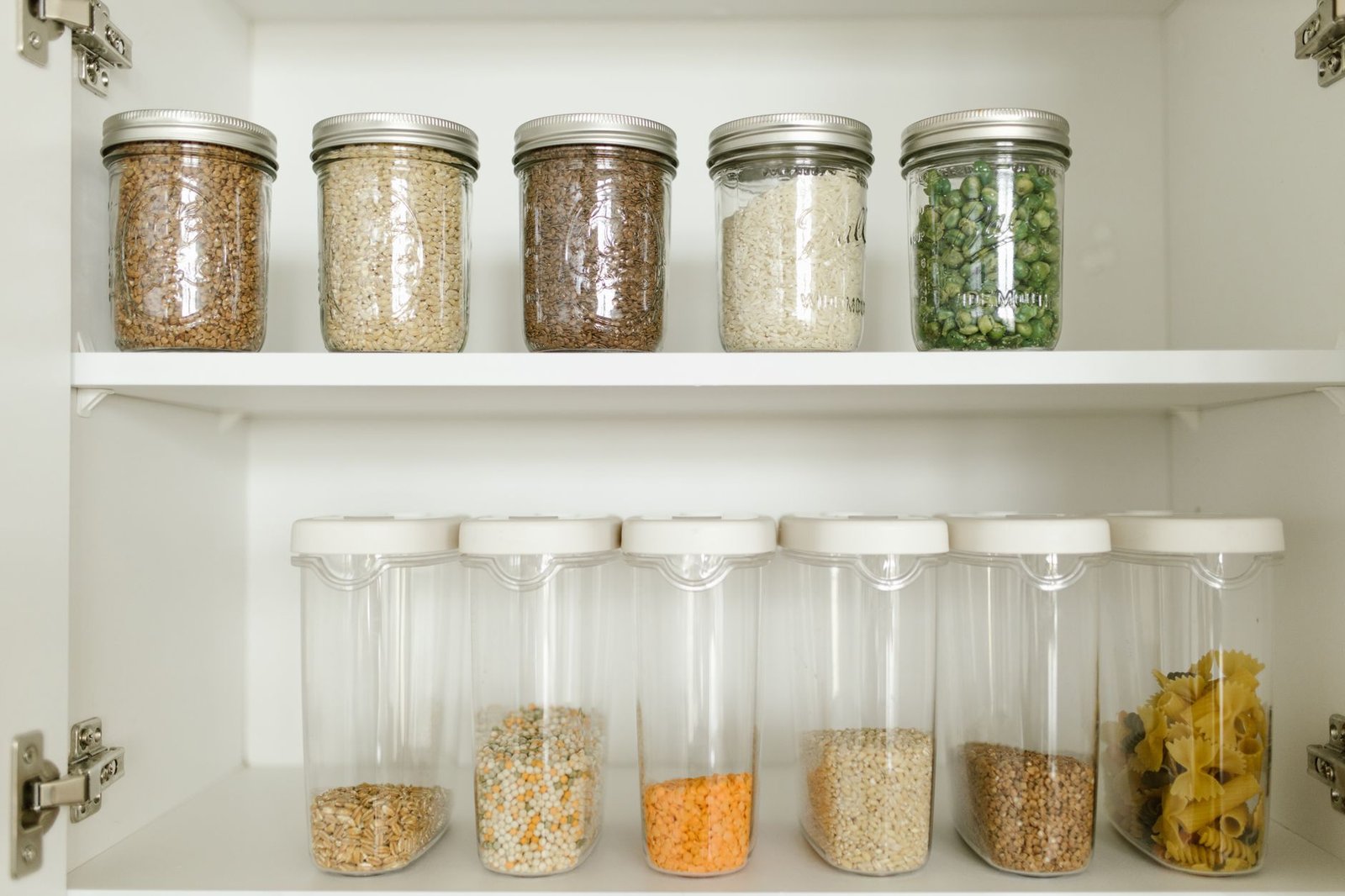
Run a pantry-first week once a month
One week in four, plan your meals around what you already own before buying
anything fresh. Most households are carrying two to three weeks of food they
have forgotten about — dried goods, tins, freezer contents from a batch cook.A pantry-first week is not deprivation. It is collecting food you have
already paid for. It also stops the slow accumulation of things that expire
unopened.Typical saving: $25–50 a month.
-
Swap your top three line items, not everything
Look at a receipt and find the three most expensive recurring items. For most
households that is meat, cheese, and one branded staple somebody insists on.Do not attempt to downgrade your whole basket — that is how frugality
becomes miserable and gets abandoned in a fortnight. Change three things. Buy
the cheaper cut, buy the block instead of pre-grated, switch the one branded
item where nobody can actually tell.Typical saving: $20–40 a month.
-
Read one receipt a month for leaks
Once a month, actually read a receipt line by line. You are looking for one
thing: the purchase that surprises you. There is always at least one — the
thing that costs more than you assumed, or the thing you did not know somebody
was buying weekly.This is a five-minute job and it is the only “tracking” this system needs.
Typical saving: variable, occasionally large.
 Save
SaveWhy coupons come last
Coupons are not useless. They are just badly ranked by most advice, because
they are visible and feel like effort well spent.
The problem is the effort-to-saving ratio and the substitution effect. A
coupon for a branded product you would not otherwise buy is not a saving — it
is a redirected purchase, often still above the store-brand price. Clipping,
sorting, and remembering them costs real time every week, and the yield is
usually smaller than simply not making four unplanned trips.
If you enjoy couponing, keep doing it. Just do it after the five levers
above, not instead of them.
What not to bother with
What works
- Planning meals before shopping
- Checking the fridge before you leave
- Shopping once a week
- Swapping your top 3 line items
- Buying store brand on staples
What to watch
- Clipping coupons for hours
- Driving to three stores for deals
- Buying in bulk with nowhere to store it
- Tracking every single receipt in a spreadsheet
- Cutting the food your household actually likes
Store-hopping deserves a note. Driving to a second store to save $6 costs
you fuel and forty minutes, and it creates a second opportunity to buy things
you did not plan to. Unless the stores are genuinely adjacent, one store beats
two almost every time.
 Save
SaveTracking, without a spreadsheet
You do not need a detailed budget to control grocery spending. You need one
number, checked weekly.
Set a weekly grocery figure based on your real 30-day number minus about 15%.
Then, once a week, check what you actually spent against it. That is the whole
system — it takes about ninety seconds and it belongs in the ten-minute money
block of the Sunday reset, right after you write the
grocery list.
Cutting 15% and holding it beats cutting 40% for three weeks and giving up.
The households that save the most over a year are not the most frugal ones; they
are the ones still running the system in month eleven.
Common questions
and dietary needs. The USDA publishes monthly
food plan cost estimates
at several spending levels, which is a more useful benchmark than any blog’s
figure. Compare your real number to that, then aim to reduce your own baseline
rather than hit someone else’s target.
perishable ingredients for the first three days and the freezer or pantry-based
meals for later in the week. That sequencing solves nearly all of it.
and — if unplanned buying is the pattern — pay with cash for roughly the amount
those items cost. The constraint does the work that willpower does not.
ends up in the back of a cupboard is not a saving, it is prepaid waste. Apply it
to two or three high-turnover staples and ignore the rest.
Start with the number
Before you change any habit, spend ten minutes adding up the last thirty days
of food spending — every transaction, including the small ones. Count the
transactions as well as the total.
Almost everyone finds the same thing: the problem is not what you buy, it is
how many times you go. Fix that first and the $100 largely takes care of
itself.



12 comments