
Meal planning for picky eaters usually gets sold as a recipe problem — hide
the vegetables, find the clever version, disguise the thing they refuse. It is
not a recipe problem. It is a structure problem, and the structure that works is
serving one meal in separate parts so everybody assembles their own.
Nobody cooks twice. Nobody negotiates. And the fussy eater sees the same food
repeatedly without being made to eat it, which is the only thing that reliably
changes anything over time.
 Save
SaveThe component method
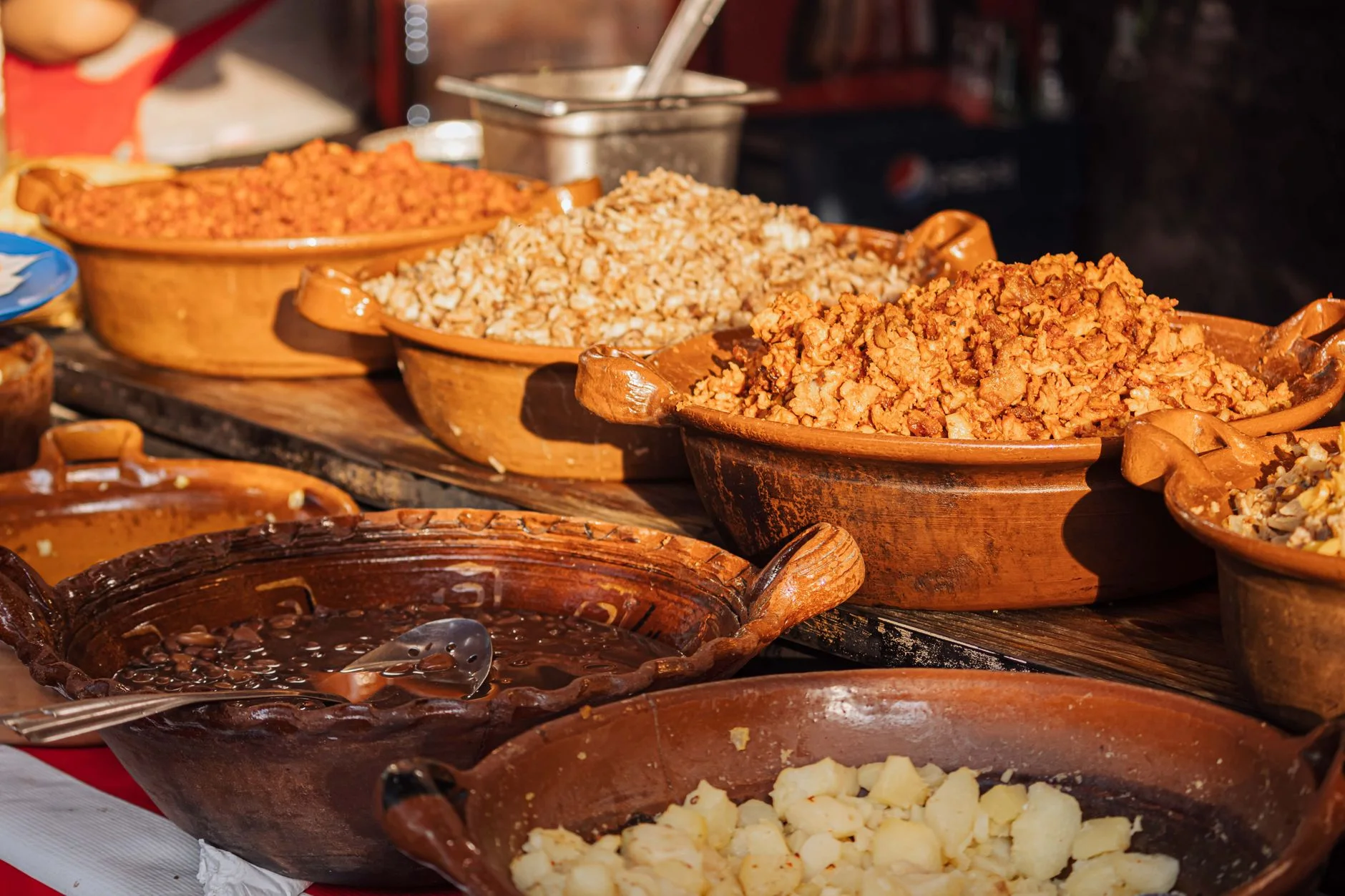
Instead of plating a finished dish, put every element on the table in its own
bowl. Everyone builds their own plate.
A bolognese becomes: pasta, sauce, grated cheese, cucumber sticks. One child
has pasta and cheese. Another has all four. An adult has the lot with chilli on
top. It is one pan of sauce and one pan of pasta — the same cooking, presented
differently.
This does three useful things at once. It removes the flashpoint, because
nobody is served something they did not choose. It keeps the refused food
visible and available without a confrontation. And it means the person cooking
makes one meal, which is the part that actually burns families out.
Meal planning for picky eaters, week by week
-
List the accepted foods honestly
Everything each child will reliably eat, written down. Most parents are
surprised — the list is usually longer than it feels at 6pm, and it is the raw
material for the plan.Group it: carbohydrates, proteins, fruit and vegetables, dairy. You are
looking for at least one reliable item in each group per child. -
Build six dinners that come apart
Six is enough for a rotation nobody notices. The requirement is that each one
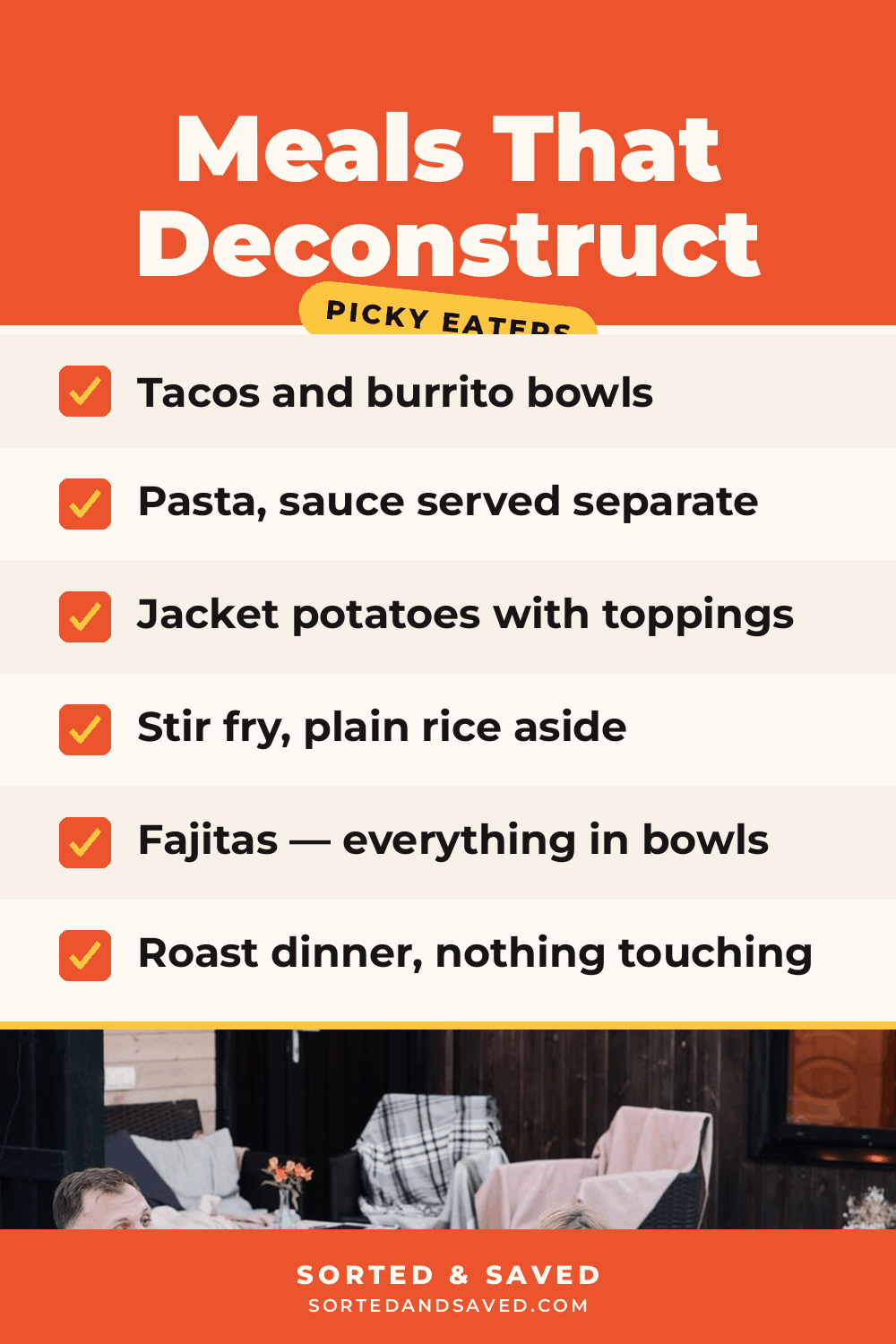
deconstructs into components — tacos, pasta, jacket potatoes, stir fry, fajitas,
a roast. All of these are naturally separable.Casseroles, curries, pies and soups are the difficult category, because
everything is already mixed. Keep one or two, and serve them with a safe side.
The five dinner rule works well here. -
Put a safe food on the table every single time
Bread, plain rice, cucumber, yoghurt, fruit — something guaranteed. It is not
a reward and it is not a separate meal; it is one of the bowls on the table.This is what lets you serve unfamiliar food without the evening becoming a
standoff. A child who knows there is something they can eat is much more likely
to try what is next to it. -
Add one new thing a week, in a small amount
One new food, one teaspoon, alongside the usual. No requirement to eat it,
touch it or comment on it. If it goes untouched, it appears again in a fortnight.Acceptance of a new food commonly takes ten or more exposures. Almost nobody
gets that far, because it is offered twice and then written off. -
Cook once for the parts, not the plates
Roast a tray of vegetables and serve some plain, some in the dish. Cook plain
chicken and add sauce at the table. Batch the components rather than the
finished meals — the same principle as
a Sunday prep session, just applied to elements.
 Save
SaveWhat to do at the table
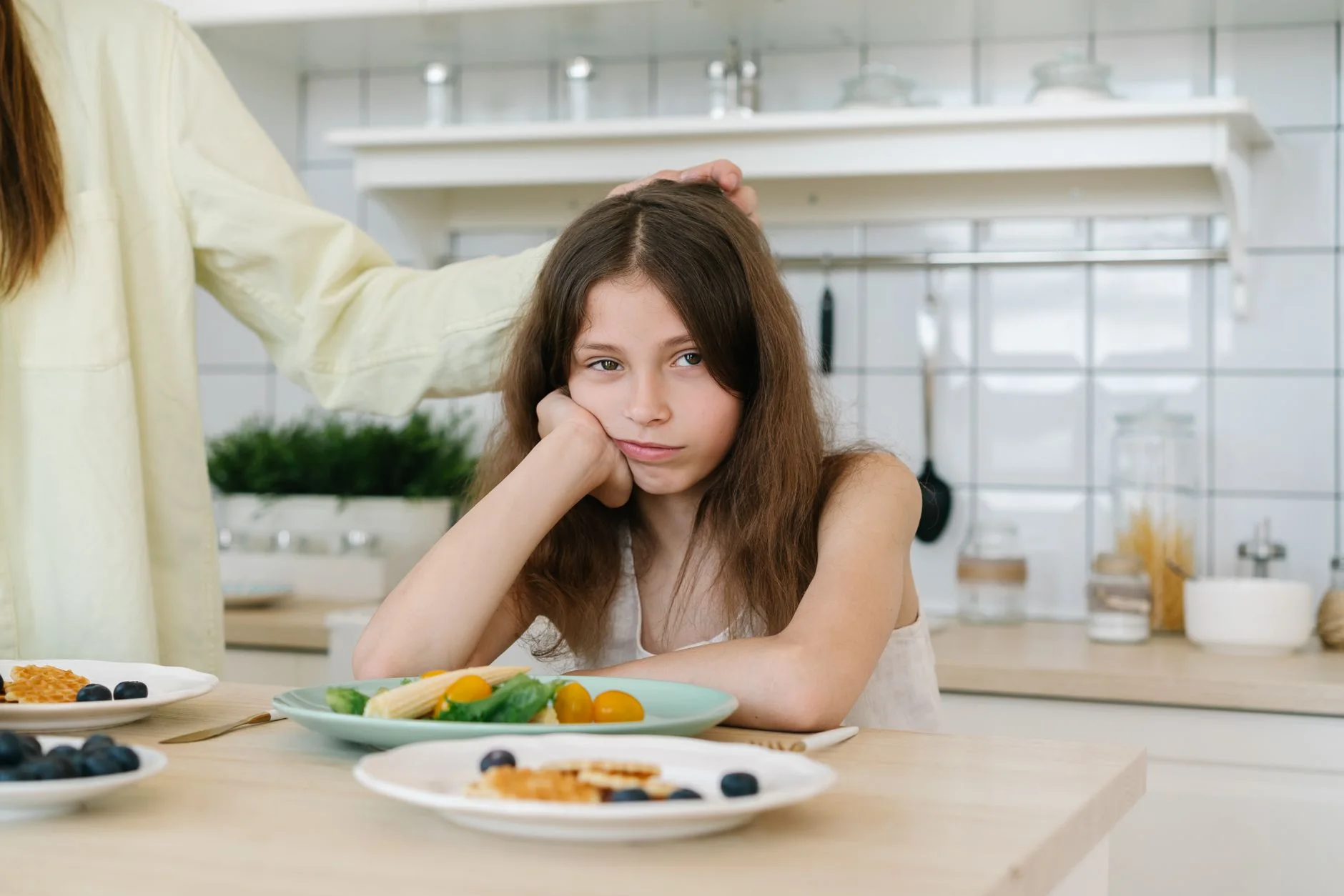
The division that ends most mealtime conflict: the adult decides what
is served and when. The child decides whether to eat it and how much.
Applied properly, this means no coaxing, no bargaining, no “three more
bites”, and no separate meal cooked at 7pm. It also means not commenting when
something new does get eaten, which is harder than it sounds and matters as
much — praise turns eating into a performance with an audience.
What it does not mean is a free-for-all. You still decide the menu, the
timing, and that the kitchen closes afterwards.
What works
- Components in bowls, assembled at the table
- One safe food at every meal
- New foods in tiny amounts, repeatedly
- Neutral reaction whether they eat it or not
- Snacks finished 90 minutes before dinner
- The same six meals on rotation
What to watch
- Cooking a second dinner on request
- Hiding vegetables in the sauce
- 'Three more bites' bargaining
- Big praise when they try something
- Grazing right up to the meal
- A new recipe every night to find a winner
Six dinners that deconstruct
- Tacos or burrito bowls — mince, rice, beans, cheese, lettuce, wraps. The most flexible meal there is.
- Pasta with sauce on the side — plus cheese, and a vegetable served raw as sticks.
- Jacket potatoes — three or four toppings in bowls. Almost every child eats a potato.
- Stir fry with plain rice — vegetables and protein cooked separately, sauce added at the table.
- Fajitas — peppers, chicken, wraps, cheese, sour cream, all separate.
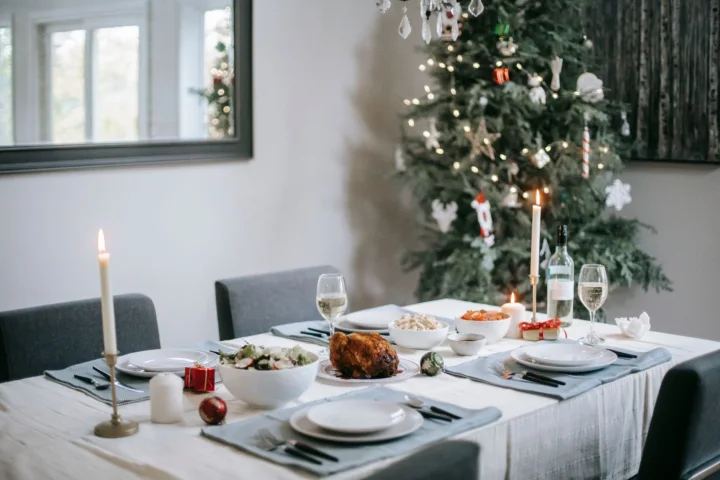
- A roast dinner — naturally deconstructed, which is why fussy eaters often manage it better than a weeknight meal.
Nothing here is a special “kids’ meal”. They are ordinary dinners that happen
to arrive in parts, which is the point — and most of them are on the
cheap family meals and
thirty-minute dinners lists already.
 Save
SaveWhen to be less relaxed about it
Ordinary picky eating is common, it peaks between roughly two and six, and it
usually resolves. It looks like a narrow but stable range of foods, normal
growth, and enthusiasm about food they like.
Worth raising with a health visitor or doctor: a range that is shrinking
rather than stable, fewer than about twenty accepted foods, distress or gagging
at the sight of food, weight loss or faltering growth, or whole food groups
excluded entirely. That pattern is different from fussiness and responds to
different help.
For the nutrition side, the USDA’s
MyPlate
gives the food group targets, which are useful for checking the week overall
rather than any individual meal. Balance across a week is the sensible unit —
almost no child eats a balanced dinner on a Tuesday.
Common questions
there is always something on the table they will eat, so refusing the main dish
does not mean going without. Cooking a second dinner teaches that refusing
produces a better option, which is a hard pattern to undo.
they never learn to eat the vegetable, and if they find out, trust at the table
takes a real hit. Do it if you want the nutrition, but keep serving the visible
version alongside.
be low-pressure — the food present, offered, and completely unremarked on
whether it is eaten or not. Most families stop at two or three attempts, which
is well short.
tried, and nothing that requires enthusiasm to open. See
lunchbox ideas that survive the bag — the component
approach works there too.
Start with one dinner
Pick the meal that causes the most trouble this week and serve it in bowls
instead of on plates. Change nothing else.
It is the smallest possible version of this and it usually removes the
argument immediately. If meal planning itself is the harder part,
start there and add the components afterwards.
2 comments