Most guides to meal planning for beginners start with a blank month, a
color-coded spreadsheet, and thirty recipes you have never cooked. That is not
a beginner system, it is an advanced one being handed to a beginner.
It collapses in week two, reliably, and the person concludes meal planning
does not work for them. It does. It just needs to start much smaller than
anybody tells you.
 Save
SaveWhy beginner meal plans fail
They plan every night. Seven planned dinners means one
disruption breaks the whole thing, and the ingredients for Thursday get thrown
away on Sunday. The five-dinner rule exists for exactly this
reason — and four is an even better start.
They are built from new recipes. New food takes longer,
requires unfamiliar ingredients, and sometimes fails. A first plan made entirely
of things you already cook is boring and it works.
They ignore the week’s actual shape. A thirty-minute recipe
on the night with two after-school activities was never going to happen.
Meal planning for beginners, in five steps
-
Look at the week first, not the food
Before thinking about a single meal, look at what the week contains. Which
nights are rushed, which are late, is anyone out.Then match effort to the night. A slow-cooker meal on the busiest day, the
thirty-minute dinner on the medium one, and the thing you enjoy cooking on the
night you actually have time. -
Write down four dinners
Four. Not seven. Choose from meals you have cooked before and know your
household will eat.The remaining nights cover themselves: leftovers, something from the freezer,
eggs on toast, or the takeout you were going to have anyway. Leaving those
unplanned is deliberate — it is where a real week’s chaos gets absorbed. -
Check what you already have
Before writing the shopping list, look in the freezer, the refrigerator, and
the cabinet. Build at least one of the four meals around something already in
the house.This is the step that turns meal planning into a money system rather than
just an organizing one, and it is most of what makes a
grocery budget work. -
Turn the plan into one list
Write the shopping list from the four meals plus breakfasts, lunches, and
staples. One list, one shop.Then shop from the list. Most overspending is not the plan failing, it is the
list being abandoned in aisle three. -
Put the plan where people can see it
The fridge door, or inside a cabinet door. Not in a notebook in a drawer and
not only on your phone.Visible plans get followed, and they stop the daily “what’s for dinner”
question, which is a surprising amount of the mental load this is meant to
remove.
 Save
SaveWhere to do it
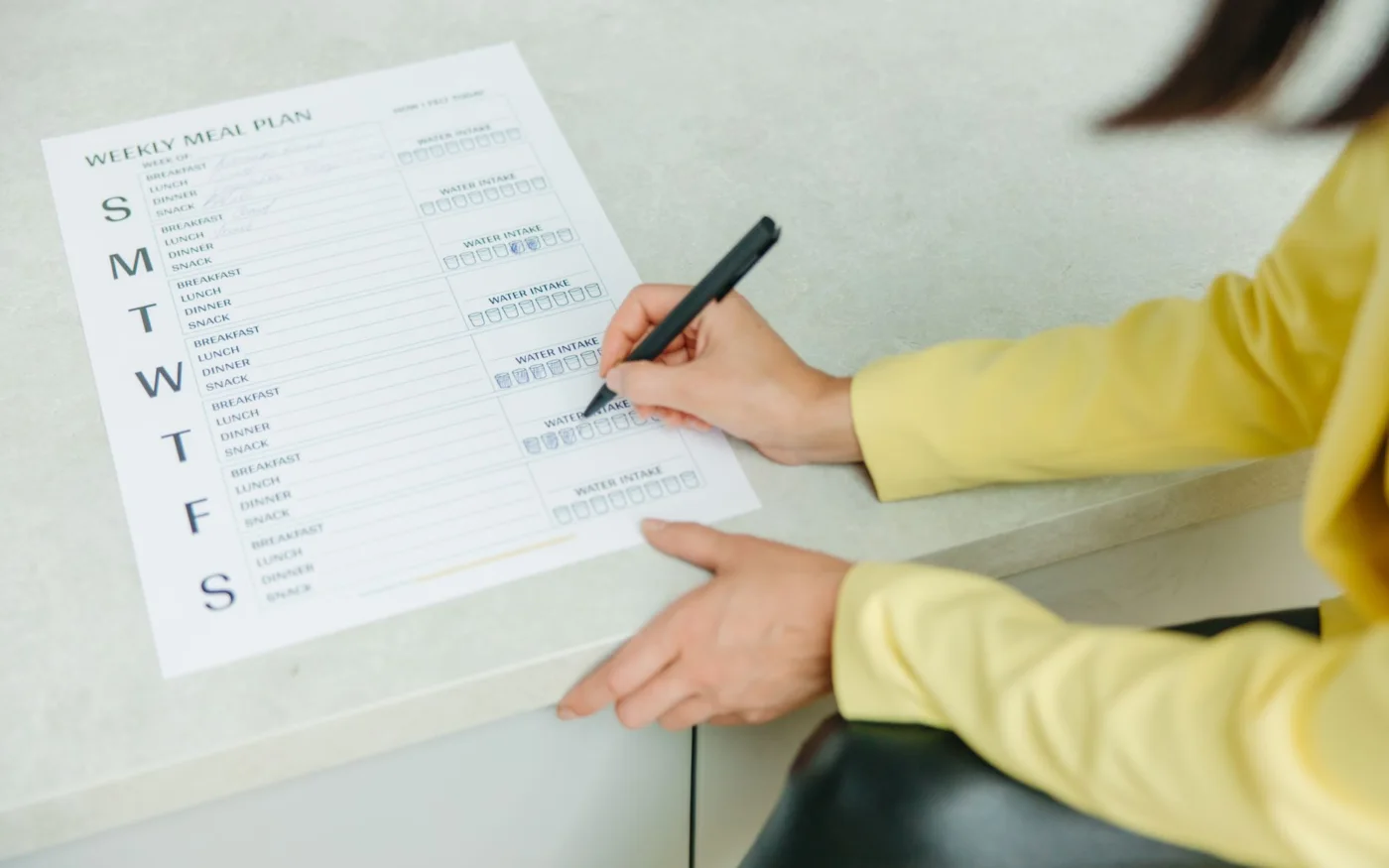
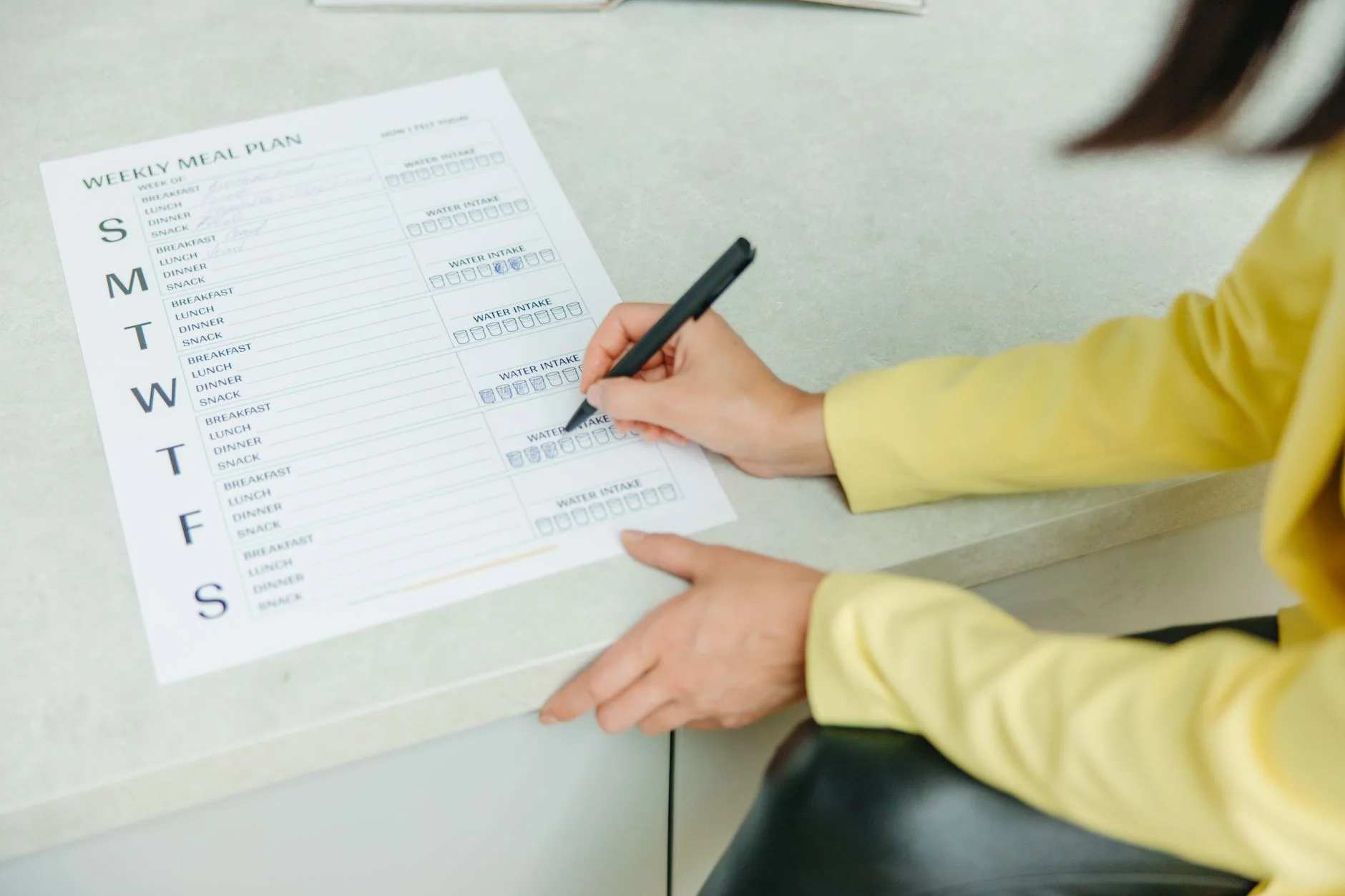
Paper, a note on your phone, or a printable — it genuinely does not matter,
and the time spent choosing a system is time not spent planning meals.
What matters is that it happens at the same point every week. Attach it to
something that already happens: the shop, or the admin block of
a Sunday reset. A plan made at a random moment when you
remember is a plan that stops within a month.
What works
- Four dinners a week to start
- Meals you already know
- Checking the calendar first
- One list, one shop
- The plan visible in the kitchen
- A fixed weekly planning slot
What to watch
- Planning all seven nights
- Starting with new recipes
- Building the plan around a spreadsheet
- Shopping without the list
- Keeping the plan on your phone only
- Planning whenever you remember
What to add once it holds
Only after four weeks of the basic version working. Adding these too early is
what turns a working habit back into a project.
- A stocked cabinet so the unplanned nights have a default — pantry staples covers what is worth keeping.
- A short prep session — even twenty minutes of chopping, as in Sunday meal prep, removes most weeknight friction.
- A few fast dinners you can cook without a recipe, which is what thirty-minute school-night dinners are for.
- Doubling one meal and freezing half. The easiest freezer stock there is.
For the nutrition side rather than the logistics,
Nutrition.gov’s
shopping and meal planning resources are a solid reference, and a better one
than most food blogs including this one.
 Save
SaveCommon questions
nobody successfully plans seven, because real weeks contain leftovers, changed
plans, and nights where nobody wants what was decided on Sunday.
the same base with different toppings, or the protein served alongside rather
than mixed in. Cooking two dinners nightly is the fastest route to abandoning
meal planning entirely.
fewer unplanned takeout nights. The saving comes from the shopping list being
followed rather than from the plan existing.
and treating a missed week as failure is the most common reason people stop
permanently.
Start with four dinners
Look at this week, pick four meals you already know how to cook, write one
list, and stick it on the fridge.
That is the whole beginner version. Everything else is an optimization you can
add once this one is boring.