
Linen closet organization fails for one reason, and it is not folding. It is
volume. Almost every linen closet in the country is storing two or three times
what the household actually uses, and no arrangement system survives a cupboard
that is eighty percent full of things nobody puts on a bed.
Fix the count first. The folding, the labels and the baskets all work
afterwards, and none of them work before.
 Save
SaveThe count that actually works
Before touching a shelf, decide what belongs in the cupboard at all.
- Sheets: two full sets per bed. Two lets you strip and remake immediately while the other set washes.
- Towels: two bath towels per person, plus two hand towels per bathroom, plus four guest towels for the whole house.
- Spare duvets and pillows: one spare of each, for guests. Not one per bed.
- Tablecloths and napkins: whatever you have used in the last two years.
For a two-bedroom house with three people, that is roughly four sheet sets,
six bath towels, four hand towels, four guest towels and one spare duvet. Most
people are storing double that, and the excess is what makes the cupboard
unusable.
Linen closet organization, shelf by shelf
-
Empty it completely
Everything out, onto a bed. You cannot judge quantity while it is stacked,
and half of what is in there will turn out to be a duvet cover with no matching
sheet or towels from a previous house. -
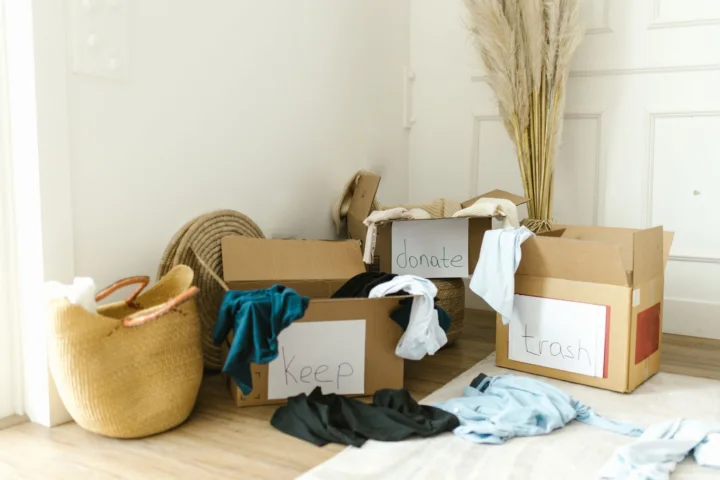
Sort into four piles
Keep, retire, repurpose, and belongs-somewhere-else. The last pile is always
bigger than expected — medicines, spare toiletries, gift bags, a hairdryer.
Those get relocated, not rearranged. Toiletries generally belong in
the bathroom.Retire means it leaves the house. Textile recycling takes worn sheets and
towels, and animal shelters take clean ones. Both are better than a bag in the
garage labelled “rags”. -
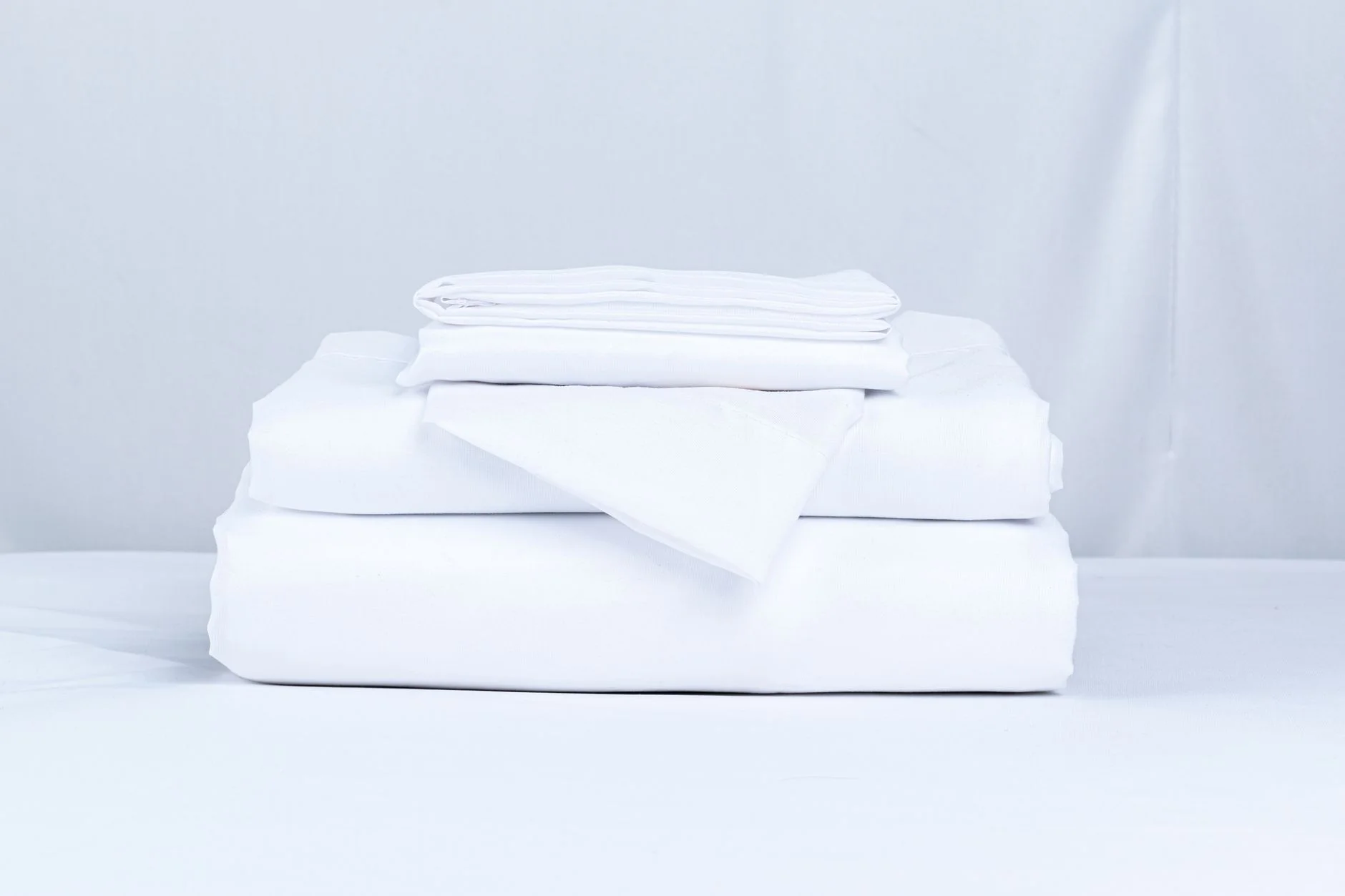
Bag each sheet set inside its own pillowcase
Fold the flat sheet and the fitted sheet roughly — roughly is fine — and put
them, plus the second pillowcase, inside the first pillowcase. Fold the flap
over.You now have one neat rectangle per set. Nobody has to fold a fitted sheet
well, complete sets never get separated, and you can pull one set out without
disturbing the stack. This single change does more for a linen closet than any
container. -
Zone by height and weight
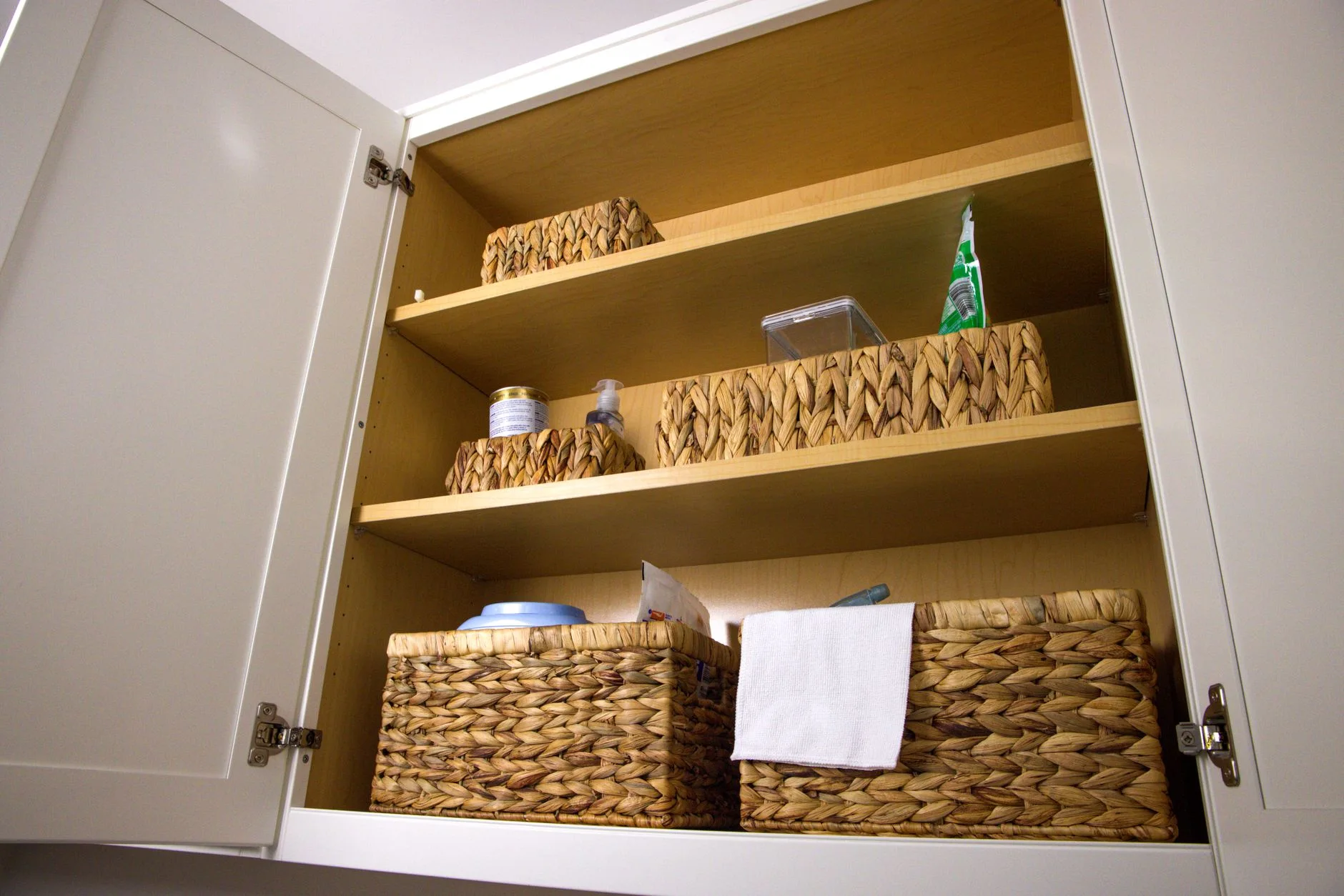
Heavy and rarely used at the bottom — spare duvets, pillows, the camping
bedding. Daily items at eye and chest level: towels, and the sheets for the beds
you strip most often. Light and seasonal at the top, in a labelled basket.The rule is that the things used weekly sit between your shoulders and your
waist. Everything else can be inconvenient. -
Label the shelf, not the item
A label on the shelf edge — “double”, “king”, “guest”, “towels” — survives.
Labels stuck to baskets get moved with the basket and then lie. Anyone in the
household putting laundry away can then get it right without asking, which is
the entire point.
 Save
SaveThe trick that ends the fitted sheet argument
There is a correct way to fold a fitted sheet, it takes practice, and almost
nobody does it consistently. The pillowcase method sidesteps it: the fold only
has to be good enough to fit in a bag you cannot see into.
It also solves the problem that actually annoys people, which is not untidy
stacks but incomplete sets — pulling out a fitted sheet at 10pm and discovering
the matching pillowcases are in the wash, in a different pile, or gone.
What works
- Two sets per bed, then stop
- Each set stored in its own pillowcase
- Labels on the shelf edge
- Heavy items low, seasonal high
- Worn linens to textile recycling
- A quick check twice a year
What to watch
- Keeping every set you've ever owned
- Folding fitted sheets perfectly, once
- Labels stuck to movable baskets
- Everything stacked at eye level
- A 'rag bag' that never leaves
- Reorganizing instead of reducing
Keeping it that way
Two habits, and neither takes real time.
Strip and remake the same day. The bed gets its clean set
immediately and the dirty one goes straight into the wash, so linens are either
on a bed or in the machine — never in a chair. This is the single biggest
determinant of whether a linen closet stays tidy, and it belongs in
your laundry routine rather than in the cupboard.
One in, one out. New towels arrive, old towels leave the
same day. Textiles are the easiest category in the house to accumulate silently
because nothing ever wears out enough to force the decision — the same trap that
makes closets fill up.
Twice a year, when you swap
seasonal clothes, do a five-minute count of the linen
closet at the same time. That is enough to catch drift before it needs another
full afternoon.
 Save
SaveHow often to replace them
Towels last roughly two to five years before they stop absorbing properly;
sheets somewhere between two and five depending on quality and how often they
are washed. Pillows are the ones people keep far too long — every one to two
years is the common recommendation, and the
Sleep
Foundation’s bedding guidance covers washing frequency and replacement in
more detail.
Replacing on a schedule rather than when something visibly fails is also what
keeps the count stable, because nothing gets demoted to the spare pile.
Common questions
third makes sense for a child who is ill often, a bed that gets stripped
mid-week, or a guest room used at short notice. Beyond three, you are storing
laundry you are not doing.
or stained goes to textile recycling rather than general waste. Keeping two
towels as genuine rags is reasonable; keeping eleven is how the cupboard got
full in the first place.
top shelf of the wardrobe. It is arguably better than a central cupboard,
because the linens live where they are used. See
small space organization for the same principle applied
elsewhere.
silently refills — you cannot see the excess so you never deal with it. The one
good use for a basket is seasonal items on the top shelf, where hiding them is
the point.
Ninety minutes, one cupboard
Empty it, count what you have against the numbers above, and put every
surviving set inside a pillowcase. That is the whole job.
It is one of the fastest wins in the house, which makes it a good first room
if you are working through a declutter challenge and
need something that finishes in an afternoon.
1 comment