

Monthly grocery shopping works, and it fails for a completely predictable
reason: people try to buy a month of everything. Four weeks of milk, salad and
bananas does not exist, so week three arrives with a full pantry and nothing to
put on a plate, and the whole approach gets abandoned.
The version that holds is a split. One large shop for the things that keep,
and a short weekly top-up for the things that do not. That is roughly eighty
percent of the spend in one trip and twenty percent in four small ones.
 Save
SaveWhy fewer trips saves money
The saving is not mainly bulk pricing, which is often marginal and sometimes
worse per unit than a promotion. It is trip count.
Every visit to a supermarket carries an unplanned spend — the thing at the
end of the aisle, the reduced item you did not need, the snacks bought because
you are hungry. Cutting from eight or ten trips a month to five removes most of
that, and it is the reason monthly shopping outperforms weekly even when the
list is identical.
It also removes decisions. Standing in a shop at 6pm deciding what to eat is
what produces expensive baskets and the takeaway that follows. The same logic
underpins the grocery budget reset.
What goes on the monthly grocery shopping list
Anything with a shelf life longer than about five weeks, plus anything
frozen.
- Dry goods: rice, pasta, noodles, oats, flour, sugar, lentils, dried beans, couscous.
- Tinned and jarred: tomatoes, beans, chickpeas, tuna, coconut milk, passata, pasta sauce.
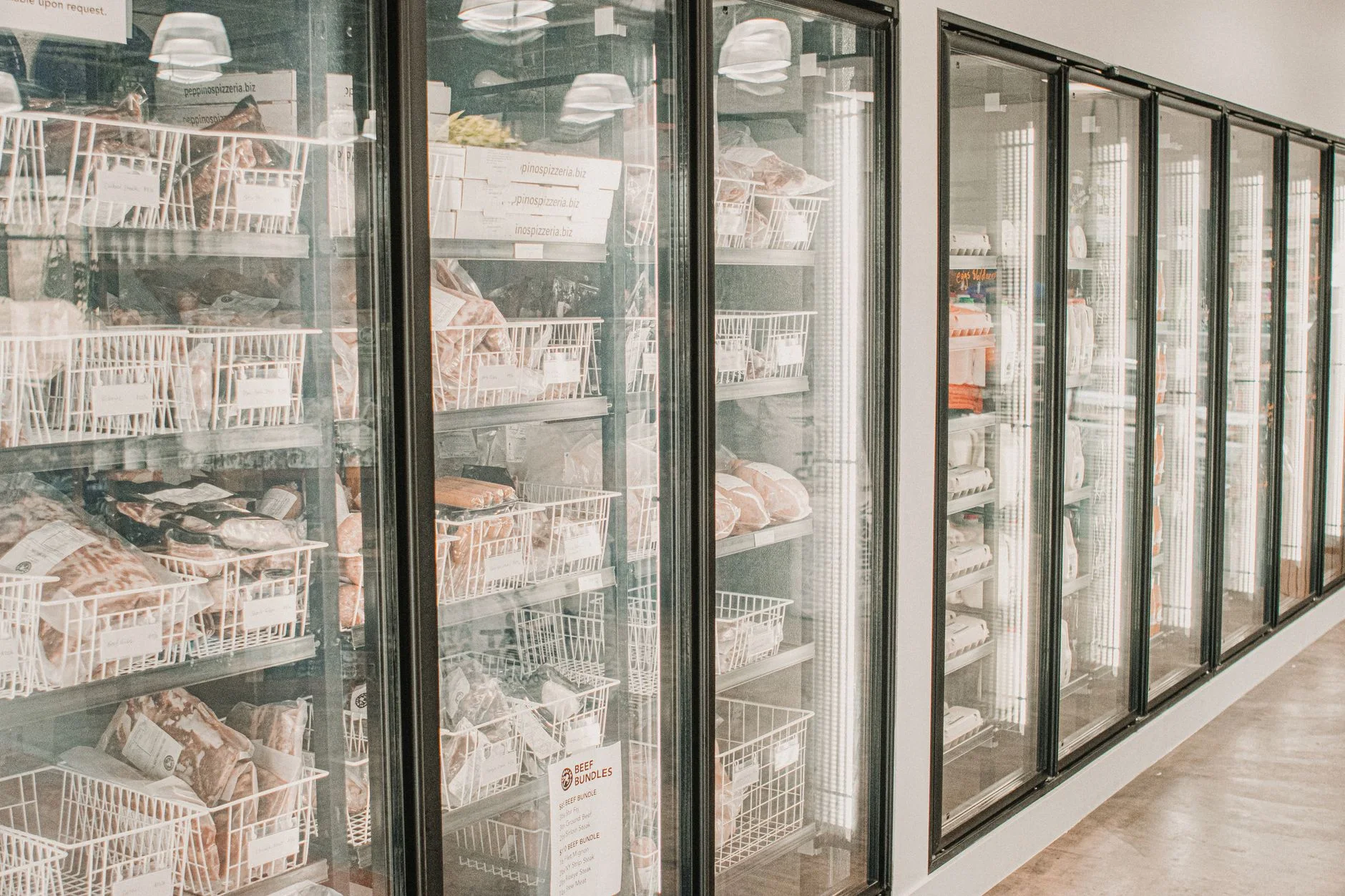
- Frozen: vegetables, fruit, chips, fish, chicken, mince, peas — the entire frozen half of the shop.
- Cooking base: oil, vinegar, stock cubes, spices, soy sauce, mustard, honey.
- Dairy that lasts: hard cheese, butter (freezes well), long-life milk as backup.
- Household: loo roll, kitchen roll, washing powder, dishwasher tablets, bin bags, cleaning products.
Household goods alone justify the trip. They are bulky, they never spoil, and
running out of them is what produces most emergency shop visits.
What stays weekly
The top-up list should be short enough to memorise and should not vary much.
- Milk, bread, eggs
- Fresh fruit and salad
- Fresh vegetables that do not keep — leaves, berries, courgettes, mushrooms
- Yoghurt and fresh meat if you are not using the freezer for it
Ten minutes, one basket, no trolley. Taking a trolley is how a top-up becomes
a second full shop, which is worth knowing before it happens rather than after.
-
Check storage before you plan anything
Count freezer drawers and shelf metres, honestly. A monthly shop for a family
of four needs roughly a full freezer compartment plus about two metres of
shelving. If you do not have it, run a fortnightly cycle instead — the same
system, half the volume.Sort the freezer first, because a monthly shop into a disorganised freezer
just buries things. Freezer organization is genuinely the
prerequisite here. -
Build the month from about eight meals
Eight dinners on rotation covers a month without anyone noticing, especially
if two are variations. Write them down, then work backwards to ingredients — that
is what turns a vague bulk shop into a list. Cheap family
meals is a reasonable starting set. -
Do a full stock check first
Twenty minutes with the cupboards, the freezer and a notebook. Monthly
shoppers accumulate five bags of rice and no stock cubes because nobody checks
before leaving. A standing pantry staples list makes this
much faster. -
Shop the list, in aisle order
A monthly trolley is large and slow, and wandering back for forgotten items
is what turns it into a two-hour trip. Order the list the way the shop is laid
out — a grocery list template does this once and then keeps
doing it. -
Unpack with the next month in mind
Older stock to the front, new to the back, in every cupboard and drawer. This
takes ten extra minutes on the day and is the difference between a system that
reduces waste and one that simply relocates it.
 Save
SaveWhere it goes wrong
Buying a month of fresh. The most common failure, and the
most demoralising, because it ends in a bin bag of soft vegetables and the
conclusion that the system does not work.
Bulk-buying something the household does not eat. A very
large bag of something is only cheap if it gets eaten. Buy the normal size the
first time and scale up once it has proven itself.
No labelling in the freezer. Unlabelled frozen containers
become archaeology. A marker pen and the date is enough, and it is what makes
freezer meals worth doing at all.
Treating the top-up as optional. It is part of the system,
not a failure of it. The month is covered; the week is topped up.
What works
- Splitting the list into monthly and weekly
- Checking the freezer before planning
- Eight meals on rotation
- Aisle-ordered list
- Rotating stock when unpacking
- A basket, not a trolley, for top-ups
What to watch
- Buying a month of fresh produce
- Bulk-buying anything untested
- Shopping without a stock check
- Wandering the shop deciding
- Unlabelled freezer containers
- A weekly 'top-up' that fills a trolley
Storage times worth knowing
Monthly shopping only works if you know how long things actually keep, and
most people are conservative on frozen goods and optimistic on fridge items.
The USDA’s
cold
food storage charts give the real numbers for fridge and freezer by
category.
The short version: most frozen meat is fine for months, fresh mince is not
fine for a week, and eggs last considerably longer than people think.
 Save
SaveMaking the month easier
Two hours of prep after the big shop pays for itself across the whole month.
Portion and freeze the meat as you unpack it, in meal-sized amounts rather than
in the bag it came in. Do the same with bread.
If you already run a Sunday prep session, the shop-day
version is the bigger one — and it is worth treating as part of the shop rather
than a separate job, because the food is already out on the counter.
Common questions
Households that cut from eight or ten shop visits a month down to five typically
see the difference immediately, without changing what they eat.
only a fridge-freezer’s top drawer, run the same system fortnightly instead —
the split between monthly and weekly items still applies, just at half the
volume.
dark place. Carrots and potatoes will happily cover most of a month. It is
leaves, berries and soft fruit that force the weekly trip.
specific dinner assigned to a specific Tuesday. The monthly shop buys the
ingredients for the rotation; the weekly top-up decides which of them you feel
like eating.
Start with the household half
If a full monthly shop feels like too much to change at once, move only the
non-food items to monthly first — cleaning products, paper goods, laundry.
It is the easiest half, it needs no meal planning, and it removes a
surprising number of shop trips on its own. Add the dry goods next month, and
build from there during your weekly reset.


2 comments